
Dakha MLA Manpreet Ayali to join Amritpal-led outfit today
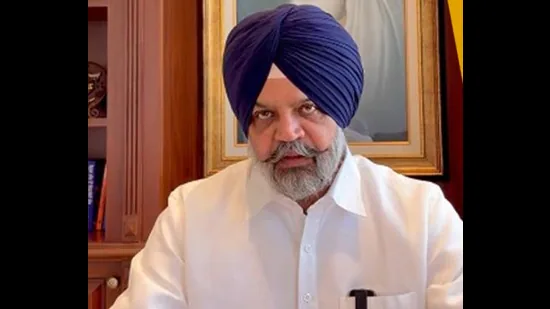
Dakha MLA Manpreet Ayali Joins Amritpal Singh’s Akali Dal Faction
Bharatmorningnews.com – In a notable development for Punjab’s political landscape, Dakha MLA Manpreet Ayali is set to formally join the Waris Punjab De faction of the Akali Dal, led by Amritpal Singh, today in Chandigarh. This move represents a pivotal moment in the state’s political dynamics, as Ayali, a prominent figure in the Shiromani Akali Dal (Punar Surjit), aligns himself with the growing influence of the Amritpal-led group. His decision to join the faction comes after a series of strategic shifts, including his resignation from the SAD (Punar Surjit), which had previously sought to reorganize the party under the guidance of the Akal Takht. Ayali’s presence alongside his father, Tarsem Singh, and Faridkot MP Sarabjit Singh Khalsa signals a united front as he steps into a new political phase.
Political Realignment and the SAD (Punar Surjit) Split
Manpreet Ayali’s journey from the SAD (Punar Surjit) to the Waris Punjab De faction underscores a broader trend of political realignment in Punjab. He resigned from the SAD (Punar Surjit) on May 20, marking the end of his tenure as convener of a coordination committee aimed at fostering unity with the Amritpal-led group. At the time, Ayali had stated his reluctance to join major parties like the Congress, BJP, or AAP, emphasizing his commitment to a new Panthic platform. However, his recent decision to join the Waris Punjab De faction suggests a recalibration of priorities, driven by the faction’s momentum and its alignment with the Akal Takht’s vision for the Akali Dal.
Faridkot MP Sarabjit Singh Khalsa, who will accompany Ayali during his formal joining, has been a vocal supporter of the Waris Punjab De faction since its inception. The faction, which emerged as a splinter group from the mainstream Shiromani Akali Dal, has gained traction by advocating for a more grassroots-focused approach to governance. Ayali’s departure from the SAD (Punar Surjit) is seen as a calculated move to bolster the faction’s strength, particularly in regions like Chandigarh, where his influence could tip the balance of power.
“The rise of Waris Punjab De is gaining momentum, and I am confident about the outcomes in the near future. We are actively advancing the Panthic agenda, which reflects the community’s desire for a renewed political movement,” Ayali stated in recent interviews, highlighting his belief in the faction’s potential to reshape the political landscape.
Amritpal Singh and the Waris Punjab De Faction’s Growth
The Waris Punjab De faction, led by Amritpal Singh, has been steadily growing its support base across Punjab. Despite Singh’s incarceration in Assam for his alleged role in the 2023 Ajnala Police Station attack, the faction continues to assert its influence through grassroots mobilization and ideological alignment with the Akal Takht. Ayali’s joining of the group is a testament to the faction’s ability to attract prominent figures, even as it faces challenges from the mainstream SAD and other political entities.
Earlier this year, Ayali was part of an Akal Takht-appointed committee tasked with revitalizing the Shiromani Akali Dal’s membership. The committee, formed on December 2, 2024, aimed to restructure the party and address internal dissent. While Ayali’s involvement in this initiative was seen as a step toward reform, his eventual decision to join the Waris Punjab De faction indicates a divergence from the SAD’s traditional governance model. This shift could signal a new chapter for the Akali Dal, with Ayali’s support potentially strengthening the faction’s position in key constituencies.
The political realignment has sparked discussions about the implications for Punjab’s upcoming elections. Analysts suggest that Ayali’s move may further polarize the Akali Dal, dividing its base between the mainstream SAD and the more radical Waris Punjab De faction. His joining also raises questions about the future of Sukhbir Singh Badal’s leadership, as the SAD (Punar Surjit) had previously faced criticism for its governance strategies from 2007 to 2017. The Akal Takht’s “punishment” on Badal and other leaders added to the faction’s urgency to create a fresh political identity.
Chandigarh, a union territory with significant political importance, is likely to see heightened activity as Ayali’s affiliation with the Waris Punjab De faction takes root. His presence could galvanize local support, especially among Panthic communities who feel underrepresented in the mainstream SAD. This development may also influence other regional leaders, prompting them to reassess their alliances and strategies in the evolving political environment.
The broader impact of Ayali’s joining extends beyond Chandigarh, as it reflects a growing trend of dissent within the Akali Dal. His decision to align with the Waris Punjab De faction highlights the party’s internal struggles and the competition for influence among its factions. With Ayali’s backing, the faction may position itself as a viable alternative to the SAD, particularly in areas where the community seeks a more progressive and community-centric approach to governance.