
How Asia’s largest oxbow lake is losing its fish, water, and future | HT Ground Report from a Ramsar Site in Bihar
Asia’s Largest Oxbow Lake in Crisis: Losing Fish, Water, and Future
Bharatmorningnews.com – How Asia’s largest oxbow lake is losing its fish, water, and future. Kanwar Lake, recognized as Asia’s largest oxbow lake and a Ramsar Site in Bihar, is facing a critical ecological decline. Nestled in Begusarai district, this vital water body has long been a lifeline for local communities, particularly for fishers like Naresh Sahni, whose family has relied on its resources for generations. Yet, as the lake’s water levels drop and its biodiversity dwindles, the balance between conservation and human survival is increasingly fragile. Experts warn that without urgent intervention, Kanwar Lake may lose its status as a sustainable ecosystem.
A Historical Ecological Haven
Kanwar Lake was once a sprawling sanctuary teeming with life, supporting 165 plant species, 394 animal species, and 221 bird varieties. Its prime area spanned 63,000 hectares, serving as a crucial habitat for migratory birds and a hub for aquatic biodiversity. However, over the years, the lake has shrunk dramatically, now covering only 2,620 hectares as a Ramsar site. This transformation is not just a loss of space—it represents a disruption of delicate ecological processes that have sustained the region for decades.
Naresh Sahni, a 40-year-old fisherman, recalls a time when the lake brimmed with diverse species like puthi, garah, singhi, chouri, and rohu. “Each season brought different fish,” he said. Today, only 25% of those species remain, with kawai and desi mangur vanishing entirely. This decline underscores the urgent need for targeted conservation strategies to revive the lake’s natural equilibrium.
Human Activities and Climate Pressures
The shrinking of Kanwar Lake is attributed to a combination of human interventions and climate shifts. A key factor is the 12-kilometer canal that diverts excess water into the Buri Gandak river. Naresh explains that during the “Aas” months, water is siphoned back to the river, preventing it from replenishing the lake. This artificial drainage has disrupted the natural hydrological cycle, leading to accelerated degradation.
Government proposals for a 4-meter check dam have further intensified tensions. Farmers fear the dam will exacerbate water scarcity, while fishermen see it as a potential solution to stabilize catches. This conflict highlights the broader challenge of aligning human needs with ecological preservation, as competing interests continue to shape the lake’s fate.
Fragmented Governance and Conservation Challenges
Conservation efforts for Kanwar Lake remain fragmented due to unclear land demarcations and outdated policies. Officials note that 4,000 land settlement cases are still pending since 1989, leaving the Ramsar site’s boundaries ambiguous. This lack of clarity has allowed encroachment to continue unchecked, undermining the lake’s ability to recover.
“A lake’s survival hinges on four systems: hydrology, climate, groundwater, and human activity,” noted Mehebub Sahana, an environmental geographer at the University of Manchester. “Disruptions in any of these can lead to ecological collapse.”
The ongoing debate over the check dam and canal management reflects a deeper struggle. While the dam could regulate water flow and prevent seasonal depletion, its impact on groundwater levels and the lake’s health remains a subject of contention. Experts emphasize that without integrated policies, the lake’s ecological and economic value may continue to erode.
A Livelihood at Risk
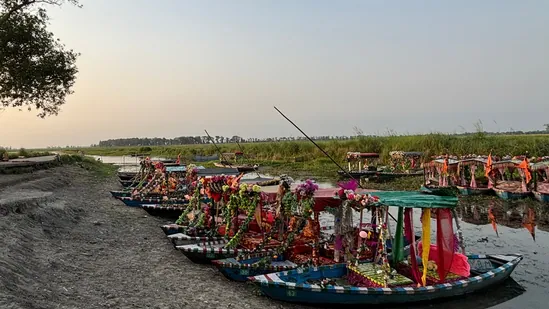
For generations, Kanwar Lake has provided sustenance and income to local families. Naresh Sahni’s story is emblematic of this reliance, as his community has shifted from traditional fishing to tourism in response to dwindling resources. Boat rides have become a new revenue stream, but the sustainability of this approach depends on the lake’s ability to retain its allure amid environmental challenges.
Local farmers also face uncertainty as the lake’s water is increasingly diverted for agricultural use. With groundwater levels dropping and the lake’s size shrinking, the balance between irrigation and conservation is under scrutiny. These pressures are compounded by climate variability, which has altered rainfall patterns and seasonal flooding, further threatening the lake’s long-term viability.
“The lake’s decline is a warning sign for other wetlands in the region,” said Dr. Anjali Kumar, a regional environmental consultant. “Without immediate action, we risk losing not just a Ramsar Site, but a symbol of resilience in the face of climate change.”
Towards a Sustainable Future
As the situation worsens, stakeholders are calling for a unified approach to protect Kanwar Lake. This includes revising water management policies, engaging local communities in conservation efforts, and investing in sustainable practices that restore the lake’s natural flow. Experts stress the importance of monitoring groundwater levels and integrating climate resilience into regional planning to safeguard the lake’s future.
For now, the community watches with concern as the lake continues to shrink. While efforts to revitalize it persist, the question remains: will these actions be enough to ensure the survival of a once-thriving ecosystem? The answer may determine whether Kanwar Lake can reclaim its role as a vital resource for both nature and people in Bihar.