
8 killed as molten steel spills on workers after Visakhapatnam plant blast
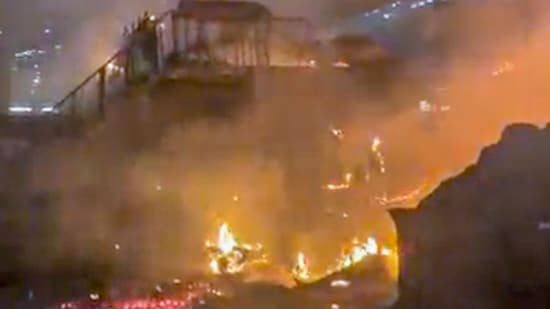
8 Killed in Molten Steel Spill at Visakhapatnam Plant Blast
Bharatmorningnews.com – A tragic incident at the Rashtriya Ispat Nigam Limited (RINL) steel plant in Visakhapatnam, Andhra Pradesh, resulted in the death of eight workers and injury to six others after a catastrophic molten steel spill. The explosion occurred during the transfer of molten steel from a ruptured ladle to a casting unit, creating a scene of chaos and destruction. The event has been described as the deadliest in the plant’s 34-year operational history, underscoring the critical need for enhanced safety measures in industrial environments.
Timeline and Location of the Incident
The incident unfolded at approximately 4:15 pm on Monday in the Continuous Casting Department (CCD) of the Steel Melting Shop (SMS) section at the Visakhapatnam Steel Plant. This central government-run facility, located in Visakhapatnam district, is a key player in India’s steel production. The explosion was triggered by a rupture in a ladle, allowing molten steel—hot enough to reach nearly 1,500 degrees Celsius—to surge uncontrollably into the workspace. The sudden release of the scorching metal caused immediate harm to workers nearby.
“Eight workers were killed and six others sustained injuries in the accident,” stated Visakhapatnam district collector M Abhishikth Kishore, who visited the site to assess the damage.
Historical Context and Safety Concerns
This incident marks the worst in the plant’s history since June 14, 2012, when a massive explosion in the SMS-III oxygen plant killed 19 people, including officials. The recurrence of such disasters has raised significant questions about the plant’s safety protocols and maintenance practices. Analysts are calling for a thorough review of the measures in place to prevent similar accidents, especially in high-risk areas like the SMS and CCD sections.
“Providing the best possible medical treatment to the injured is our top priority,” said Union state steel minister Bhupathiraju Srinivasa Varma, who was en route to Visakhapatnam from his Bhimavaram office.
Technical Details of the Blast
Investigations into the blast revealed that the explosion happened during the transfer of about 150 tonnes of molten steel. The steel, maintained at an extreme temperature of 1,500°C, was being transported via a ladle to machine No. 2 when the vessel ruptured. This caused a cascade of molten metal to flood the area, with workers caught in the path of the rapidly spreading heat and flames. The mechanical failure is being analyzed to determine whether it was due to aging equipment, human error, or a combination of factors.
“The circumstances leading to the incident are being assessed, and all necessary assistance is being extended to those affected,” added Union minister HD Kumaraswamy.
Worker Accounts and Immediate Reactions
Survivors and on-site witnesses provided harrowing accounts of the event. A supervisor technician at the plant described the explosion as a “loud blast” that sent flames and molten steel spreading rapidly across the floor. “I heard the explosion, then the roof of the plant caught fire, and the hot metal was flowing like a river,” the technician said. The speed at which the spill occurred left little time for workers to react, resulting in severe burns and injuries. Emergency services were quickly deployed, but the scale of the disaster overwhelmed initial response efforts.
“The molten steel, which was at an extreme temperature of 1,500 degrees Celsius, spilled out of the ladle like a foam, leaked in large quantities, and fell on the workers in the unit,” said D Adinarayana, a senior employee and trade union leader.
Government Response and Compensation Measures
In the wake of the tragedy, Prime Minister Narendra Modi extended his condolences and announced financial assistance for the victims. Through a social media post, he stated, “Saddened by the mishap at the Visakhapatnam Steel Plant. Condolences to those who have lost their loved ones. Praying that the injured recover at the earliest.” Modi’s ex-gratia package includes Rs. 2 lakh for each deceased worker and Rs. 50,000 for the injured, aiming to provide immediate relief. The central government has also ordered a probe into the incident to identify lapses in safety standards.
“An ex-gratia of Rs. 2 lakh from PMNRF would be given to the next of kin of each deceased. The injured would be given Rs. 50,000,” PM Modi shared on X.
Long-Term Implications and Industry-Wide Reactions
The Visakhapatnam Steel Plant, which is part of the Steel Authority of India, has become a focal point for discussions on industrial safety. The incident has sparked concerns about the potential for similar accidents in other steel plants across the country, particularly those operating under similar conditions. Industry experts are emphasizing the need for regular maintenance of equipment, such as ladles and transfer systems, to prevent catastrophic failures. Meanwhile, the local community and workers are demanding stricter oversight and better protective measures to ensure safety in future operations.