
US stock market opens lower as S&P 500 holds steady, Nasdaq slips on OpenAI IPO delay
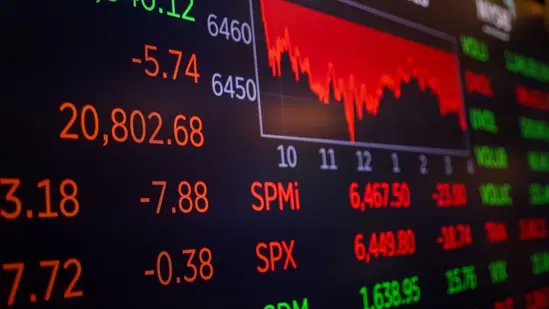
US Stock Market Opens Lower Amid OpenAI IPO Delay
Market Openings Reflect Investor Uncertainty
Bharatmorningnews.com – The US stock market began the trading session with a decline, as investor sentiment was weighed down by concerns over the delayed IPO of OpenAI. On Friday, the S&P 500 remained relatively stable, opening with a minimal drop, while the Nasdaq Composite experienced a more pronounced decline of 1.1% at the start of the day. This divergence highlights the complex dynamics at play, with the broader market showing resilience while technology-driven indices like the Nasdaq faced pressure.
Market analysts observed that the tech sector, which had been a key driver of growth in recent months, was particularly affected by the news. The Dow Jones Industrial Average opened lower by 237 points, or 0.5%, but managed to stabilize as the trading session progressed. In contrast, the Nasdaq struggled to recover, with its decline persisting throughout the morning. This disparity underscores the impact of the OpenAI IPO delay on market confidence, especially in high-growth sectors.
OpenAI IPO Delay and Its Market Impact
The potential postponement of OpenAI’s IPO has sent ripples through financial markets, prompting investors to reassess risk exposure in AI-related stocks. A report from
New York Times
indicated that the company may delay its public offering until next year, citing challenges in finalizing its financial strategy. This uncertainty has raised questions about the pace of innovation and investment in artificial intelligence, which has been a major theme in recent market trends.
Experts have linked the market reaction to broader issues in the tech industry, including the performance of other AI firms and the overall economic climate. The delay could signal a slowdown in the sector’s momentum, affecting not only OpenAI but also its partners and competitors. Investors are now closely monitoring whether this setback will lead to a wider correction in the technology space or if it’s merely a temporary fluctuation.
Technology Sector Faces Pressure
The tech sector experienced significant selling pressure, with major players like chipmakers and AI hardware developers seeing sharp declines. Shares of Micron Technology, AMD, and Intel all dropped around 2% in the early hours, reflecting the market’s concern over reduced funding opportunities for AI projects. These losses were compounded by volatility in Asian markets, where SoftBank Group, a major investor in OpenAI, fell more than 12%—marking one of the worst performances of the day.
Investor sentiment in the technology space has been shifting as the IPO delay casts a shadow over future growth prospects. Analysts suggest that the uncertainty may lead to a reevaluation of current investments, particularly in companies reliant on OpenAI’s progress. This could have long-term implications for the sector’s ability to attract capital and sustain innovation, as the IPO delay serves as a reminder of the challenges facing even the most ambitious tech ventures.
Broader Market Reactions and Investor Behavior
Outside of the tech sector, other markets showed mixed reactions. While the S&P 500 held steady, the Dow Jones Industrial Average fluctuated but ultimately stabilized. This suggests that investors are still cautiously optimistic about the overall market, despite the tech-related concerns. However, the Nasdaq’s continued decline indicates that the AI sector remains a focal point of market anxiety.
Market participants are now closely watching for any signs of a rebound in the technology sector. The IPO delay for OpenAI, one of the most anticipated events in the AI space, has created a ripple effect, influencing investor behavior across the board. As the market continues to adjust, the focus keyword “US stock market opens lower” is likely to remain relevant in shaping the narrative around early trading activity.
Factors Influencing the Market Opening
Several factors contributed to the US stock market opening lower, including broader economic indicators and global market trends. The delayed IPO of OpenAI, combined with recent turbulence in AI stocks, has created a climate of uncertainty that investors are actively navigating. This has led to a cautious approach in buying and selling, with many opting for a wait-and-see attitude ahead of the next major developments.
Additionally, the performance of the technology sector is being closely tied to the broader US stock market. As companies like OpenAI face challenges in their public offering, the market’s response reflects both short-term volatility and long-term strategic shifts. Investors are now more aware of the risks associated with high-growth sectors, which may influence future market behavior and the overall trajectory of the US stock market.
Long-Term Implications for the US Stock Market
The delayed IPO of OpenAI is not just a short-term event but a potential catalyst for long-term changes in the US stock market. Investors are beginning to reevaluate their portfolios, with a focus on diversifying risk across different sectors. This shift may lead to a more balanced market performance, as the tech sector’s dominance is challenged by other industries.
While the US stock market opens lower, the situation presents an opportunity for investors to capitalize on undervalued stocks. The market’s reaction to the OpenAI IPO delay highlights the importance of staying informed and adaptable in a rapidly changing financial landscape. As the day unfolds, the focus keyword “US stock market opens lower” continues to shape the discourse around early trading trends and investor sentiment.