
Explainer: How OpenAI plans to win the healthcare industry with ChatGPT AI
Explainer: How OpenAI Plans to Win the Healthcare Industry with ChatGPT AI
Bharatmorningnews.com – Explainer: OpenAI has made healthcare a central pillar of its business strategy, leveraging cutting-edge artificial intelligence to tackle critical challenges in the sector. The company believes that AI has the potential to revolutionize patient care, streamline medical workflows, and enhance diagnostic precision. By focusing on healthcare as a key vertical, OpenAI aims to position itself as a leader in the rapidly growing AI-driven medical landscape. The initiative reflects the company’s broader mission to make AI accessible and impactful across industries, with healthcare serving as a prime example of its strategic vision.
Leadership in AI Adoption
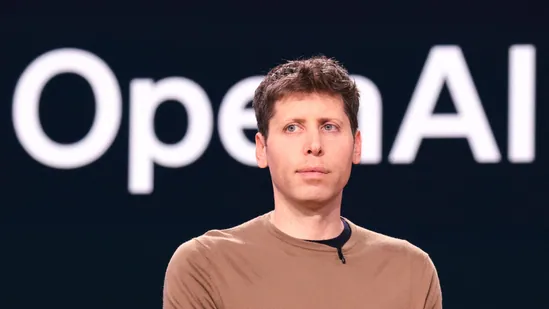
Sam Altman, OpenAI’s CEO, has taken a personal approach to securing healthcare partnerships, engaging directly with hospital executives to promote the integration of the company’s AI solutions. His involvement signals the high priority OpenAI places on the healthcare sector, as noted by Forbes. Altman’s presence is designed to build trust among healthcare professionals who may be hesitant to adopt new technologies. By showcasing the benefits of AI in real-world settings, he reinforces the company’s commitment to transforming medical practices through innovation.
Customized AI Solutions for Medical Professionals
In early 2025, OpenAI expanded its healthcare offerings by partnering with eight major U.S. health systems, including Cedars-Sinai Medical Center and HCA Healthcare, as reported by Forbes. Over the past six months, the company has developed three specialized products tailored for the healthcare industry. One of these is a customized ChatGPT version specifically designed for medical professionals, enabling them to access rapid, data-driven insights for clinical decision-making. This explainer highlights how such tools are being integrated into daily operations to improve efficiency and reduce errors in patient care.
Another key product is “ChatGPT Health,” a platform that allows users to securely connect their medical records and health apps like Apple Health and MyFitnessPal. While the platform is currently available via a waitlist, its potential to support patients during delays in care is significant. According to Ashley Alexander, a representative from OpenAI, the tool aims to bridge gaps in accessibility and provide timely assistance. This explainer further explores how OpenAI’s AI solutions are being tailored to meet the unique demands of the healthcare industry.
Real-World Applications and User Impact
With over 230 million weekly users globally, ChatGPT has become a vital resource for health-related inquiries, from symptom analysis to interpreting lab results. This explainer underscores how the platform’s widespread adoption has led to collaboration with more than 260 physicians, who review AI-generated responses and refine its accuracy. These experts also train the system to recognize when it should withhold answers due to insufficient data, ensuring reliability in critical healthcare scenarios.
“AI has risks, but its potential to transform healthcare is immense,” said Karan Singhal, head of health AI at OpenAI, via Forbes.
Lauren Bannon, a patient from North Carolina, provided a compelling example of ChatGPT’s utility. After being diagnosed with rheumatoid arthritis, she consulted the AI for additional insights. ChatGPT suggested Hashimoto’s disease, which later proved to be a critical lead. Further tests confirmed thyroid cancer, and surgery in January 2025 saved her life. Bannon credited the tool with “literally saving my life,” per Forbes. This explainer demonstrates how OpenAI’s AI can play a life-saving role in patient care, even when used as a supplementary tool.
Financial Strategy and Competitive Landscape
Despite generating $13 billion in revenue in 2025, OpenAI reportedly faced a $39 billion loss that year, highlighting the challenges of scaling AI in healthcare. The company also missed some revenue and user milestones in April, though it quietly filed for an IPO in June, possibly postponing it to 2026. As competitors like Anthropic and Google enter the healthcare AI space, OpenAI is emphasizing cost-efficiency to attract hospitals and other healthcare providers. This explainer details how the company is balancing innovation with affordability to remain competitive in the market.
John Beadle of Aegis Ventures noted that while OpenAI shows promise in consumer healthcare, its success in selling to hospitals remains uncertain. The healthcare sector’s thin profit margins require OpenAI to demonstrate clear value, such as reducing operational costs or improving patient outcomes. This explainer explores the strategies the company is using to align its AI solutions with the financial and practical needs of the healthcare industry, ensuring sustainable growth and adoption.
Addressing Workforce and Accessibility Challenges
Experts highlight that many U.S. communities face a shortage of medical professionals, with patients often waiting months for appointments. Rural areas, in particular, struggle with severe shortages: over one-third of adults use emergency rooms for primary care issues, and 86% of rural counties have no practicing cardiologists. OpenAI’s healthcare initiatives aim to address these gaps by offering AI-driven tools that assist in preliminary assessments and information sharing. This explainer explains how AI can serve as a bridge in underserved regions, providing critical support to both patients and providers.
Additionally, OpenAI has introduced GPT-Live voice models, capable of real-time speech input and output, expanding its capabilities in medical communication. This explainer details how such innovations are being integrated into everyday healthcare scenarios to enhance patient engagement and streamline interactions. By focusing on these tailored solutions, OpenAI is positioning itself to meet the evolving demands of the healthcare