
Colombia Elects Hardline Populist Who Vows War on Cocaine Gangs
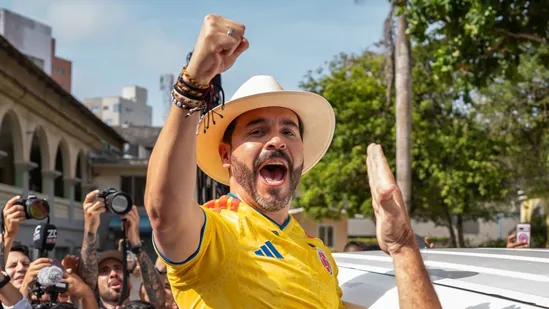
Colombia Elects Far-Right Populist Vowing to Combat Cocaine Networks
Bharatmorningnews.com – Abelardo de la Espriella, a far-right populist and 47-year-old lawyer, narrowly won Colombia’s presidential election on Sunday, positioning the nation for a potential showdown with drug-trafficking syndicates and criminal factions that have entrenched themselves in key drug-producing areas.
With a victory margin of just 247,000 votes, de la Espriella secured 49.6% of the ballots cast, a result that reflects the deepening divide in Colombian politics. His campaign focused on eradicating armed groups that have proliferated in recent years, a stance that resonated with voters frustrated by the country’s escalating violence and drug-related issues.
Close Race and Uncertain Outcome
Despite the apparent win, de la Espriella’s supporters celebrated in the capital while President Gustavo Petro, his rival, urged patience. Petro’s X account highlighted that the official results depend on a full verification process by electoral authorities, which will consolidate vote tallies from across Colombia and dozens of countries where Colombian expatriates cast their ballots.
“No one can be declared president yet,” Petro stated, emphasizing the need for an official count to determine the final victor.
Supporters of Ivan Cepeda, the far-left senator who ran on a platform of continuing Petro’s progressive policies, also voiced concerns. Cepeda had warned that his backers might protest if he lost, with aides like Gustavo Bolivar warning, “Let business leaders be warned: if the far right wins, this country will erupt in flames.”
De la Espriella, who holds U.S. citizenship, promised a dramatic shift from Petro’s approach. His victory marks a departure from initiatives like increased cash transfers to the poor, land redistribution efforts, and peace talks with armed groups. “We defeated the regime, the political establishment, and the usual elites,” he declared in a recent speech, calling the outcome “a win against all odds.”
Known as “the Tiger,” de la Espriella has targeted powerful drug cartels and warlords, vowing to dismantle their operations. “I declare you military targets, and I’m going to take you down,” he said, envisioning a future where Colombia becomes a “miracle nation.”
Drug Production and U.S. Influence
Colombia’s coca cultivation has expanded significantly, reaching 625,000 acres—nearly the size of Rhode Island—and surpassing levels from 2000 by 55%. This surge has fueled cocaine production, with American officials noting the drug’s price in the U.S. may hit a historic low. Hybrid militias, combining insurgent and drug trafficking elements, have grown to 25,000 members in four years, spreading across hundreds of towns.
Petro’s administration faced criticism for the rise in violence and the persistence of armed groups, which many Colombians blame for the country’s instability. De la Espriella’s campaign has drawn support from U.S. officials, including former President Donald Trump, who praised the candidate as “Smart, Strong, and Tough” and pledged full backing.
“Because of his competence and love for his country, he will have the full support and strength of the United States,” Trump wrote in a recent post.
Trump had previously endorsed de la Espriella, labeling Ivan Cepeda a “radical leftist Marxist” after the candidate won the first round of voting in May. This backing aligns de la Espriella with policies like constructing mega-prisons, a strategy also favored by U.S.-supported leaders such as Nayib Bukele of El Salvador.