
Europe’s sway weakens as Germany, Netherlands knocked out on penalties
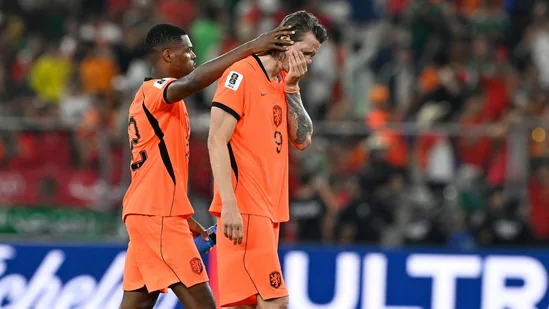
Europe’s sway weakens as Germany and the Netherlands face dramatic World Cup exits
Bharatmorningnews.com – Europe’s sway weakens as Germany and the Netherlands, two of the continent’s most storied football nations, were dramatically eliminated from the 2026 World Cup in penalty shootouts. This unexpected turn of events has shaken the traditional narrative of European dominance, as both teams fell to underdog squads—Paraguay and Morocco—highlighting a seismic shift in the global football landscape. The results signal that the competition is no longer confined to Europe’s top-tier teams, with emerging nations proving their mettle in high-pressure knockout stages.
A Stunning Fall for Germany
Germany’s exit came in a penalty shootout against Paraguay, a team that has historically struggled to compete with Europe’s giants but demonstrated remarkable composure in the final moments. The match, which ended 1-1 in regulation time, saw Germany’s possession-heavy approach falter under the weight of tactical precision from their opponents. Despite a late goal by Florian Wirtz and Kai Havertz’s header, the German team’s inability to secure a decisive win left them vulnerable to the penalty round.
Paraguay’s goalkeeper, Orlando Gill, played a pivotal role in the shootout, making critical saves that kept their hopes alive. However, it was the defense that truly shone, with Jose Canale, Gustavo Gomez, and Gill forming an unbreakable wall against Germany’s attacking threats. The VAR decision to overturn a goal in the second half added to the tension, as it forced Germany into a scenario where their famed technical skills would be tested in the most unforgiving format of the tournament.
Morocco’s Rise Challenges European Powerhouses
The Netherlands’ elimination by Morocco was equally dramatic, as the North African team staged a stunning comeback to clinch a 3-2 shootout victory. Morocco’s resilience was on full display, with their late equalizer by Issa Diop turning the tide after a seemingly comfortable lead for the Netherlands. The final moments of the match were electrifying, as Morocco’s Chemsdine Talbi delivered a hopeful cross that Diop headed home, silencing the stadium and setting the stage for a nail-biting penalty battle.
Morocco’s goalkeeper, Yassine Bounou, became the hero of the shootout, denying Crysencio Summerville with a crucial save before Ismael Saibari sealed the win. This marked Morocco’s first appearance in the World Cup’s last 16, a historic milestone that underscores the growing influence of African teams in the global football arena. The Netherlands, despite their 80% possession and tactical brilliance, were unable to convert their opportunities into a decisive margin, further emphasizing Europe’s waning control in the competition.
Knockout Drama Redefines Football’s Future
The World Cup 2026 knockout stage has become a battleground where underdogs can dismantle even the most formidable European sides. Both Germany and the Netherlands, known for their attacking flair and defensive discipline, were exposed in the final moments, where the margin between victory and defeat is razor-thin. The pressure of the shootout tested their mental fortitude, revealing that technical excellence alone is no longer enough to secure progression.
Paraguay’s efficient execution in the penalty round, with four saves from their defending trio, showcased the importance of composure under pressure. Similarly, Morocco’s ability to adapt and capitalize on their chances highlighted the strategic depth of teams that once considered themselves outsiders. These victories have sent ripples through the football world, suggesting that the next generation of teams may not need to rely on Europe’s traditional strength to succeed on the global stage.
A New Era for Global Football
The outcomes of these matches have already begun to reshape expectations for the World Cup 2026. Europe’s sway weakens as Germany’s exit marked the end of an era for the continent’s once-unbeatable teams, while Morocco’s triumphs represent a bold statement from Africa’s growing football power. The tournament’s structure, which allows for dramatic underdog stories, has become a catalyst for change, with teams from other continents gaining confidence in their ability to challenge European dominance.
As the World Cup progresses, the lessons from these matches will undoubtedly influence how teams approach the knockout stage. Europe’s traditional strength in possession and technical play will need to be complemented by resilience and tactical flexibility to thrive in a more competitive global environment. The 2026 World Cup is proving to be a turning point, where the old order is being challenged by teams that have mastered the art of high-stakes football.
Implications for European Football
Europe’s sway weakens as Germany’s and the Netherlands’ exits have sparked a wave of reflection within the continent’s football community. Analysts are questioning whether the overreliance on possession-based strategies has left European teams unprepared for the unpredictable nature of knockout football. The ability to convert chances, manage pressure, and perform in critical moments is now as vital as technical skill, a lesson that will shape future training and tactics.
With both Germany and the Netherlands eliminated in dramatic fashion, the 2026 World Cup has become a platform for emerging nations to showcase their capabilities. The tournament’s inclusivity and the lack of rigid boundaries between continents have allowed teams like Paraguay and Morocco to rise, challenging the perception that European teams are the sole contenders for success. As the competition continues, the stage is set for a new era of football, where the world’s best teams, regardless of their origin, will have to adapt to a more balanced global landscape.