
Why women’s household work deserves economic recognition
Why Women’s Household Work Deserves Economic Recognition
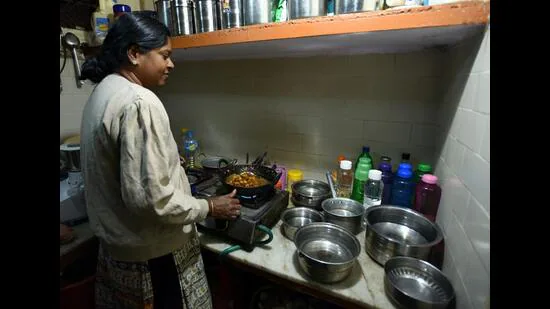
Bharatmorningnews.com – Why women’s household work deserves economic recognition has become a pressing issue as global conversations on gender equality gain momentum. India’s Supreme Court recently addressed this topic in a groundbreaking ruling, assigning a monthly value of ₹30,000 to the unpaid labor of homemakers. This decision not only highlights the critical role of women’s domestic work in sustaining families but also underscores the need to integrate it into national economic frameworks, ensuring it is acknowledged as a vital component of productivity.
The Unseen Contribution of Women in Domestic Labor
Women’s household work is often undervalued despite its profound impact on household stability and economic output. Data from the 2019 and 2024 Time Use Surveys reveal a stark disparity: women in India spend nearly eight times the hours on caregiving and domestic chores compared to men. This imbalance is not just a personal burden but a systemic issue that affects labor participation, economic growth, and the overall productivity of the workforce. By recognizing this contribution, societies can begin to shift from viewing domestic labor as a secondary role to seeing it as an essential economic activity.
Gendered Labor Patterns and Economic Disparities
The 2023 Nobel Prize in Economics was awarded to Claudia Goldin, whose research on gendered labor patterns has shed light on the role of “greedy jobs” in perpetuating inequality. Her work shows how high-paying professions, which demand long hours and intense commitment, have historically discouraged women from entering the formal economy. This trend is now evolving as gig work platforms emerge, offering flexibility but often requiring women to balance unpaid domestic responsibilities with professional demands. The economic implications of this shift are significant, as women’s household work becomes a critical factor in shaping labor market dynamics.
Why women’s household work remains largely invisible in economic discussions is due to entrenched cultural norms that prioritize domestic duties over paid labor. These norms, rooted in traditional gender roles, have persisted even in modern societies, where women are increasingly entering the workforce. The result is a double burden: women contribute to both the formal and informal economies, yet their labor is often not accounted for in national productivity metrics. Addressing this gap requires a reevaluation of how economic value is measured and how policies support women’s dual roles.
Empowering Women Through Policy Reforms
Recent statistics from the Periodic Labour Force Survey further emphasize the disparity. Only 30.7% of women in India are currently employed or seeking employment, compared to 59.1% of men. This gap has broader implications for the nation’s economic performance. For example, the World Bank notes that India’s per capita GDP lags behind China by 59%, yet the per worker productivity deficit is smaller, at 47%. This suggests that unlocking women’s economic potential could significantly narrow the growth gap, as their unpaid labor contributes to household productivity and overall economic stability.
Why women’s household work deserves recognition is also tied to the broader movement for equitable economic participation. The Supreme Court’s ruling serves as a catalyst for policy reforms that could redefine how unpaid labor is valued. Governments must take steps to formalize domestic work through measures such as parental leave, flexible work hours, and childcare support. These initiatives would not only reduce the burden on women but also enable them to contribute more effectively to the formal economy, fostering a more inclusive and productive society.
Moreover, the recognition of women’s household work can lead to more equitable distribution of labor within households and across society. By valuing this work economically, we can challenge the notion that domestic responsibilities are solely a woman’s burden. This shift in perception could encourage men to take on more caregiving roles, further reducing the time women dedicate to unpaid labor. Such changes would enhance women’s opportunities in the workforce and create a more balanced approach to economic and domestic responsibilities.