
We Are All Trying Here director on making Koo Kyo Hwan, Oh Jung Se and Park Hae Joon heartbreakingly human | Interview
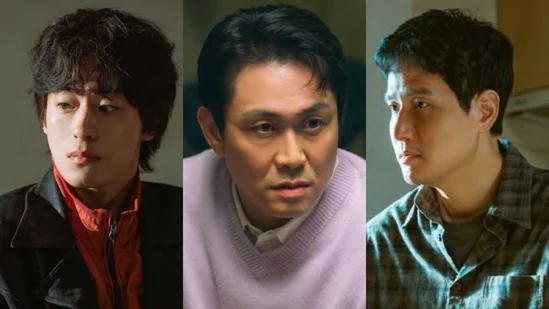
We Are All Trying Here: Director Cha Young Hun on Crafting Emotional Depth in K-Drama
A Departure from Traditional Thrills
Bharatmorningnews.com – Unlike mainstream television, which thrives on professional success, the JTBC and Netflix series We Are All Trying Here took a different route by focusing on the quiet, introspective struggles of its characters. Over the course of 12 hours, the show lingered on themes of self-doubt, unmet expectations, and the silent burdens of male solitude. Through its stellar trio of male leads—Koo Kyo Hwan, Oh Jung Se, and Park Hae Joon—it explored how men navigate the crushing weight of feeling inadequate.
The narrative centers on Hwang Dong Man (Koo Kyo Hwan), an aspiring film director who has yet to achieve success after two decades of effort. As the sole member of his university film club “The Eight” without notable accomplishments, he masks his vulnerabilities with relentless talk. Eventually, he finds solace in Byeon Eun Ah (Go Youn Jung), a driven film producer grappling with her own emotional wounds.
Emotional Layers in the First Scene
In the second part of an exclusive interview with director Cha Young Hun, the filmmaker shared insights into the show’s nuanced portrayal of human emotion. One pivotal moment, which set the tone for Dong Man’s emotional arc, was carefully crafted to evoke discomfort in viewers.
“This was the first scene that explained the root of Dong Man’s patheticness,” Cha Young Hun said. “It may have made viewers feel uneasy in Episode 1, so I spent a lot of time refining it during filming.”
To convey Dong Man’s internal conflict, Cha Young Hun emphasized the importance of layered expressions. He explained, “I wanted viewers to empathize with Dong Man’s pain as he pushes himself to the brink, thinking, ‘If I can’t prove my value through brilliance, I’ll show it through collapse.’” The director and actor Koo Kyo Hwan discussed avoiding a single emotional dimension, instead capturing the complexity of Dong Man’s struggle. Though the scene couldn’t be used due to copyright, it was filmed while listening to Gilbert O’Sullivan’s “Alone Again,” a track that blends cheerful rhythm with profound melancholy.
The Weight of Emotional Hunger
Cha Young Hun described hunger in the series as more than a physical need—it became a metaphor for emotional yearning. “In this show, hunger symbolizes Dong Man’s relentless fight to overcome the void created by self-loathing and shame,” the director noted.
To emphasize this, he designed moments where Dong Man’s eating habits felt unnatural. “I wanted viewers to see him as someone desperately consuming food, almost as if he were weeping.” Unsettling combinations, like scooping rice with a paddle or dipping yakgwa in gochujang, heightened the sense of desperation. The more heart-wrenching these scenes were, the more Cha Young Hun believed the later shared meals with Eun Ah or his brother would contrast powerfully.
Contrasting Loneliness in Brothers
Cha Young Hun highlighted the distinct emotional landscapes of two brothers in the series. “Both Dong Man and Jin Man are battling their own sense of worthlessness,” he explained. “Yet their loneliness takes different forms.”
“If Dong Man’s isolation is a fiery, restless despair—desperation to prove himself to the world—then Jin Man’s is a colder, resigned emptiness. Even the word ‘loneliness’ feels inadequate for Jin Man’s state,” Cha Young Hun said.
Visually, this difference was reflected in their portrayals. Dong Man’s emotions were dynamic, while Jin Man’s were captured in a more subdued, static style. Similarly, their dialogue patterns varied: Dong Man poured his feelings out, while Jin Man delivered them with sharp, abrupt force. Cha Young Hun described the sibling bond as “a mix of affection and unspoken tension, where love is expressed through quiet gestures rather than words.”