
Trying and testing Ember: What worked, what didn’t and whether this cookware brand suits a family of one
Ember Cookware: A Two-Week Test in a One-Person Kitchen
Bharatmorningnews.com – Ember’s sage-green cookware has become hard to miss on social media, where polished kitchen videos and food creators have helped turn the brand into a familiar name. The visual appeal is clear, but cookware has to earn its place beyond an Instagram feed. After two weeks of daily use, the Ember starter kit proved useful in different ways, with one piece becoming an immediate favourite and another demanding considerably more patience.
The starter kit included three items: a Ceramic Frypan, a Titanium-Clad Cast Iron Tawa and a SuperPan. In a kitchen used by one person, all three were put into regular rotation, from hurried breakfasts and late-night snacks to bread toast and attempts at uttapam.
A lightweight frypan for quick everyday meals
The Ceramic Frypan was the easiest item to adopt. At roughly 700 grams, it feels light in the hand, is uncomplicated to wash and suits small, frequent cooking jobs. It became especially useful for midnight Maggi, egg bhurji between morning meetings and quick desi macaroni lunches.
Its Arcilla ceramic surface kept sticking to a minimum and did not require much oil. Onions and garlic browned well with about a teaspoon of oil, making it practical for everyday cooking where convenience matters as much as cleanup. For a household of one, a pan that can move quickly from stove to sink without feeling heavy is a meaningful advantage.
That ease comes with some care requirements. Metal spatulas and other hard utensils should be avoided in favour of wooden or silicone tools. Steel scrubbers can damage the cooking surface, so gentle hand washing is the better choice. The frypan also performs best over low or medium heat rather than intense heat.
It is important to let the pan cool before rinsing it. Cold water on a hot ceramic surface can affect the coating over time. These are not difficult habits to build, though they may feel restrictive for cooks accustomed to tougher stainless-steel cookware.
The cast-iron tawa has a steeper learning curve
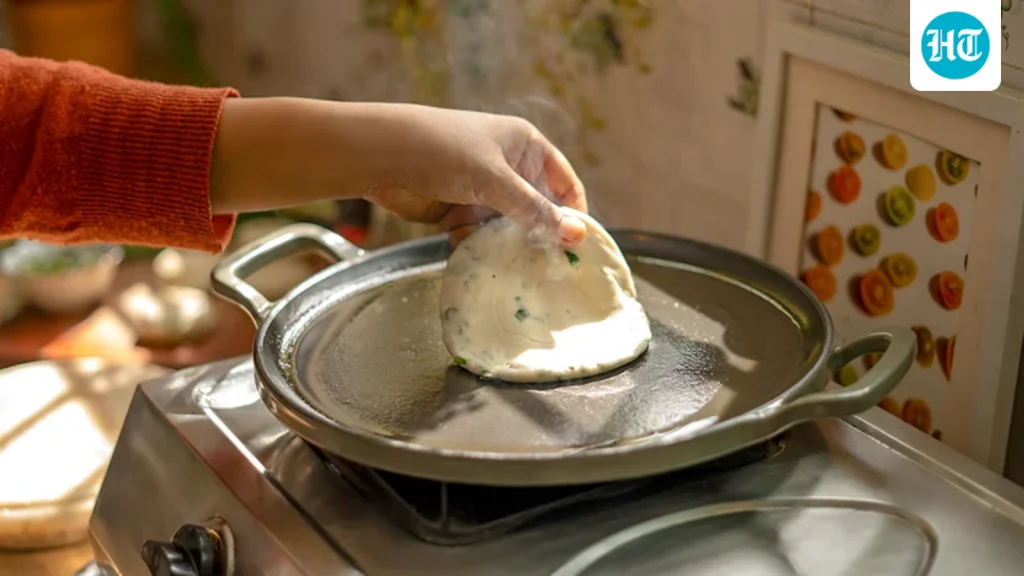
The 30 cm Titanium-Clad Cast Iron Tawa required more trial and error. Cast iron often rewards technique and familiarity, and this tawa was no exception. At around 2.7 kg, it is substantial, large enough for rotis, parathas, uttapams and sliced bread, but not especially convenient to wash after every use.
In the first week, toast was a frustrating exercise in uneven browning. One side of a bread slice would colour beautifully while the other remained noticeably pale. A small adjustment changed the result: pressing the bread down with a spatula for around 10 seconds produced much more even, attractive browning.
Uttapams delivered similarly mixed results. One attempt came out crisp and golden, with vegetables cooked neatly into the batter. Another breakfast was far less successful, despite trying more oil, cold water and other adjustments. The inconsistency may have had as much to do with the batter as the tawa itself, but it underlined the fact that cast iron is not always instantly forgiving.
The tawa’s size and heat retention are both benefits and challenges. It stays hot for longer after cooking, which can be useful for maintaining heat but calls for caution when handling it. Its two short side handles become extremely hot on the stove, making a cloth or suitable protection essential.
For routine care, a thin coating of oil before cooking and low to medium heat are helpful starting points. Food should be allowed to release naturally instead of being aggressively scraped from the surface. Warm water and mild soap are suitable for washing, while boiling water in the pan can help with a deeper clean before rinsing. Abrasive cleaners and steel wool should stay out of the routine.
Because washing a heavy tawa repeatedly can feel cumbersome, it may be tempting to leave it on the stove after wiping it gently with a paper towel. That approach is familiar to many cast-iron users, but good handling and regular care remain important if the pan is to become a dependable long-term piece.
A large pan fills an everyday kitchen gap
The SuperPan addressed a different need: a roomy kadhai-style pan that can also take on wok-like tasks. For a relatively new kitchen, that versatility can reduce the need for multiple large pans.
Its design challenges the usual expectations of non-stick cookware. The pan is uncoated but is intended to provide a non-stick cooking experience, while also being compatible with metal utensils. Ember describes it as having a layered stainless-steel body with NanoFusion, a titanium-enhanced surface engineered into the steel rather than placed on top of it.
“Layered stainless steel body, finished with NanoFusion — a titanium-enhanced surface engineered into the steel, not applied over it.”
That distinction matters for anyone wary of conventional non-stick coatings and their care limitations. A surface integrated into the steel suggests a different approach to durability, while metal-utensil compatibility can make the pan easier to use in a busy kitchen. Its larger capacity also makes it more useful for meals that go beyond a single serving, even if it is being used primarily by one person.
Who is Ember’s starter kit for?
For solo cooks, the Ceramic Frypan is the clearest success in this set. It is light, flexible and quick enough for the kind of informal cooking that happens throughout the day. The SuperPan appears designed to cover larger, more adaptable cooking tasks without relying on a traditional coating.
The cast-iron tawa is less of an instant recommendation for someone who wants effortless results from day one. It asks for attention, practice and comfort with a heavier pan. Yet its uneven early results do not necessarily make it a failure; cast iron tends to become more rewarding once a cook understands heat control, timing and food release.
Ultimately, the kit is most compelling for someone willing to match each piece to its purpose. The frypan handles speed, the SuperPan brings capacity and versatility, and the tawa offers a longer-term cooking project. For a family of one, that combination can make sense—provided there is room for a little patience alongside the appeal of a well-designed kitchen shelf.
Related Reading
Frequently Asked Questions
What is Trying and testing Ember?
Trying and testing Ember is the main topic of this guide. The article explains the context, practical details, and next steps readers should understand.
Why does Trying and testing Ember matter?
Trying and testing Ember matters because readers are looking for a useful answer, not just a short summary. Good content should match search intent and help them decide what to do next.