
‘They were not granted permission’: Shivaji Park resident files complaint over CJP protest in Mumbai
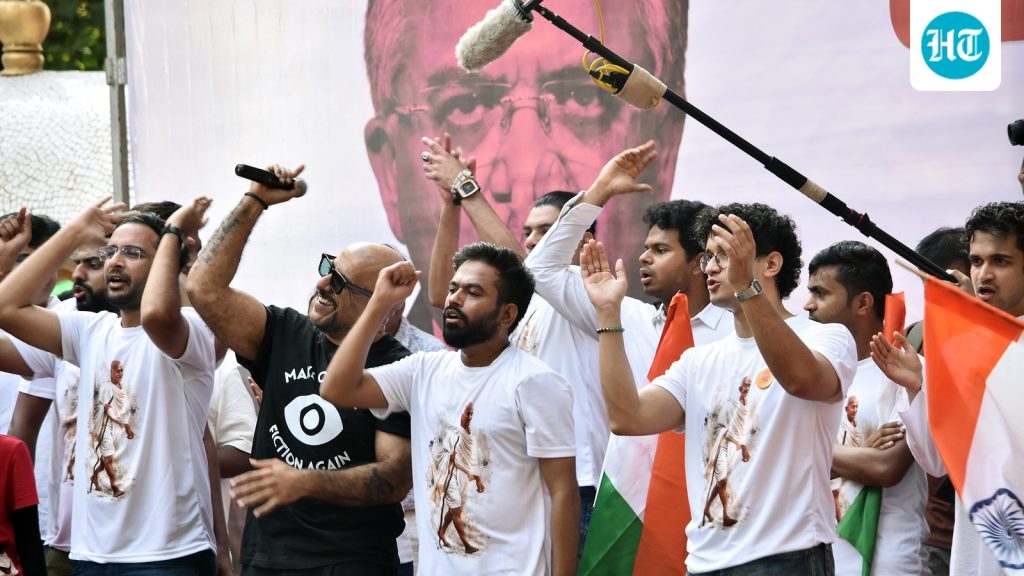
Complaint filed after Shivaji Park protest over Election Commission row
Bharatmorningnews.com – A Shivaji Park resident has approached Mumbai Police with a complaint against leaders of the Cockroach Janta Party (CJP), following a protest that went ahead despite the gathering not receiving permission for the location.
The demonstration targeted Chief Election Commissioner Gyanesh Kumar and was presented by CJP founder Abhijeet Dipke as the opening stage of a wider nationwide campaign. Protesters have raised questions about electoral rolls and sought greater accountability from the Election Commission.
Advocate Siddhi Deolekar, who has lived in Shivaji Park for a decade, said she supported the general right of citizens to demonstrate but objected to the choice of venue. She said the area’s residents had concerns about road access, traffic and security when protesters assembled near homes.
“I have lodged a complaint against the CJP founders for conducting an illegal protest today.”
Deolekar said Shivaji Park Police Station had issued a letter to Ajinkya Shinde denying permission for the event. In her view, proceeding on the road despite that decision conflicted with the Bombay high court position cited by police while considering the request.
Her objection was not framed as opposition to public dissent itself. Instead, she argued that demonstrations should be held at locations intended for them, rather than on roads in residential areas. She pointed to Azad Maidan in Mumbai and Jantar Mantar in Delhi as places where participants could voice their demands without affecting nearby households and daily movement to the same extent.
“Everyone has the right to protest, but there are designated places for protests.”
She questioned why a protest calling for the Election Commissioner’s resignation had to take place near residents’ homes. Deolekar said blocking roads, slowing traffic and staging a sit-in outside private residences created avoidable disruption for people who were not directly involved in the political dispute.
The Mumbai Police had denied permission for the Shivaji Park gathering days before it was held. The concerns cited included possible noise pollution, congestion on surrounding roads and interference with movement in the neighbourhood. After the refusal, Dipke announced a “Jail Bharo Andolan” at the same venue, a form of protest in which participants invite arrest to underline their demands.
Residents seek reassurance from police
Deolekar said several local citizens had contacted police and sought help as the protest unfolded. She thanked the force for responding to those concerns and said residents wanted reassurance that they would be safe and assisted.
“We simply needed assistance and wanted to feel secure.”
She said she hoped authorities would take suitable action in response to the complaint. The episode places attention on the balance between the constitutional freedom to protest and restrictions imposed to manage public order, traffic and the impact of large gatherings on local communities.
For residents around Shivaji Park, the issue is not limited to the political message being advanced. The immediate concern is whether an event can be held at a busy and residential location after permission has been refused, especially when police have identified practical risks connected with access and crowd movement.
Demands tied to electoral-roll controversy
CJP’s protest is linked to a broader dispute surrounding the functioning of the Election Commission and decisions involving electoral rolls. Dipke has alleged irregularities and called for stronger scrutiny of the institution’s work.
The controversy intensified after claims that objections had been recorded by Sandhu and Joshi over several poll-panel decisions during a 10-month period. The issues said to have been raised included changes concerning Form 6, centralised access to the electoral-roll database, and choices relating to voter additions, deletions and restoration. Concerns were also connected with the Special Intensive Revision, or SIR, exercise.
Opposition parties have used those developments to demand Kumar’s resignation and have sought intervention by the Supreme Court. Their criticism has focused on questions about how the poll panel reached decisions and whether internal views were adequately reflected in the process.
The Election Commission has rejected the idea that the objections indicated institutional failure or an absence of agreement among commissioners. It has said that different observations and suggestions are a normal feature of discussions within a constitutional body made up of multiple members.
The commission has also maintained that its final decisions, including those involving SIR, were unanimous. In a later statement, the Election Commission said all three commissioners had approved the decisions related to the exercise, seeking to counter suggestions of division within the body.
Parallel protest activity in Delhi
Demonstrations on the same issue have also taken place at Jantar Mantar in Delhi, where student activists and Aam Aadmi Party leaders have called for Kumar to step down. The Delhi protest illustrates that the dispute has moved beyond Mumbai and has become part of a larger political mobilisation.
More than 500 people were detained in Delhi, including AAP leaders Atishi and Sanjay Singh. Efforts were also made to detain Neha Bora, president of the All India Students’ Association.
The Mumbai complaint and the Delhi detentions show how the electoral-roll controversy is being expressed through both political campaigns and street protests. In Mumbai, the next focus will be on how police address the complaint and whether any action follows the unauthorised gathering at Shivaji Park.
Related Reading
Frequently Asked Questions
What is They were not granted permission?
They were not granted permission is the main topic of this guide. The article explains the context, practical details, and next steps readers should understand.
Why does They were not granted permission matter?
They were not granted permission matters because readers are looking for a useful answer, not just a short summary. Good content should match search intent and help them decide what to do next.