
Trump threatens 100% tariff on countries charging digital services tax: Will India be affected?
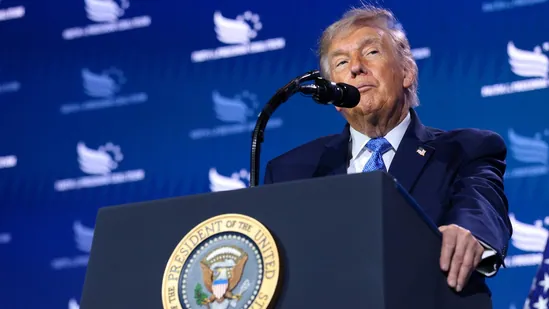
Trump Threatens 100% Tariff on Digital Services Tax Countries: India’s Stakes
Global Trade Tensions Intensify
Bharatmorningnews.com – US President Donald Trump has escalated trade tensions by announcing a potential 100% tariff on goods from countries that impose digital services taxes on American businesses. The move, announced in a recent statement, aims to pressure nations into repealing such levies, which Trump claims unfairly target U.S. firms. This threat comes amid ongoing debates over how digital services taxes could reshape international trade dynamics and impact economies like India’s.
“Any country that imposes a digital services tax will immediately be met with a 100% tariff on all goods sent to the United States,”
Trump declared, signaling a hardline approach to protect American companies from what he views as excessive taxation. The statement suggests that trade agreements with these countries could be invalidated, further complicating global commerce.
Trump’s warning is part of a broader strategy to address what he calls “unfair trade practices” by foreign nations. The digital services tax, a levy on revenue generated by digital platforms, has been a point of contention for the U.S. since its introduction in 2023. While the policy targets tech giants, Trump argues it creates a financial burden on American exporters, prompting a retaliatory measure.
India’s Digital Services Tax Landscape
India, a key market for U.S. technology firms, recently revised its digital services tax framework. Under the Finance Act, 2024, the country eliminated the 2% Equalisation Levy on non-resident e-commerce operators and removed the 6% digital services tax on advertising revenue from foreign companies as of April 1, 2025. These changes reflect India’s efforts to balance tax policy with the interests of global businesses.
The digital services tax, initially dubbed the “Google Tax,” was first introduced in 2016 to ensure that digital companies operating in India contribute to the country’s tax base. It applies to firms like Alphabet Inc. and Meta Platforms, Inc., which generate significant income from Indian users. By revising these taxes, India aims to attract more investment while maintaining its fiscal autonomy.
India’s decision to revise its digital services tax has drawn attention from global policymakers. Trump’s threat of 100% tariffs on countries imposing similar taxes raises concerns about how India’s policies might affect its trade relations with the U.S. Analysts suggest that the move could either strengthen India’s position in international trade or risk a punitive response from the Trump administration.
EU’s Trade Pact and Digital Services Tax Controversy
The backdrop to Trump’s latest tariff threat is the recent EU-US trade agreement, which caps tariffs on European goods at 15%. However, digital services taxes were excluded from the deal, leaving them as a sticking point between the two blocs. This omission highlights the growing divide over how digital revenue should be taxed globally.
France, a prominent advocate for digital services taxes, has faced Trump’s ire before. Earlier in 2023, the U.S. threatened to impose a 100% tariff on French wine and champagne if the country did not remove its digital tax on tech firms. Now, Trump is extending this policy to a wider range of countries, including those with similar digital tax frameworks.
As part of the EU’s broader economic strategy, the digital services tax is seen as a way to ensure that tech giants pay their fair share of taxes. Trump’s threat of 100% tariffs on these countries underscores the tension between the U.S. and its allies in shaping the global tax landscape. The EU has vowed to respond swiftly to protect its regulatory authority.
India’s Potential Impact and Strategic Considerations
India’s tax reforms have positioned it as a more attractive destination for global technology firms. By removing the 6% digital services tax on advertising revenue, the country signals a willingness to adapt its policies to foster innovation and investment. However, Trump’s threat of 100% tariffs could create uncertainty for Indian businesses operating in the U.S. market.
Experts warn that a 100% tariff on Indian exports could significantly affect the country’s trade balance. India is a major exporter of goods like textiles and pharmaceuticals, which are heavily reliant on U.S. markets. While the digital services tax primarily targets services, the broader tariff threat could have cascading effects on India’s economic growth and international partnerships.
India’s government has yet to publicly comment on Trump’s threat, but it is likely aware of the potential risks. The country’s trade ministers have emphasized the need to negotiate favorable terms with the U.S. to mitigate the impact of such a policy. This situation underscores the delicate balance between regulatory autonomy and trade cooperation in the global economy.
Broader Implications for International Trade
Trump’s threat of 100% tariffs on digital services tax countries could set a precedent for future trade policies. By targeting specific taxes, the U.S. is seeking to influence how other nations structure their fiscal systems. This approach might lead to a new era of trade negotiations centered around digital taxation, with India and the EU being key players.
The digital services tax has sparked a global conversation about the future of taxation in the digital age. Countries like the UK, Spain, and Austria have also implemented similar measures, creating a patchwork of regulations that could complicate business operations. Trump’s response to this growing trend highlights the U.S.’s desire to maintain control over trade agreements and tax policies.
As the global trade landscape evolves, the interplay between tariffs and digital services taxes will shape economic strategies for years to come. India’s recent tax reforms, coupled with its strategic importance in the global market, make it a prime candidate for scrutiny in this new trade climate. The outcome of these tensions will determine how nations navigate the complexities of digital taxation and international trade.