
‘Sorry, I hit your car’: Indian woman in New Zealand says stranger’s note restored her faith in people
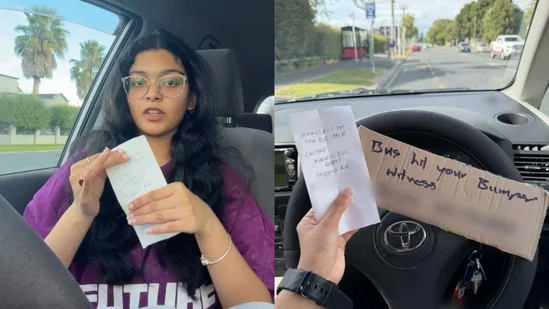
Sorry I Hit Your Car: Indian Woman in New Zealand Finds Hope in Stranger’s Note
Bharatmorningnews.com – When Shreeya Gupte, an Indian woman living in New Zealand, returned to her parked car one evening to find a handwritten note on the windshield, she was initially startled. The message—“Sorry, I hit your car”—was a simple yet profound gesture that not only clarified the accident but also restored her faith in humanity. Gupte shared the moment on Instagram, capturing the heartwarming encounter that has since sparked a wave of positive reactions online.
A Moment of Unexpected Kindness
The incident occurred near Gupte’s university, where she had left her car earlier that day. As she arrived to find the note, her first thought was that the damage might be the result of a hit-and-run, especially given the bustling environment of the campus. However, the note, penned by a bus driver who had accidentally struck her vehicle, offered a clear explanation and an apology. The driver, who took the time to write the message, also included contact details to ensure Gupte could reach out if needed.
What truly moved Gupte was the additional note left by a passerby who witnessed the event. This stranger, unaware of the driver’s identity, took the initiative to detail the incident and provide further contact information, creating a chain of kindness that left her emotional. “It became one of the nicest experiences I’ve had in New Zealand,” she said, reflecting on how the act of honesty and compassion had unexpectedly softened her perspective on strangers.
The Power of a Single Note
Gupte’s video quickly gained traction, with viewers captivated by the simplicity and sincerity of the message. The phrase “Sorry I hit your car” became a symbol of hope, resonating with people who had experienced similar moments of vulnerability. The story highlighted a broader theme of trust and kindness in a society often perceived as fast-paced and impersonal. Social media users praised the bus driver’s transparency and the stranger’s thoughtfulness, with many calling the incident a reminder of the goodness that still exists in the world.
The note’s impact extended beyond Gupte’s personal experience. It ignited conversations about the role of small acts of kindness in rebuilding confidence in human connections. Commenters noted that the gesture was not only a personal apology but also a collective affirmation of community support. “This is exactly what the world needs more of: honesty,” one user wrote, while another added, “New Zealand is a place where people truly value sincerity.” These reflections underscored the universality of the moment, as others shared their own stories of similar encounters.
Gupte’s account also brought attention to the cultural context of her experience. As an Indian expatriate in a foreign land, she had previously felt cautious about interactions with strangers. The incident, however, proved to be a turning point. “It’s amazing how a single note can change your perception of someone you’ve never met,” she explained, emphasizing the emotional weight of the gesture. The message not only resolved a potential conflict but also created a sense of belonging and appreciation for the unexpected kindness of others.
Following the viral response, Hindustan Times reached out to Gupte for more details. She described how the act of the bus driver and the passerby had transformed a potentially frustrating situation into a celebration of human connection. “The idea that someone would take the time to apologize and offer help is rare,” she said, highlighting the significance of the moment. The story has since been shared widely, with many hoping it inspires similar acts of generosity in their own lives.
As the story continues to spread, it serves as a testament to the power of small, thoughtful actions. In a world where negativity often dominates headlines, Gupte’s experience reminds us that kindness can flourish even in the most unlikely of circumstances. The phrase “Sorry I hit your car” may have been just a few words, but it carried the weight of a message that resonated far beyond the confines of her vehicle. For Gupte, it was a glimpse of hope in an unfamiliar environment, and for others, it was a validation of the importance of honesty and compassion in everyday interactions.