
Sona Mohapatra says backlash for sexualised depiction in Peddi forcing filmmaker to apologise has given her hope
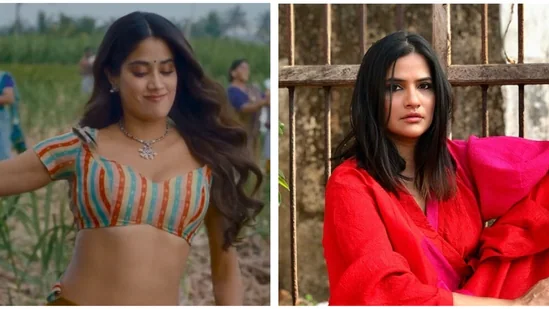
Sona Mohapatra’s Backlash for Sexualised Depiction in Peddi Sparks Hope
Bharatmorningnews.com – Sona Mohapatra, a prominent figure in South Indian cinema, has expressed renewed optimism after the backlash against the sexualised portrayal of women in *Peddi* compelled its director to issue an apology. The controversy surrounding the film, which stars Janhvi Kapoor as Achiyyamma, has ignited a broader discussion about the representation of female characters in mainstream Indian cinema. Mohapatra, who has long advocated for more nuanced storytelling, highlighted how this response has validated her efforts to challenge traditional gender norms in the industry.
A Catalyst for Change
The film’s depiction of its heroine has drawn sharp criticism for objectifying her, with audiences arguing that her role is reduced to a visual spectacle rather than a multidimensional character. Mohapatra, who recently shared her reflections on social media, emphasized the importance of such audience-driven reactions. “This time, the people are holding filmmakers accountable,” she stated. “The backlash for sexualised depiction in *Peddi* is a sign that we’re on the right track to demand better representation.”
“In many cases, misogyny triumphs at the box office because the story is secondary. Filmmakers prioritize patriarchal narratives, adding objectification and stripping women of agency,” Mohapatra added. “But this time, the audience is holding them accountable.”
The controversy has also sparked a dialogue about the intersection of commercial success and critical acclaim. While *Peddi* remains a box office hit, grossing over ₹200 crore globally, the incident has forced creators to reconsider their approaches. Mohapatra’s comments align with growing awareness of how cinematic portrayals shape societal attitudes, particularly in a region where gender dynamics are often reinforced through media.
Critics and Cultural Shifts
The backlash for sexualised depiction in *Peddi* has not only caught the attention of fans but also critics and industry insiders. Many have noted that the film’s narrative follows a familiar pattern: the male lead is the central focus, while the female character is framed as a decorative element. This formula, which has persisted in numerous Telugu films, has now faced scrutiny from a vocal segment of the audience.
“The director has finally acknowledged the issue, which is a step forward,” Mohapatra remarked. “The backlash for sexualised depiction in *Peddi* shows that change is possible when audiences speak up.”
Her advocacy has also been tied to her involvement in the queer film festival Kashish, where she will perform soon. This event, which celebrates diverse narratives, has become a platform for her to amplify her message. Mohapatra believes that the growing number of such festivals and platforms is crucial in fostering a more inclusive cinema landscape. “We need more spaces where stories are told with respect and depth,” she said.
Industry Response and Future Implications
The director of *Peddi*, Buchi Babu Sana, issued a public apology, acknowledging the audience’s concerns. “As a filmmaker, I believe cinema should entertain, inspire, and connect. It must never make viewers feel uneasy or disrespected,” he wrote. “If any part of the film has been interpreted as objectifying, we respect those feelings and sincerely apologize.” This statement reflects a growing willingness among creators to address gender-related critiques.
While the apology is a positive sign, it also raises questions about how deeply the industry is committed to change. Mohapatra’s comments suggest that the backlash for sexualised depiction in *Peddi* is part of a larger movement. “This isn’t just about one film—it’s about a system that has long prioritized male gaze over women’s agency,” she explained. The incident has also prompted discussions about the role of social media in amplifying such critiques and influencing film trends.
“The backlash for sexualised depiction in *Peddi* is a reminder that cinema can be a mirror to society. When audiences react, it challenges filmmakers to rethink their choices,” Mohapatra added. “It’s a small victory, but it’s a start.”
As the conversation continues, the film’s success has also highlighted the tension between commercial appeal and social responsibility. While *Peddi* has achieved significant revenue, its critics argue that the narrative should evolve to reflect contemporary values. Mohapatra’s voice, now amplified by the backlash, offers a glimpse of what a more equitable cinematic future might look like.
About the Author
Santanu Das, a Senior Content Producer at Hindustan Times, has spent over five years exploring the evolving landscape of South Asian cinema. His work often delves into independent films and their role in challenging mainstream narratives. He has attended prestigious events like Sundance and CPH: Docx, and contributes to the monthly column *The Fault in Our Stars*.
A graduate of Banaras Hindu University with a postgraduate degree in English from Jadavpur University, Santanu is also a Rotten Tomatoes-certified film critic. In his free time, he enjoys reading and is an avid fan of works such as *Aparajito*, *Ponyo*, and *The Double Life of Veronique*. His favorite literary reads include *The Corrections*, *The God of Small Things*, and *A Room of One’s Own*.