
Sona Mohapatra says all heartbreak songs in Bollywood are ‘reserved for men’, gives example of Arijit Singh’s Zaalima
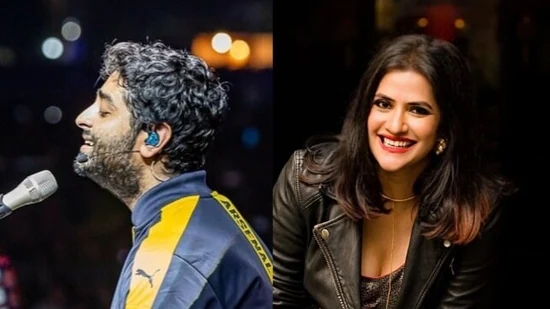
Sona Mohapatra: Bollywood’s Heartbreak Songs Favor Men
Bharatmorningnews.com – In a recent critique of the Bollywood music industry, singer and actor Sona Mohapatra sparked conversation by highlighting a perceived bias in how heartbreak themes are portrayed. With her focus on gender dynamics in art, Mohapatra argues that the emotional weight of romantic and painful songs is disproportionately assigned to male artists. This insight comes as part of a broader discussion about the evolving roles of women in Indian cinema, where their contributions are often overshadowed by traditional narratives. The key point remains clear: Mohapatra says all heartbreak songs in Bollywood are *reserved for men*, a trend she attributes to systemic trends rather than individual preferences.
Arijit Singh’s Zaalima as a Symbol of the Pattern
During a video clip shared on her Instagram page, Mohapatra pointed to Arijit Singh’s hit *Zaalima* from the 2017 film *Raees* as a prime example of this male-centric structure. The song, performed by Singh and Harshdeep Kaur, features Shah Rukh Khan and Mahira Khan in the music video, but Mohapatra emphasized how the lyrical flow and emotional climax are dominated by the male voice. “Men experience love, men feel heartache,” she remarked. “Every time I was asked to sing a duet, I ended up with the final chorus. You should listen to *Zaalima*—it’s Arijit Singh’s work, and I was surprised to be the one singing the closing lines.”
“Why is the male voice taking the lead? My question to Pritam was, ‘Is the man writing love for himself?’ What kind of duet is this? Why do I always come in the end? This is a literature festival, and freedom of speech is something Kerala champions. I’m using this platform to raise my voice. The system, not individuals, is risk-averse.”
Heartbreak as a Gendered Narrative
Building on her critique, Mohapatra expanded the discussion to broader industry practices. She argued that the way heartbreak is depicted in Bollywood music reflects a deeper cultural bias, where women’s emotional experiences are sidelined in favor of male-centric storytelling. This sentiment echoes a growing movement among female artists to challenge the notion that heartbreak is inherently a male domain. Mohapatra says all heartbreak songs in Bollywood are not just reserved for men but also reinforce stereotypes about gender roles in love and loss. By spotlighting *Zaalima*, she draws attention to how even when women are included in songs, their roles are often secondary to the male lead.
The comments section of her post further elaborated on this theme. Mohapatra noted that if the industry continues to focus on male-driven romantic narratives, it risks diminishing the visibility of female voices. She pointed out that over two decades, 80–90% of the most iconic romantic stories have been centered around men, making it harder for women to achieve similar cultural recognition. This observation aligns with her broader view that the music industry’s reluctance to embrace diverse perspectives limits the potential of female artists to create impactful work.
The Cultural Impact of Male-Centric Themes
Heartbreak songs have long been a cornerstone of Bollywood, but Mohapatra suggests their male-dominated nature stifles innovation. By framing love and loss as primarily male experiences, the industry perpetuates a narrative where women are either the object of affection or the secondary figure in emotional duets. Mohapatra says all heartbreak songs in Bollywood are not only assigned to men but also shaped by their perspectives, creating a cycle that favors traditional roles. This pattern may be subtle, but its cumulative effect is significant, influencing how audiences perceive and relate to female-driven stories in music and film.
The issue extends beyond individual songs, reflecting a larger trend in the industry’s approach to songwriting and vocal composition. Mohapatra’s critique encourages a reevaluation of how emotions are attributed and who gets to embody them. By questioning the structure of *Zaalima*, she invites listeners to consider the broader implications of gender representation in Bollywood music. This challenge has since sparked debates on social media, with many agreeing that the emotional core of songs often remains in the hands of male artists, despite the growing presence of women in the field.
Industry Trends and the Road Ahead
While Mohapatra’s comments are part of a growing awareness, the music industry still grapples with ingrained biases. Despite the increasing number of female artists gaining recognition, heartbreak remains a genre that often leans on male vocalists for its emotional intensity. Mohapatra says all heartbreak songs in Bollywood are not just a matter of artistic choice but a reflection of how power and visibility are distributed in the industry. This realization has prompted calls for more balanced representation, with some artists and producers beginning to experiment with female-led heartbreak narratives.
The future of Bollywood music may depend on how willing the industry is to change its structure. As Mohapatra’s critique highlights, the current system risks perpetuating stereotypes by defaulting to male voices for emotional depth. By challenging this norm, female artists can reshape how heartbreak is experienced and expressed in Indian cinema. This shift not only empowers women but also enriches the diversity of stories that the industry tells, ensuring that every voice—regardless of gender—has a place in the emotional landscape of Bollywood music.