
Second Sena split in 4 years: How Thackeray’s party is unravelling again
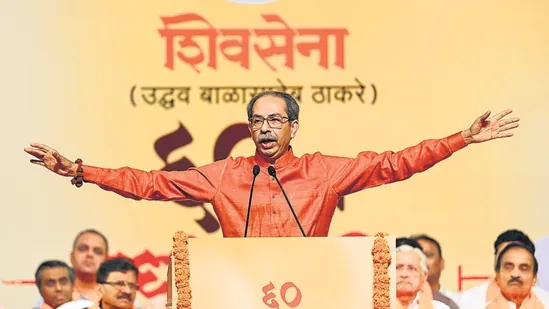
Second Sena Split in 4 Years: How Thackeray’s Party Is Unravelling Again
Current Split and Political Shift
Bharatmorningnews.com – The Second Sena split in 4 years has reignited tensions within Maharashtra’s political sphere, as Uddhav Thackeray’s faction faces a growing challenge from the Shinde-led rebel group. This latest division comes four years after Eknath Shinde’s initial departure, marking a recurring pattern of internal conflict. Six of the nine Lok Sabha MPs under Thackeray’s leadership reportedly sought to form an independent group, signaling a strategic shift toward aligning with the BJP-led NDA government. The move underscores the fragile state of the Shiv Sena’s unity, with the party now teetering on the brink of a deeper fracture.
At the heart of this split is the growing influence of Shinde’s faction, which has been actively working to consolidate its support. His son, Shrikant Shinde, has played a pivotal role in orchestrating the rebellion, facilitating discussions in Delhi that have led to the formation of the independent group. While the rebels aim to strengthen their political leverage, their actions have also created uncertainty within the party’s ranks, with some members choosing to distance themselves from Thackeray’s leadership. This situation reflects a broader struggle for power, as the Second Sena split in 4 years reshapes the party’s ideological and organizational structure.
Leadership Dynamics and Rebellion
Shinde’s faction has leveraged the anti-defection law to legitimize its defection, arguing that the two-thirds majority threshold is met by the six rebel MPs. This legal maneuver allows them to avoid disqualification while positioning themselves as a separate political entity. However, the rebels’ claim of autonomy has been met with skepticism from Thackeray’s supporters, who view the split as a calculated attempt to weaken the party’s core leadership. The deputy chief minister’s continued communication with the dissenters suggests a well-coordinated effort to challenge Thackeray’s authority, even as the party’s traditional base remains divided.
Thackeray’s frustration with the Second Sena split in 4 years has been evident in his public statements, which have increasingly criticized the party’s future direction. He has accused Shinde’s group of prioritizing alliances over ideological principles, particularly in their support for the BJP. Meanwhile, Sanjay Raut, a key figure in the rebel camp, has framed the split as a necessary step to ensure the party’s survival. His rhetoric highlights the ideological rift between the factions, with the rebels emphasizing their commitment to protecting Marathi interests while Thackeray’s supporters argue for a more inclusive approach.
Historical Context and Comparison
This latest split echoes previous divisions that have weakened the Shiv Sena over the years. The 2022 assembly split, which saw 40 MLAs defecting to Shinde, led to a dramatic reshaping of the party’s power dynamics. However, the Second Sena split in 4 years appears to be a more protracted process, reflecting deeper dissatisfaction with Thackeray’s leadership. Unlike the 2022 crisis, which culminated in Uddhav’s resignation within days, the current split has unfolded gradually, with the rebels maintaining a low profile before making their formal move.
Despite the challenges, the Shiv Sena has managed to retain a loyal base, as seen in the 2024 Lok Sabha elections. Team Uddhav secured nine seats, a testament to their ability to mobilize supporters even in the face of internal strife. Yet, the November 2024 Maharashtra assembly elections revealed a stark contrast, with Shinde’s faction capturing 57 seats from 87. This outcome highlights the evolving balance of power, as the Second Sena split in 4 years continues to influence electoral outcomes across the state.
Legal Framework and Disqualification
The anti-defection law, a critical component of India’s electoral system, has once again played a central role in the Shiv Sena’s internal turmoil. According to the Tenth Schedule of the Constitution, a member of a party can be disqualified if they vote against the party’s whip or abandon it voluntarily. The rebels have successfully applied this provision to avoid being labeled as defectors, but the law’s ambiguity has sparked debates about the party’s identity. The Supreme Court’s upcoming ruling on this issue could determine whether the rebels are considered a separate entity or still part of the Shiv Sena, with implications for future elections and alliances.
Legal scholars have noted that the Second Sena split in 4 years represents a strategic use of the anti-defection law to restructure the party. While the law was designed to prevent political instability, it has also become a tool for factions to assert independence. The case has drawn comparisons to past splits, such as the 2023 defection of Raghav Chadha’s group, which further eroded the party’s cohesion. As the legal battle unfolds, the Shiv Sena’s ability to maintain its identity will depend on how courts interpret the boundaries of party membership and defection.
Public Reaction and Media Analysis
The Second Sena split in 4 years has sparked a wave of public debate, with media outlets and analysts dissecting its impact on Maharashtra’s political landscape. Supporters of Thackeray argue that the split undermines the party’s legacy as a unified force for Marathi pride, while Shinde’s faction frames it as a necessary evolution to adapt to changing electoral realities. The media’s role in amplifying these narratives has further polarized public opinion, with some viewing the split as a betrayal of the party’s founding principles and others seeing it as a pragmatic step toward political survival.
Political commentators have drawn attention to the symbolic significance of the split, noting that it marks the second major fracture in the Shiv Sena since its formation. The party’s ability to withstand such divisions is a testament to its enduring influence, but the repeated splits also raise concerns about its long-term stability. As the Shiv Sena navigates this crisis, the question remains: can it recover from the Second Sena split in 4 years, or will it continue to fragment under the weight of internal rivalries?