
Registration without rituals, ceremonies doesn’t validate Hindu marriage: Gujarat high court
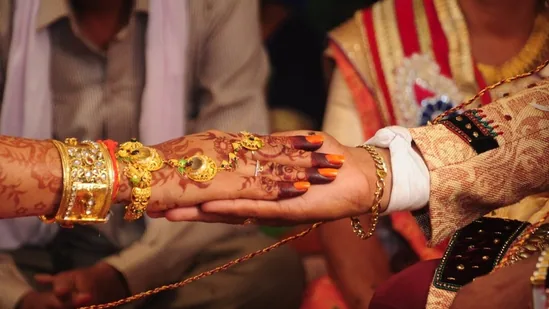
Gujarat High Court Rules Hindu Marriage Requires Rituals, Not Just Registration
Bharatmorningnews.com – The Gujarat High Court has clarified that registration alone does not suffice to validate a Hindu marriage, emphasizing the necessity of traditional rituals and ceremonies. In a recent ruling, the court stated that without the performance of customary rites such as the saptapadi, a marriage cannot be legally or spiritually recognized. This decision was prompted by an appeal from a UK-based individual who contested the validity of his marriage to a partner in Ahmedabad, arguing that he had not participated in the required ceremonies.
Section 7 of the Hindu Marriage Act, as interpreted by the court, mandates the inclusion of traditional rites to complete a marital union. Justice Ilesh Vora and R T Vachhani underscored that these rituals, though culturally diverse, are integral to the sacred and symbolic nature of Hindu marriage. They noted that such ceremonies are not merely formalities but essential components that bind the couple in a spiritual and social contract. The court also highlighted that the absence of these rites could leave the marriage incomplete, affecting its legal and cultural legitimacy.
Legal Implications and Cultural Significance
The case revolved around Kaushal Sonar, a British resident who claimed his marriage to a partner in India was invalid due to the lack of Hindu rituals. Sonar argued that he had not performed any of the traditional rites, nor had he lived with his spouse as a husband, and that his signature on the registration documents was obtained without his consent. The court’s ruling reinforces that marriage in Hindu tradition is more than a legal contract—it is a spiritual journey that requires participation in the sacred rites.
By emphasizing the importance of rituals, the bench aligned itself with broader interpretations of Hindu law that view marriage as a sacrament. This perspective positions the union as a transformative experience for both partners, fostering a deep connection and shared responsibility. The court also noted that the ritualistic aspect of marriage helps preserve cultural heritage and ensures that the institution remains rooted in its traditional values, even in modern legal contexts.
Additionally, the court highlighted the role of rituals in distinguishing Hindu marriage from other forms of union. While registration provides a legal framework, it is the rituals that imbue the marriage with cultural and spiritual meaning. This distinction is crucial, as it affects how marriages are perceived and upheld in both personal and societal contexts.
Impact on Marital Recognition and Legal Procedures
The decision has significant implications for couples who may rely solely on registration for marital validation. It mandates that both parties actively participate in the customary rites to establish a legally binding union. This could influence how marriage registrations are processed, requiring couples to provide evidence of ritualistic compliance alongside legal paperwork.
Legal experts suggest that this ruling may encourage a more holistic approach to marital recognition, ensuring that cultural and spiritual aspects are not overlooked. It also serves as a reminder to couples that the act of marriage involves more than just signing documents—it requires a commitment to shared traditions and values. The court’s emphasis on rituals could lead to greater awareness among individuals about the importance of these ceremonies in Hindu law.
Furthermore, the judgment provides clarity on the interpretation of the Hindu Marriage Act, which has been a subject of debate in recent years. By affirming the necessity of rituals, the court supports the view that Hindu marriage is a sacred institution, requiring both legal and cultural validation. This stance may also impact future legal cases involving marriage disputes, particularly those where the absence of rituals is a central issue.