
Raising minimum wages limits workers’ choice
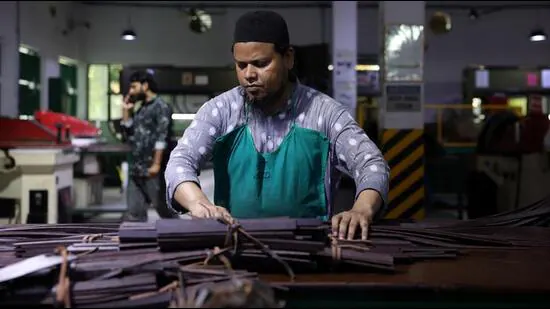
Raising Minimum Wages Limits Workers’ Choice
The Policy Dilemma
Bharatmorningnews.com – Raising minimum wages limits workers’ choice—a challenge that has intensified in recent years as governments across India push for higher wage floors to address income inequality and poverty. The Karnataka government’s decision to increase minimum wages by up to 60% for 83 occupations in late May ignited a debate about the trade-offs between labor protection and economic flexibility. Employer groups swiftly raised concerns, arguing that such hikes could lead to job losses, particularly in sectors reliant on low-cost labor. Similar tensions emerged in Haryana, where earlier wage adjustments triggered protests in neighboring Uttar Pradesh, where workers in Noida took to the streets. The UP government responded by raising its minimum wage by 21%, illustrating a pattern of reactive policy adjustments that often prioritize short-term gains for workers over long-term economic viability. While these measures may seem like progress for laborers, they highlight a systemic issue: India’s labor policies increasingly favor rigid wage structures, which can stifle employment opportunities and limit workers’ ability to choose jobs that best suit their circumstances.
“The most reliable evidence consistently highlights adverse employment impacts [of minimum wage]… studies focusing on the least-skilled groups show overwhelming support for stronger dis-employment effects in these categories.”
This assertion from labor economists underscores a critical debate: while minimum wage increases aim to lift workers out of poverty, they can also create unintended consequences. For instance, in the garment sector, where cost-sensitive manufacturers operate, higher wage mandates may push businesses to outsource production to countries with more lenient labor laws, like Bangladesh, where wages are significantly lower. This dynamic forces workers to accept less favorable conditions or risk losing their livelihoods, thereby reducing their autonomy in the job market.
Costly Choices for Employers
When a farm worker or casual laborer earns ₹9,000 monthly, a garment factory in India may offer ₹12,000 to compete with Bangladesh, which maintains a lower wage structure. This 30% increase might initially appear beneficial, but the legal requirement to formalize employment means that wages must meet a minimum of ₹13,500. Suddenly, the financial viability of setting up a factory in India diminishes, as profit margins shrink in favor of higher labor costs. This situation reflects a broader economic challenge: raising minimum wages can force employers to choose between investing in domestic labor or shifting operations overseas. For small-scale industries, this often means scaling back production or laying off workers, directly impacting employment rates. While the goal of fair wages is commendable, the inflexibility of minimum wage laws may create a barrier for businesses, particularly those in labor-intensive sectors, limiting their capacity to generate jobs.
The ripple effects of these policies extend beyond direct employment. For example, in rural areas, where informal employment is the norm, higher wage mandates can push workers into the formal sector, but only if employers are willing to absorb the increased costs. This transition is not always smooth, as it requires additional investments in infrastructure, training, and compliance. Moreover, the pressure to formalize employment may lead to reduced hiring in the short term, as businesses opt for automation or contract-based work to minimize their exposure to rigid wage structures. This creates a paradox: while the intention is to empower workers, the outcome may be a reduction in job availability, forcing individuals into limited or precarious employment options.
Relative Wages and Legal Constraints
India’s minimum wage is 50% higher than in China, Vietnam, and Bangladesh when compared to GDP per capita, according to recent economic analyses. For the median casual worker, this means a 1.7 times increase in earnings, which is significantly steeper than in other developing economies where the ratio ranges from 0.26 to 0.6. These disparities are not just numerical—they reflect broader structural differences in labor markets. In countries like Bangladesh, where wages are lower, employers can scale up production more easily, meeting global demand at competitive prices. In contrast, India’s higher minimum wage requirements often lead to overpricing, making domestic goods less attractive in international markets. Beyond wages, legal constraints such as mandatory overtime, social security contributions, and rigid working hour limits further escalate operational costs. These rules, while designed to protect workers, can inadvertently hinder businesses from adapting to market demands, limiting their ability to create jobs and grow.
Another factor contributing to this challenge is the complexity of India’s labor laws. With over 40 central and state-level laws governing employment, compliance becomes a significant burden for small and medium enterprises. This complexity can discourage investment in sectors that heavily depend on low-skilled labor, such as agriculture, construction, and textile manufacturing. For instance, a small textile unit might struggle to afford the increased wages, leading it to adopt automation or outsource labor to regions with more favorable regulations. This shift not only affects the availability of jobs but also alters the nature of employment, pushing workers toward more mechanized roles with fewer opportunities for advancement. As a result, raising minimum wages, while well-intentioned, may limit workers’ choice by narrowing the spectrum of available employment options and increasing the risk of job displacement.