
‘People pay more to avoid uncertainty’: LinkedIn post on Uber vs Ola sparks debate online
Uber vs Ola: People Pay More to Avoid Uncertainty, Sparks Online Debate
Bharatmorningnews.com – A recent LinkedIn post titled “People pay more to avoid uncertainty” has reignited discussions about consumer behavior in the ride-hailing sector, particularly comparing Uber and Ola. The post, shared by Akash Kotalwar, highlights how passengers at Bengaluru’s airport often opt for the familiar Uber Comfort over cheaper Ola options, despite longer wait times. This choice, the author argues, reflects a deeper psychological preference for predictability and reliability, even at a higher cost.
Why Predictability Matters in a Competitive Market
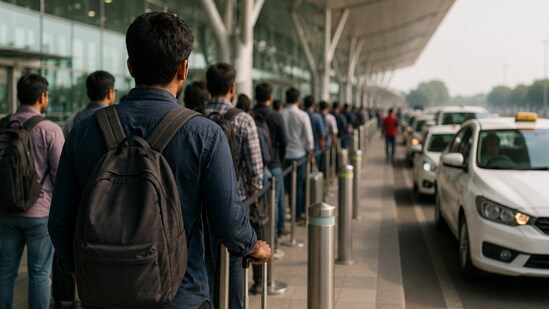
Kotalwar’s analysis begins with a real-world scenario: at Terminal 2, Uber Go faced a 30-minute wait, with 30-40 passengers queued, while Ola’s counter had available cabs. Despite this, many travelers chose Uber Comfort, paying more for the assurance of a quicker and more reliable ride. The post underscores that the perceived value of “known reliability” often outweighs the immediate savings of cheaper alternatives, even when uncertainty is present.
The emotional weight of unpredictability plays a significant role in decision-making, especially after long journeys. Kotalwar explains that switching apps feels like a gamble when fatigue sets in, and passengers prioritize comfort over cost. Uber’s features like real-time driver tracking, transparent pricing, and consistent user experience are presented as key factors in this preference, while Ola’s early-stage reputation as a less dependable option is contrasted.
Consumer Psychology and the Ride-Hailing Dilemma
Delving into consumer psychology, the post posits that people are willing to pay a premium to avoid the anxiety of uncertainty. This concept, rooted in behavioral economics, suggests that the mental effort required to process a new choice can be more valuable than the monetary savings. In the context of Uber vs Ola, the debate centers on whether customers are trading cost for convenience or reliability.
Kotalwar’s argument is supported by the idea that familiarity breeds comfort. He notes that Uber’s brand has cultivated a sense of trust through years of service, making it a safer option for users who value predictability. Meanwhile, Ola, though competitive, may still be perceived as less consistent, especially during peak hours or in high-demand areas like airports. This dynamic creates a situation where uncertainty costs more than the price difference.
The post also raises questions about the broader implications of this behavior. If customers are consistently choosing Uber over Ola for its perceived reliability, does it signal a market advantage for the established brand? Or does it reflect a systemic issue in how competition is framed in the industry? These questions have sparked a lively exchange, with users offering contrasting viewpoints and experiences.
Responses to the Debate: A Spectrum of Perspectives
Commenters on the LinkedIn post have voiced a range of opinions, challenging Kotalwar’s generalization and offering alternative explanations. Some argue that the scenario described is anecdotal, noting that personal preferences and local conditions can vary widely. One user pointed out, “This should be based on your personal experience. You can’t assume this applies to all users,” emphasizing the need for broader data to validate the claim.
Others questioned the assumption that uncertainty is the sole driver of the choice. A commenter asked, “Do Indian customers truly consider the cost of switching when they’re simply eager to exit the airport?” This highlights the tension between convenience and cost, suggesting that in high-stress situations, the immediate desire to leave may override concerns about price. Additionally, some users highlighted that Ola has made strides in improving its service quality and user experience, challenging the notion that it lags behind Uber in reliability.
Meanwhile, a few responses reinforced the post’s premise, citing Uber’s long-standing reputation as a reason for its continued dominance. One user remarked, “The premium is not for the product itself, but for the comfort of knowing what happens next.” This sentiment aligns with the idea that predictability is a premium service, especially in a market where trust and consistency are critical for user retention.
Ultimately, the debate around Uber vs Ola reflects a larger conversation about how consumers balance cost, convenience, and reliability in an increasingly competitive digital landscape. Whether the decision is driven by psychological comfort or practical necessity, the scenario at Bengaluru’s airport serves as a microcosm of this ongoing discussion, with implications for the future of ride-hailing services in India and beyond.
The post has since generated over 2,000 comments, with users sharing their own stories and critiques. Some cited personal experiences where Ola’s services were more efficient, while others echoed Kotalwar’s argument about the emotional cost of uncertainty. This exchange underscores the complexity of consumer decision-making, where factors like brand loyalty, app interface, and past experiences all play a role. As the ride-hailing industry continues to evolve, the question of whether users are paying more for certainty or convenience remains central to understanding market trends.