
Music and lyrics?: Wknd talks to Julie Elie, the award-winning scientist decoding bird calls
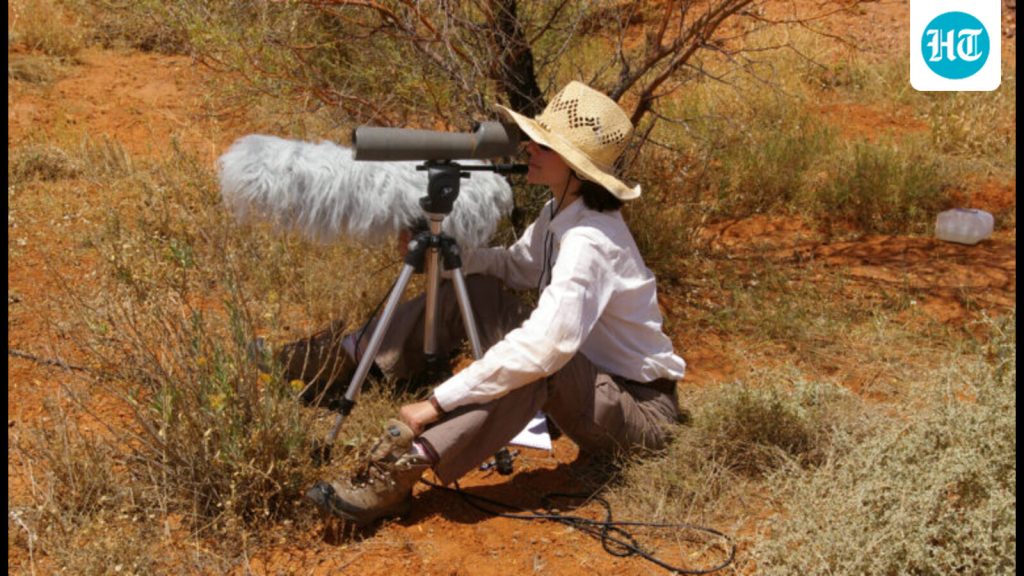
Music and Lyrics: Julie Elie Decodes Zebra Finch Calls
Bharatmorningnews.com – Music and lyrics can seem uniquely human, but scientist Julie Elie’s work with zebra finches raises a compelling question about how other species communicate. After spending six months closely studying the birds’ calls, Elie received the $100,000 Coller-Dolittle Prize for advances in interspecies communication.
Her research explores whether zebra finches react only to the acoustic qualities of a call or whether they also understand the information it conveys. The findings suggest that these highly social birds may distinguish signals according to meaning, rather than simply responding to sounds that are similar in pitch, rhythm or tone.
Professor Yossi Yovel, a zoologist at Tel Aviv University and chair of the prize panel, called Elie’s findings “a key moment in the field”.
A Vocal System Scientists Can Study Closely
Zebra finches have been studied for at least three decades and are well suited to research on animal communication. They can live in captivity with proper care and social contact, while their vocal repertoire offers more variety than that of species with only a few call types.
At the same time, their communication system is more manageable than the highly variable vocal world of birds such as crows. Elie notes that a crow’s calls may change depending on its social setting, making it harder to identify the basic building blocks of its communication.
“They sit at this nice little level of complexity that makes it interesting,” Elie says.
By September last year, Elie and her collaborators had identified 11 main categories of zebra finch vocalisations. These include calls associated with hunger, danger and greeting, as well as signals that help birds find flockmates or announce that they are nearby.
Some calls work like a bird version of “Marco! Polo!”, allowing individuals to locate one another. Others are used while flying or foraging through dense spaces, helping a flock stay in contact. A distinct distress call appears to signal that a bird needs help from the group.
From Sound to Meaning
Elie’s interest in zebra finches began during her undergraduate years at Ecole Normale Superieure de Lyon, or ENS de Lyon, in 2004. She later worked at the Helen Wills Neuroscience Institute as a postdoctoral fellow from 2010 to 2017, studying how birds’ auditory systems encode meaning.
After joining the Theunissen Lab at the University of California, Berkeley, in December 2024, Elie continued connecting recordings of bird calls with observations of behaviour. This approach revealed links between particular vocalisations and specific social situations.
“I found a correlation between certain types of sound and certain types of behaviour,” she says.
For example, Elie describes an “ah!”-like call associated with aggression and an “eh!”-like sound used when one bird reaches out to a partner. Other calls have been observed in situations involving nest defence, searching for a companion and begging for food.
Machine learning helped the team compare recordings with behavioural evidence. Their results showed that zebra finches were more likely to confuse calls with related meanings than calls that merely sounded alike. In other words, birds may treat acoustically similar signals differently when those signals serve different social purposes.
This is where the idea of music and lyrics becomes useful as a metaphor. A call may have a sound pattern, but it may also carry a message shaped by the bird’s social world. Elie’s research suggests that animal communication can involve more than recognising noise: it may include interpreting context and meaning.
Why the Findings Matter
The work offers a new way to examine cognition in non-human animals. If zebra finches respond to the meaning of calls, researchers may be able to learn more about how communication systems develop, how brains process social information and where human and animal communication overlap.
Elie’s research does not claim that birds use language in the human sense. Instead, it provides evidence that their vocal exchanges may be more meaningful and sophisticated than a simple response to sound alone. For anyone interested in music and lyrics, the study is a reminder that communication may be rich with signals beyond human speech and song.
Frequently Asked Questions
What did Julie Elie discover about zebra finches?
Elie and her collaborators found evidence that zebra finches may distinguish calls based on their meaning and social purpose, not only on how similar the calls sound.
How many zebra finch call categories were identified?
By September last year, the research team had identified 11 central categories of vocalisations, including calls related to hunger, danger, greeting, contact and distress.
Why are zebra finches useful for communication research?
They have a vocal repertoire that is complex enough to reveal meaningful differences but limited enough for researchers to study systematically in laboratory settings.