
UP’s 1st DNA fingerprinting lab in a med inst opens at KGMU
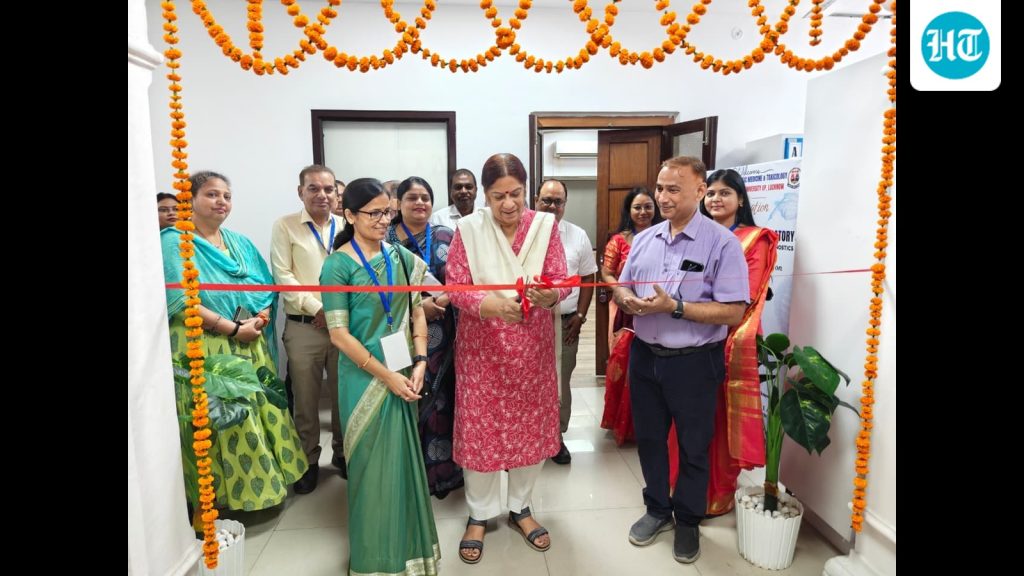
KGMU Opens Uttar Pradesh’s First DNA Fingerprinting Laboratory at a Medical Institution
Bharatmorningnews.com – King George’s Medical University has expanded its forensic and diagnostic capabilities with the launch of a dedicated DNA fingerprinting laboratory, described as the first such facility established within a medical institution in Uttar Pradesh. The laboratory was inaugurated on Friday at KGMU’s Department of Forensic Medicine and Toxicology.
The new facility, named the DNA Fingerprinting Laboratory – Forensic Genetics and Molecular Diagnostics, was opened by KGMU vice-chancellor Prof Soniya Nityanand. Its creation is expected to support both scientific investigation and healthcare-related molecular analysis, bringing DNA profiling work closer to doctors, researchers and forensic specialists in Lucknow.
Support for identification and forensic cases
DNA profiling can play a central role when conventional methods of identification are not enough. At KGMU, the laboratory is intended to assist with the identification of unidentified bodies, missing individuals and victims of disasters. These cases can require highly reliable biological comparison when visual recognition, documents or other forms of evidence are unavailable.
The facility will also be used in paternity-related disputes and investigations involving suspected accidental exchanges of newborns in hospitals. DNA testing can provide scientific clarity in such matters by examining inherited genetic markers and comparing relevant samples.
Prof Nityanand also pointed to the laboratory’s potential value for medical research. One area mentioned was chimerism analysis after bone marrow transplantation. In such cases, genetic testing can help assess the presence of donor and recipient cells, making molecular diagnostics relevant beyond criminal and medico-legal work.
A new local testing capability
KGMU spokesperson Prof KK Singh said the university is the first medical institution, whether government-run or private, in the state to set up a DNA fingerprinting laboratory. Until now, private collection centres in Lucknow have collected samples locally before forwarding them to laboratories in Pune and Hyderabad for testing.
Having a laboratory within a medical university creates an opportunity to connect forensic requirements with clinical expertise, teaching and academic research. It can also give postgraduate doctors, faculty members and researchers access to practical learning in methods used for genetic identification and molecular assessment.
Prof Anoop Kumar Verma, who heads KGMU’s Department of Forensic Medicine and Toxicology, said DNA profiling is an important scientific resource for forensic investigations. Its availability may prove useful in working through cases that have remained unresolved or require stronger biological evidence.
Focus on training, research and molecular diagnostics
Dr Anshu Priya, associate professor in KGMU’s forensic fingerprinting unit, said the laboratory’s work will include research and innovation, education and training, and molecular diagnostics based on short tandem repeats, or STRs.
STR profiling is widely used in forensic genetics because these repeating sections of DNA can be compared across samples to help establish whether biological material may be linked to a particular individual or family relationship. The value of such testing lies in careful laboratory procedures, accurate interpretation and the proper handling of samples at every stage.
The launch has been accompanied by a two-day practical workshop on forensic DNA profiling, scheduled for October 23 and 24. The programme is designed for researchers, postgraduate resident doctors, faculty members and forensic professionals.
Participants are receiving training in several key stages of DNA analysis: extracting DNA from samples, amplifying genetic material through polymerase chain reaction, carrying out STR profiling and interpreting results with a genetic analyser. These skills are central to producing and assessing DNA profiles in a controlled scientific setting.
Experts join the workshop
The workshop brings together specialists from forensic science and academic institutions. Among the participants are Dr Pankaj Srivastava of the Forensic Science Laboratory in Jabalpur, Prof Gyaneshwer Chaubey of Banaras Hindu University, and Dr Jwala Kumar Nand from the Jharkhand Forensic Science Laboratory.
The involvement of professionals from laboratories and universities reflects the multidisciplinary nature of forensic DNA work. Effective profiling depends not only on laboratory technology, but also on expertise in genetics, forensic procedure, interpretation and the presentation of scientific findings in legal or medical contexts.
For KGMU, the new laboratory adds a specialised resource to its existing role as a medical teaching and research institution. Its stated scope reaches from forensic identification to transplant-related analysis, while the accompanying training programme aims to build familiarity with modern DNA-profiling techniques among future and current professionals.
As the laboratory begins operations, its significance will rest on the quality of its scientific work and its ability to serve cases requiring precise genetic evidence. For patients, families, investigators and medical professionals confronting difficult questions of identity or biological relationship, the facility represents a new institutional capability within Uttar Pradesh.
Related Reading
Frequently Asked Questions
What is UP s 1st DNA fingerprinting lab?
UP s 1st DNA fingerprinting lab is the main topic of this guide. The article explains the context, practical details, and next steps readers should understand.
Why does UP s 1st DNA fingerprinting lab matter?
UP s 1st DNA fingerprinting lab matters because readers are looking for a useful answer, not just a short summary. Good content should match search intent and help them decide what to do next.