
J&K’s Rajouri records over 100 forest fire incidents, 850 hectares impacted
J&K’s Rajouri Records Over 100 Forest Fire Incidents, 850 Hectares Impacted
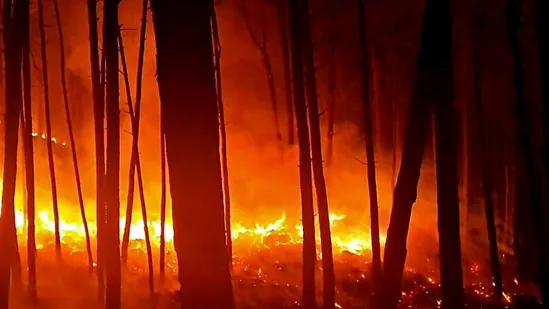
Bharatmorningnews.com – Rajouri records over 100 forest fire incidents this season, according to Sat Pal, the Conservator of Forests for the West Circle, who noted that the blazes have scorched approximately 850 hectares of forest land. The alarming surge in wildfires has prompted heightened concern among environmental authorities and local communities, as the district’s delicate ecosystem faces unprecedented strain. Pal, in an interview with ANI on Sunday, emphasized that the forest department is intensifying its efforts to monitor and mitigate the spread of these fires, particularly in areas where the risk is highest.
The Factors Behind the Escalating Fires
Pal highlighted that the current heatwave and prolonged dry weather conditions have significantly contributed to the rise in forest fires. The region’s climate, characterized by high temperatures and low humidity, creates a tinderbox environment, especially in the dense Chir pine forests that dominate much of Rajouri’s terrain. These pine trees, while resilient to certain environmental stresses, are highly flammable when dry, making them a key factor in the region’s vulnerability to wildfires. “The combination of natural factors and human activities has intensified the situation,” he added, noting that the forest department is working to address both.
“Rajouri records a steady increase in fire incidents due to the region’s unique geography and the type of vegetation prevalent here,” Pal stated. “Chir pine forests, which cover a large portion of the district, are particularly susceptible to burning. Moreover, the rugged terrain and limited road access in some areas make early detection and response more challenging.”
Community Involvement and Prevention Strategies
As Rajouri records more than 100 forest fire incidents, the authorities have called for greater collaboration with local residents to curb the spread. Pal urged travelers and villagers to exercise caution, especially when using fire in forested zones, and to promptly report any signs of flames. “Even a small spark can escalate into a major disaster, so vigilance is critical,” he said. The forest department has also distributed informational pamphlets and conducted awareness campaigns in nearby villages, aiming to educate the public on fire prevention practices.
Despite these measures, the district continues to face challenges. The forest divisions in Rajouri span vast, hilly regions with limited infrastructure, making it difficult for teams to reach affected areas quickly. Pal mentioned that some remote locations remain inaccessible until the monsoon season, leaving them at higher risk of uncontrolled blazes. “Rajouri records a significant number of fires in these hard-to-reach zones, which often go unnoticed until they spread beyond containment,” he explained.
Efforts to combat the fires have included the deployment of drones and thermal imaging cameras to detect smoldering flames in dense pine forests. These technological tools, combined with ground-based surveillance, have improved early warning systems. Pal also noted that the Forest Survey of India has provided additional support, sharing real-time data to assist in managing the situation. “Rajouri records more fires than previous years, but our proactive measures are helping us respond faster and more effectively,” he concluded.
Environmental and Ecological Impacts
The ongoing wildfires have not only affected the forest cover but also disrupted wildlife habitats and bird nesting sites. Pal revealed that while the department is working to minimize ecological damage, some areas have suffered irreversible harm. “The fires have forced several bird species to relocate, and the soil in affected zones is now more prone to erosion,” he said. This has raised concerns about the long-term sustainability of the region’s biodiversity. Environmental experts have warned that repeated burns could lead to a decline in forest regeneration, especially in the Chir pine-dominated regions.
Moreover, the fires have impacted local agriculture and water sources. Smoke from the blazes has reduced air quality in nearby villages, affecting both human health and crop yields. Pal acknowledged these secondary effects, stating that the district’s economy, which relies heavily on tourism and agriculture, is now under additional pressure. “Rajouri records a higher number of fires this year, and the consequences are already being felt,” he remarked, urging continued vigilance and cooperation from all stakeholders.