
Is the lack of bonding with ‘outsider’ Shreyas Iyer the reason behind India’s dismal show in the UK?
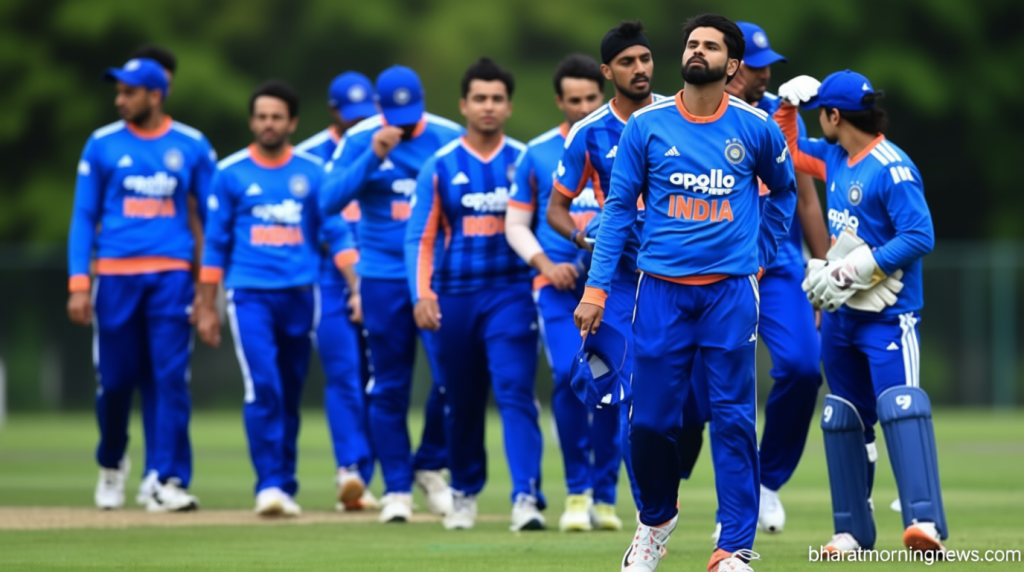
Is the Lack of Bonding with ‘Outsider’ Shreyas Iyer the Reason Behind India’s Dismal Show in the UK?
Bharatmorningnews.com – Is the lack of bonding between the Indian T20I squad and their new captain, Shreyas Iyer, a key factor in the team’s recent struggles during the UK tour? Despite their historic T20 World Cup triumph just months ago, India’s T20I team has faced a series of setbacks, raising questions about the impact of this leadership transition. The selection panel’s decision to appoint Iyer, a relatively untested leader in international T20I, has sparked debate over whether the absence of a strong team bond is contributing to their inconsistent performances.
Historically, India has prioritized continuity in leadership, often promoting existing stars to maintain cohesion. However, the abrupt shift to Iyer, who had not played a T20I in over two and a half years, disrupted this pattern. The lack of bonding with Iyer has been a recurring theme in post-match analyses, as players and fans alike grapple with the new captain’s leadership style. Gautam Gambhir’s endorsement of Iyer’s appointment added a layer of uncertainty, as it marked a departure from the team’s traditional approach to captaincy.
The Impact of Leadership Transition
While Iyer’s technical skills and experience in the Indian Premier League are undeniable, his ability to connect with the squad has been a point of contention. The transition from Suryakumar Yadav to Iyer was not gradual, leaving little time for players to adapt to the new dynamic. Hardik Pandya, the former vice-captain, was not chosen as the new leader, and Shubman Gill’s brief stint as captain further fragmented the team’s sense of direction. This lack of bonding has been evident in their on-field communication and off-field unity, with some players expressing doubts about Iyer’s role in the team’s strategy.
“The lack of bonding between the team and their new captain has created a visible divide,” said a cricket analyst in a recent commentary. “It’s not just about performance; it’s about trust and shared goals.”
This sentiment reflects the broader concern that Iyer’s outsider status has hindered the team’s ability to gel. While his leadership has shown promise in domestic settings, the international stage has demanded a different kind of cohesion, which the team has yet to achieve. The UK tour, marked by a series of losses, has become a testing ground for this leadership challenge.
Team Dynamics and Strategic Shifts
The team’s performance in the UK has been a stark contrast to their previous dominance. Consecutive defeats to Ireland and England have highlighted the strain caused by the lack of bonding. Critics argue that Iyer’s decision-making, though strategic, has not been backed by the team’s collective buy-in. The absence of a clear successor to Suryakumar Yadav, who had been the team’s heart and soul, has compounded the issue, leaving players without a defined role in the captaincy structure.
Analysts suggest that the lack of bonding has affected not only team morale but also their tactical execution. With players still adjusting to Iyer’s vision, the team’s rhythm has been disrupted, leading to errors in both batting and bowling. The reliance on rapid decision-making and individual brilliance, rather than a unified approach, has exposed vulnerabilities in their game plan. As the T20I format demands adaptability and collaboration, the Indian team’s current challenges underscore the importance of a strong team bond.
Despite these hurdles, Iyer’s appointment remains a bold move. His fresh perspective and ability to innovate have been praised, but the transition requires time to mature. The team’s next steps will likely focus on fostering trust and unity, both on and off the field. Whether this lack of bonding proves to be a temporary setback or a deeper issue will depend on how effectively the squad adapts to their new leader’s leadership style.