
Haunted 3D Echoes of the Past review: This AI + Vikram Bhatt collab is what happens when nobody cares anymore
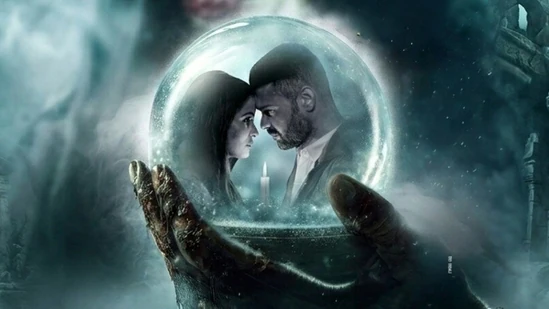
Haunted 3D Echoes of the Past Review
AI and Vikram Bhatt’s Stagnant Horror Collab
Bharatmorningnews.com – Haunted 3D Echoes of the Past is a film that epitomizes the current state of cinematic storytelling, where AI-driven efficiency often overshadows creative ambition. Directed by Vikram Bhatt, this latest venture relies heavily on artificial intelligence to craft a narrative that feels both familiar and disjointed. The film’s protagonist, Dev, played by Mimoh Chakraborty, is a filmmaker who retreats to Nainital, a serene hill station, only to find himself entangled in a series of supernatural events. The opening scene, where Dev muses,
“When the impossible becomes possible, the only thing left to believe is the impossible.”
, sets a tone of existential dread, yet it quickly becomes clear that the film’s depth is as shallow as its plot.
The Rise of AI in Cinema
The use of AI in *Haunted 3D Echoes of the Past* is both a marvel and a misstep. While the technology allows for rapid production of visuals and even dialogue, it also strips the film of its soul. The script, credited to Mahesh Bhatt, Suhrita Das, and Shubham Dhiman, is a patchwork of recycled ideas—haunted mansions, tragic histories, and reincarnation themes—each borrowed from a decade-old horror flick. This AI-assisted approach leads to a lack of originality, as the film settles for easy tropes rather than exploring new narrative territory. The result is a product that feels like it was assembled with little care, echoing the sentiment that *Haunted 3D Echoes of the Past* is what happens when nobody cares anymore.
One of the film’s most glaring issues is its pacing. The first act drags, with scenes that lack purpose, while the second half feels rushed, as if the creators were trying to compensate for a weak foundation. The use of AI-generated dialogue and visual effects creates an eerie, lifeless atmosphere, which is ironic considering the film’s premise. Instead of evoking fear through craftsmanship, it relies on algorithmic repetition, leaving audiences questioning whether the technology is enhancing or diluting the cinematic experience. This is particularly evident in the way the palace setting—once a symbol of mystery and grandeur—becomes a generic backdrop for scenes that feel devoid of emotion.
Vikram Bhatt, known for his earlier works like *1920*, which masterfully used candlelight to create an unsettling ambiance, appears to have embraced AI as a shortcut rather than a tool for innovation. In *Haunted 3D Echoes of the Past*, the lack of visual depth and atmospheric tension is glaring. While the AI-generated scenes are technically impressive, they lack the human touch that makes horror films memorable. The film’s reliance on AI is not just about speed—it’s about compromise. It prioritizes quantity over quality, resulting in a product that feels like a template rather than a true story. This shift reflects a broader trend in the industry, where the pursuit of cost-effective production has led to a decline in artistic integrity.
Despite these shortcomings, *Haunted 3D Echoes of the Past* is not without its moments of intrigue. The second half introduces a subtle layer of mystery, with hints at a deeper conspiracy that could have been explored further. However, the execution falters, as the plot unravels in a manner that feels improvised. Mimoh Chakraborty’s performance, though earnest, is overshadowed by the dated script, which fails to provide a compelling arc. Chetna Pande, in her role, also struggles to elevate the material, her efforts lost in the film’s lack of direction. The AI-assisted writing and direction create a sense of detachment, making it difficult for the audience to connect with the characters or the story.
Haunted 3D Echoes of the Past is a cautionary tale for the film industry. It exemplifies how AI can streamline production but at the cost of creativity. The film’s failure to engage is not just a matter of poor execution—it’s a reflection of a market that values speed and cost-efficiency over artistry and originality. As audiences become accustomed to formulaic content, the risk of losing the human element in storytelling grows. *Haunted 3D Echoes of the Past* may not be a complete disaster, but its indifference to quality is more haunting than any ghost it conjures. This film serves as a stark reminder that technology, while powerful, must be wielded with purpose to avoid becoming a crutch for creative stagnation.