
DMK’s Stalin says Vijay’s TVK government may not last even three months
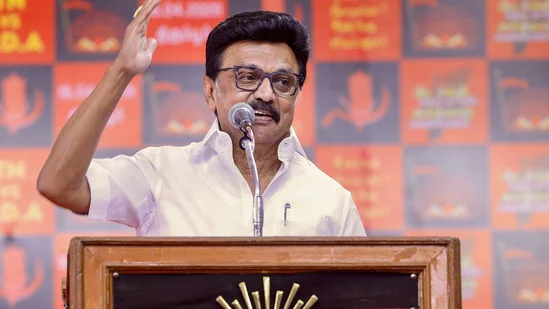
DMK’s Stalin Questions Vijay’s TVK Government Stability
Bharatmorningnews.com – In a recent statement that has sparked considerable discussion, DMK leader MK Stalin expressed concerns about the viability of the Tamil Nadu government led by Chief Minister O. Panneerselvam of the Tamilaga Vettri Kazhagam (TVK). During an event celebrating the integration of Viduthalai Chiruthaigal Katchi (VCK) MLA Paniyur Babu into the DMK fold, Stalin emphasized that the government may not last even three months, challenging its ability to maintain stability and implement effective policies. This critique comes amid a growing debate over the effectiveness of the TVK’s governance, with Stalin highlighting how the party’s reliance on digital campaigns and social media engagement has left it vulnerable to scrutiny. The DMK leader’s remarks underscore a broader strategy of keeping the opposition in check, as the party prepares to position itself as a key contender in the state’s political landscape.
Stalin’s Strategic Critique of TVK’s Governance
Stalin’s doubts about Vijay’s TVK government are not merely a political stance but a calculated move to assert the DMK’s influence in Tamil Nadu. He pointed out that while the party’s electoral victory was fueled by widespread public support, the government’s ability to translate that support into sustainable leadership remains uncertain. “They secured victory through digital campaigns, yet failed to engage directly with voters. Despite this, they formed the government,” Stalin said, implying that the TVK’s leadership lacks the grassroots preparedness necessary for long-term success. His comments were part of a broader narrative that positions the DMK as a bridge between the state’s electorate and its administrative machinery, while also drawing attention to the fragility of the current administration.
Stalin’s critique also reflects the DMK’s internal dynamics and its role as a major opposition force. The party, which has historically been a dominant player in Tamil Nadu politics, is now leveraging its position to question the credentials of Vijay’s government. By emphasizing the potential short lifespan of the TVK administration, Stalin aims to create a narrative that the current government is not equipped to handle the complexities of state governance. This approach aligns with the DMK’s traditional strategy of maintaining a critical eye on ruling parties, even as it works to consolidate its own base and prepare for future elections. The leader’s remarks suggest that the DMK is not only focused on immediate challenges but also on positioning itself to capitalize on any weaknesses in the TVK’s leadership.
Political Dynamics and Public Sentiment
The political climate in Tamil Nadu has become increasingly polarized as the DMK and TVK vie for influence. Stalin’s doubts about the TVK government’s stability come at a time when public sentiment is being closely monitored by all major parties. While Vijay’s administration has taken steps to introduce new policies, such as the unveiling of 436 projects in its first cabinet session, critics argue that these initiatives lack the comprehensive planning needed to address the state’s long-standing challenges. Stalin’s focus on the government’s potential to last only three months highlights the concerns over its ability to deliver on key promises, particularly in sectors like infrastructure, education, and healthcare.
“We initially committed to a six-month period of restraint, but even before it began, there were signs of instability. Public discourse is now questioning if this government can survive three months, let alone the full six,” Stalin remarked during the event. This statement underscores the DMK’s strategic approach to maintaining pressure on the TVK without overt confrontation. By framing the government’s challenges as a matter of public debate, Stalin has managed to keep the conversation centered on the effectiveness of Vijay’s leadership. His remarks also serve to highlight the importance of direct voter engagement, which he argues is missing from the TVK’s governance model.
Stalin’s critique has been met with mixed reactions from political analysts. Some view his comments as a necessary challenge to the government’s credibility, while others believe the DMK is overplaying its hand in the early stages of the administration. The leader’s emphasis on the potential instability of Vijay’s government is part of a larger effort to rally public support for the DMK’s eventual return to power. By highlighting the lack of organizational strength in the TVK, Stalin is positioning his party as the most viable alternative, even as the current administration works to solidify its hold on the state. The political stakes are high, with both parties vying for the hearts and minds of Tamil Nadu’s electorate.
The Role of Paniyur Babu in the DMK’s Strategy
Paniyur Babu’s transition to the DMK has been a significant moment in the party’s recent political maneuvering. As a prominent figure in the Viduthalai Chiruthaigal Katchi, his joining the DMK has bolstered the party’s ranks and provided it with an additional voice in the state’s legislative affairs. Stalin praised Paniyur Babu’s contributions, describing him as a principled representative who has consistently raised meaningful issues. “His statement was concise and respectful. Paniyur Babu is a steadfast worker who remains true to his values,” the DMK leader stated, emphasizing the importance of maintaining a constructive dialogue within the opposition ranks.
Stalin’s remarks on Paniyur Babu’s integration also serve to reinforce the DMK’s commitment to unity and collaboration. By welcoming a former ally from the VCK, the party is demonstrating its ability to adapt and expand its political base. This move is seen as a strategic effort to counterbalance the TVK’s influence and create a more formidable opposition. The DMK’s ability to attract support from other parties and factions is crucial in a state where political alliances often determine the outcome of governance. Stalin’s focus on Vijay’s government’s stability is not only a critique of current leadership but also a call to action for the DMK to solidify its position as the primary opposition force.
“The TVK government may not last even three months, but our party is ready to take charge and ensure the people’s interests are prioritized,” Stalin added, highlighting the DMK’s preparedness for a potential change in power. This statement reflects the broader political strategy of the party, which aims to position itself as the natural successor to the current administration. The DMK leader’s comments have been interpreted as a warning to Vijay’s government, signaling that its ability to govern effectively will be closely scrutinized in the coming weeks. As the state moves forward, the stability of the TVK government will be a key factor in determining the political trajectory of Tamil Nadu.
Challenges Facing Vijay’s Government
The challenges facing Vijay’s TVK government are multifaceted, ranging from internal party dynamics to external political pressures. While the party’s electoral victory was a significant achievement, the transition to power has exposed vulnerabilities in its organizational structure. Stalin’s critique of the government’s reliance on digital campaigns suggests that the TVK may be struggling to translate online popularity into tangible policy outcomes. This has raised concerns among political observers, who note that the party’s lack of grassroots engagement could hinder its ability to maintain public trust.
Furthermore, the DMK’s emphasis on the government’s potential instability has created a sense of urgency within the TVK camp. Analysts suggest that the party’s survival will depend on its ability to address key issues promptly and demonstrate effective governance. Stalin’s focus on the three-month timeline is not arbitrary; it reflects the political reality in Tamil Nadu, where governments often face intense scrutiny during their early months. The DMK leader’s comments are part of a broader effort to ensure that the state’s electorate remains aware of the potential risks associated with Vijay’s leadership. As the government begins its tenure, the success of its policies will be a critical test of its viability as a ruling party.