
‘Aya Ram, gaya Ram’: The politics of defection and erosion of democracy
‘Aya Ram, Gaya Ram’: The Politics of Defection and Erosion of Democracy
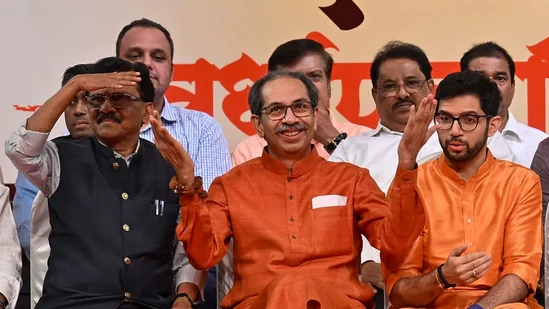
Bharatmorningnews.com – Political defections have long been a defining feature of India’s democratic landscape, and the phrase ‘Aya Ram, Gaya Ram’ has become a recurring symbol of this phenomenon. Recently, the Shiv Sena (UBT) party faced a significant upheaval as six of its nine MPs defected from the coalition, marking a pivotal moment in the ongoing political realignments. This shift has reignited debates about the fragility of party loyalty and the broader implications for democratic governance. While the Samajwadi Party (SP) leader Akhilesh Yadav has dismissed rumors of a similar split, the pattern of defectors altering their allegiances to serve personal or ideological gains continues to shape the country’s political dynamics. The phrase, rooted in a historical anecdote, now encapsulates the cyclical nature of political loyalty in India, raising questions about the stability of institutions and the influence of individual ambitions over collective decision-making.
The Origins of ‘Aya Ram, Gaya Ram’
A Historical Anecdote in Indian Politics
The phrase ‘Aya Ram, Gaya Ram’ traces its roots to the 1967 Haryana assembly elections, a turning point in Indian political history. At the time, Gaya Lal, an MLA from Hasanpur, became a central figure in the story of shifting loyalties. Within just 15 days, Lal changed allegiance three times—first joining the Congress party, then the United Front, returning to Congress, and finally aligning with the United Front once more. His repeated defections caught the attention of media and politicians alike, and when leader Rao Birendra Singh commented on the event, he famously said,
“Gaya Ram ab Aya Ram hain”
(‘Ram who has left is now the Ram who has come back’), inadvertently misnaming Lal as Gaya Ram. This anecdote, though humorous, has since evolved into a powerful metaphor for political instability in India.
From that moment, the phrase ‘Aya Ram, Gaya Ram’ has been used to describe the fluidity of political alliances and the susceptibility of democratic systems to factionalism. Between 1967 and 1971, a five-year period that witnessed intense political activity, over 1,900 defection cases were recorded in Parliament and state assemblies. This surge in defections not only led to the collapse of 32 state governments but also enabled 212 MLAs and MPs to secure ministerial positions. The phrase became a shorthand for the erosion of party discipline, highlighting how even a nation newly embracing democracy could be vulnerable to the whims of individual politicians.
How Defection Shapes Electoral Outcomes
The mechanism of political defection has been instrumental in shaping electoral outcomes and government coalitions. During the 1967 elections, the Congress party’s dominance in the Centre and most states was challenged by the rise of regional parties and the strategic use of defections. Indira Gandhi, who was then an emerging leader, faced internal dissent from senior figures like Morarji Desai, S Nijalingappa, and Neelam Sanjiva Reddy, who criticized her leadership and policies. These defections not only contributed to the Congress party’s loss of power but also underscored the importance of unity within parties for maintaining electoral strength.
Fast forward to the present, and the same pattern is playing out in different contexts. The Shiv Sena (UBT) party’s recent defections, particularly in the wake of the state assembly elections, have exposed the vulnerabilities of political alliances. Analysts suggest that these shifts are not accidental but part of a broader strategy to destabilize governments and consolidate power. Similarly, the Samajwadi Party (SP) faces potential fragmentation, with rumors of internal dissent hinting at a possible split. Such movements raise concerns about the long-term viability of party systems and the role of defection in either strengthening or weakening democratic processes.
Modern-Day Repercussions of Political Defection
Today, the phrase ‘Aya Ram, Gaya Ram’ is often invoked to critique the role of political defections in undermining institutional credibility. The Bharatiya Janata Party (BJP), currently in power, has been accused of using defections as a tool to weaken opposition and secure its majority. This has been particularly evident in recent years, where the party’s tight organizational structure and ideological rigidity have led to frustration among some members. Critics argue that the BJP’s refusal to accommodate dissenting voices has fueled a sense of alienation, prompting defections that challenge the party’s dominance.
Defections have also been a strategic weapon for regional parties seeking to expand their influence. The Shiv Sena (UBT) and Samajwadi Party (SP) splits illustrate how political realignments can reshape power dynamics. For instance, the defection of six MPs from the Shiv Sena has forced the government to rethink its coalition strategy and reassess the stability of its parliamentary majority. These events are not isolated but part of a larger trend where political parties, both in power and opposition, use defections to gain leverage. The result is a constant tug-of-war between ideological loyalty and pragmatic self-interest, often at the expense of democratic integrity.
As India’s political landscape continues to evolve, the phrase ‘Aya Ram, Gaya Ram’ serves as a reminder of the challenges inherent in maintaining a stable party system. While defections can be a means of adapting to changing circumstances, they also expose the fragility of democratic institutions. The recent splits in the Shiv Sena (UBT) and potential instability in the Samajwadi Party highlight the need for stronger internal cohesion and a more robust framework to manage dissent. Without such mechanisms, the political system risks becoming a stage for continuous realignment, where loyalty to the party is often secondary to personal or factional interests.