
Tejashwi slams Bihar CM for ‘cheap politics’ over Rabri Devi bungalow row and security cut
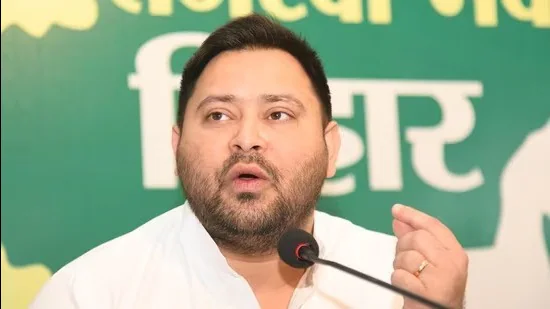
Tejashwi Accuses Bihar CM of Cheap Politics Amid Rabri Devi Bungalow Controversy
Bharatmorningnews.com – RJD leader Tejashwi Yadav has intensified criticism against the Bihar government, accusing Chief Minister Samrat Choudhary of engaging in cheap politics through the controversial transfer of a historic bungalow belonging to his mother, former Chief Minister Rabri Devi. The incident, which occurred on May 27, has sparked widespread public outrage and deepened the political rivalry between the ruling NDA and the opposition RJD ahead of crucial state elections.
Bungalow Transfer Sparks Political Tensions
The transfer of Rabri Devi’s 10, Circular Road residence to BJP minister Nand Kishore Ram has become a focal point of the current political showdown. Tejashwi emphasized that the decision was not just about property redistribution but symbolized an attack on the Yadav family’s legacy and influence in Bihar. “This is not a simple administrative move—it’s a calculated attempt to undermine our leadership,” he argued, highlighting how the government’s actions reflect its focus on short-term gains over long-term stability.
The bungalow, a well-known symbol of the Yadav political dynasty, had been a strategic asset for the RJD. Its reallocation has been interpreted as a move to weaken the party’s grip on key areas of the state, particularly in the capital, Patna. Tejashwi further accused the administration of prioritizing the protection of its allies over addressing citizens’ demands, a recurring theme in his cheap politics critique.
Security Cuts and Public Protests
Adding to the controversy, the Bihar government reportedly reduced the security provided to Rabri Devi and her husband, Lalu Prasad Yadav, following the bungalow transfer. This decision has drawn sharp criticism, with RJD supporters accusing the administration of targeting the family to divert attention from its governance failures. On June 6, a protest erupted at the bungalow, with demonstrators claiming the security cut was a deliberate move to weaken the RJD’s stronghold in the state.
“Samrat Choudhary is playing cheap politics,” Tejashwi stated. “What is the need for security? Those who are afraid keep security. The people are with us. Although Samrat Choudhary has become chief minister, he is not a real chief minister—he is a cheap minister.”
The security reduction has been perceived as a direct assault on the Yadav family’s influence, especially in light of their historical role in Bihar’s politics. Tejashwi accused the BJP-led government of failing to maintain law and order, with corruption and inefficiency rampant in key sectors. “The NDA is busy providing security to criminals and the corrupt,” added party MP Misa Bharti, “that’s why they have reduced the security of Lalu and Rabri.”
Tejashwi’s cheap politics critique extends beyond the bungalow dispute. He has repeatedly called out the administration for its lack of transparency and prioritization of factional loyalty over public welfare. The ongoing criticism has intensified as the government faces mounting pressure to address economic stagnation and social unrest, which have become major issues in the run-up to elections.
The incident underscores the high stakes of the political battle in Bihar. As the Yadav family’s bungalow remains a contested symbol, the RJD is leveraging the controversy to rally support. Meanwhile, the BJP is accused of using cheap politics to consolidate power and shift blame from its governance shortcomings. With upcoming polls looming, the rivalry between the two factions is expected to escalate further, with the bungalow row and security cuts serving as key battlegrounds for public sentiment.
“This is a clear example of how the NDA is using cheap politics to control the narrative,” said a senior RJD strategist. “By targeting Rabri Devi’s property, they’re trying to undermine the family’s credibility and weaken the opposition’s resolve.”
The episode has also reignited discussions about the role of political families in Bihar’s development. While some praise the Yadav dynasty for its contributions to infrastructure and social welfare, others criticize their dominance as a barrier to inclusive governance. Tejashwi’s cheap politics narrative aims to position the RJD as the party of integrity, contrasting it with the NDA’s alleged favoritism and neglect of public welfare. As the political climate in Bihar continues to shift, the bungalow transfer and security cut are likely to remain central to the ongoing debate about leadership and accountability.