
State to ensure drinking water supply till August 31 amid rainfall deficit
State to Ensure Drinking Water Supply Amid Rainfall Deficit
Bharatmorningnews.com – As the monsoon season in Maharashtra continues to fall short of expectations, the state government has announced a comprehensive plan to guarantee drinking water supply for its citizens until August 31. Water Resources Minister Radhakrishna Vikhe-Patil emphasized that the state’s priority is to maintain adequate water levels in reservoirs and ensure uninterrupted access to clean drinking water for all communities. This initiative comes at a critical time, as prolonged rainfall deficit has significantly impacted the state’s water reserves, raising concerns about the sustainability of water distribution for the coming months.
Current Water Supply Challenges
According to recent assessments, the state’s key reservoirs are holding only 357.5 TMC (thousand million cubic feet) of water, which represents approximately 25% of their total capacity. This is notably lower than the same period last year, creating a pressing need for immediate intervention. The situation is particularly dire in regions such as Pune, where reservoir levels have dropped to alarming levels, threatening the daily needs of residents. The shortage has prompted authorities to implement rationing measures and prioritize the allocation of water to urban centers and critical sectors like healthcare and education.
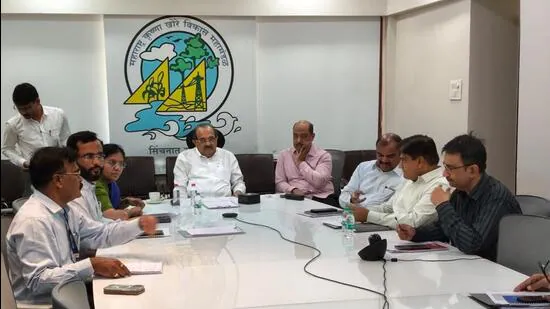
“Ensuring access to drinking water for citizens until August 31 must be the top priority,” Vikhe-Patil stated during the meeting held at the Irrigation Department building. He highlighted that the current monsoon has not only fallen short of the seasonal average but has also exacerbated the existing water crisis, requiring coordinated efforts across multiple agencies to mitigate the impact.
Regional Variations in Water Levels
Regional disparities in water availability have further complicated the situation. The Nashik division, for instance, has only 26% live storage in its reservoirs, while Marathwada reports 28%, both below the projected benchmarks. The Krishna river basin, which supports several districts, has also been identified as a critical area requiring urgent attention. These statistics underscore the state’s need for a targeted approach, as some regions face more severe shortages than others. The minister directed officials to conduct a thorough analysis of each region’s water reserves and implement localized strategies to maximize efficiency in distribution.
One of the key challenges has been the reduced inflow into major reservoirs, which are vital for the state’s water supply infrastructure. For example, the Tungabhadra and Bhandardara reservoirs have seen a sharp decline in storage, forcing authorities to rely on existing reserves and emergency water sources. The government has also urged municipal corporations to enhance their water conservation efforts, including repairing leaking pipelines and promoting the use of rainwater harvesting systems among residents.
Government Measures and Coordination
As part of the directive, stakeholders such as district administrations, municipal corporations, and water supply agencies have been tasked with developing an integrated action plan. This plan aims to streamline water management efforts and address the shortfall through coordinated measures, including the allocation of resources to priority areas. Vikhe-Patil also emphasized the importance of strict monitoring of water usage, particularly in drought-prone regions like Nashik and Ahilyanagar, to prevent wastage and ensure equitable distribution.
Authorities have launched joint initiatives against unauthorized water extraction, involving police, revenue officers, and water resource personnel. These measures are designed to enforce compliance with water usage regulations and protect the remaining reserves for essential needs. The state government has also urged the public to adopt water-saving practices, such as reducing non-essential consumption and using water-efficient appliances, to ease the pressure on existing supplies.
Despite the challenges, the government remains committed to ensuring that the State to ensure drinking water supply remains uninterrupted. With a focus on both short-term solutions and long-term sustainability, the initiative highlights the state’s proactive approach to managing the water crisis. As the drought conditions persist, the success of this plan will depend on the collaboration between state and local authorities, as well as the active participation of citizens in conserving water resources.