
SRNH junior doctors’ strike enters second day; services remain hit
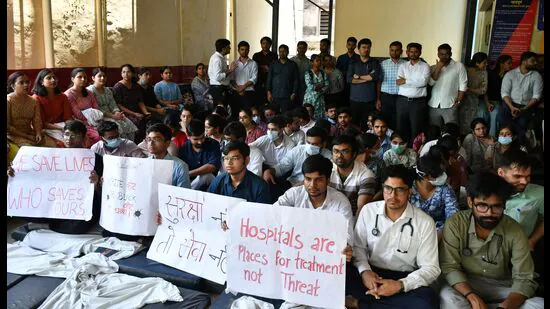
SRNH Junior Doctors’ Strike Enters Second Day: Impact on Medical Services
Bharatmorningnews.com – The SRNH junior doctors’ strike, which has now entered its second day, is causing significant disruptions across various hospital departments. On Tuesday, medical services at Swaroop Rani Nehru (SRN) Hospital faced unprecedented challenges as the protest, centered around the demand for the release of Dr. Mohsin Ali, continued to affect patient care. Over 3,000 individuals from remote areas have returned home without receiving consultations due to the ongoing strike, highlighting the critical strain on healthcare accessibility. The situation has drawn attention from both the public and officials, with concerns growing about the long-term consequences of the prolonged absence of junior doctors.
On the second day of the strike, outpatient departments, registration counters, and diagnostic services such as CT scans and MRIs experienced severe delays. Patients were forced to wait for extended periods, while others resorted to returning to their villages without necessary medical attention. The heatwave in Prayagraj exacerbated the situation, with many opting to delay their visits or abandon them altogether. A sit-in organized by striking staff outside the Trauma Centre gained traction, with slogans like “No Security, No Service” and “Black Coat Stain on the White Coat” echoing through the hospital premises. This demonstration underscored the deepening frustration among junior doctors, who have been demanding immediate action against the FIR filed against them.
Triggering Incident: Advocate’s Death Sparks Protests
The SRNH junior doctors’ strike entered its second day following the tragic death of high court advocate Jagriti Shukla while receiving treatment at SGPGI Lucknow. She had been injured in a road accident on May 20 and was admitted to SRN Hospital for initial care. Tensions between lawyers and junior doctors flared during her treatment, culminating in a clash that turned violent. Jagriti’s condition deteriorated after she was transferred to SGPGI, where she succumbed to her injuries. This incident has become the focal point of the ongoing protests, with junior doctors accusing the medical staff of negligence and inadequate care during her critical hours.
“The SRNH junior doctors’ strike will continue until Dr. Mohsin Ali is released and the FIR against us is withdrawn,” asserted a representative from the protest group. This statement reflects the determination of the junior doctors, who are not only seeking the release of their colleague but also demanding accountability from the authorities involved. The protest has also drawn support from senior doctors, who gathered near the Trauma Centre in the evening to show solidarity. However, the departure of over a dozen senior staff on summer leave has further strained hospital operations, leaving the remaining workforce to manage the increased burden.
Legal Action and Ongoing Investigation
The incident that triggered the SRNH junior doctors’ strike has led to a series of legal actions. Jagriti Shukla’s father filed a complaint, resulting in the arrest of Abshar Ahmad, a retired Army officer and the car driver involved in the collision. He was produced before a court and granted bail, but the investigation into the matter has intensified. Police have begun questioning Dr. Monish Ali, who was detained from his Rampur residence. The inquiry is focused on allegations of assault, misconduct, and other offenses tied to the conflict between lawyers and medical staff. The SRNH junior doctors’ strike has not only brought attention to the incident but also to the broader issues of workplace security and medical accountability.
As the SRNH junior doctors’ strike progresses, the impact on patients becomes more pronounced. The delay in services has forced many to seek alternative healthcare options, often leading to longer wait times or even compromising their health conditions. This has sparked discussions about the role of junior doctors in the healthcare system and whether their demands are justified. Meanwhile, the situation continues to evolve, with both the hospital administration and the protesting doctors engaging in dialogues to find a resolution. The SRNH junior doctors’ strike is a stark reminder of the challenges faced by medical professionals in maintaining service quality amid internal and external pressures.
The SRNH junior doctors’ strike has also highlighted the growing dissatisfaction among medical staff regarding working conditions and administrative decisions. The demand for Dr. Mohsin Ali’s release is part of a larger critique of the hospital’s handling of the incident, which has been perceived as a personal attack on the medical community. Protesters argue that the FIR against Dr. Mohsin Ali is a result of biased investigations and that the focus should be on improving patient care rather than penalizing doctors. The SRNH junior doctors’ strike continues to serve as a platform for expressing these grievances, with the hope that their actions will lead to meaningful changes in the hospital’s operations and policies.
As the SRNH junior doctors’ strike enters its second day, the public’s reaction has been mixed. While some patients express frustration with the disrupted services, others empathize with the doctors’ cause, acknowledging the pressures they face. The strike has also drawn media attention, with reports emphasizing the critical situation at SRN Hospital. The SRNH junior doctors’ strike is not only a local issue but has also sparked a conversation about the challenges of the healthcare sector in India. With the protests continuing, the focus remains on resolving the conflict and ensuring that patients receive timely care despite the ongoing disruptions.