
Spice of life | Vanishing verandah, architecture of pause
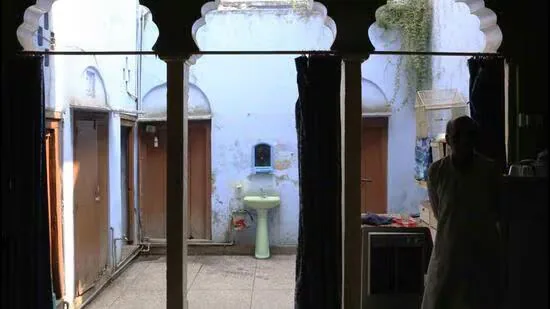
Spice of Life | Vanishing Verandah, Architecture of Pause
Bharatmorningnews.com – Once, evenings in small towns arrived gently. Shops lingered past dusk, their lights flickering softly as twilight settled. A bicycle rested against a tea stall, a radio played the echoes of an old Lata song somewhere in the distance, and elders gathered on verandahs not to debate politics or finance, but to watch the day drift away like a familiar visitor unwilling to depart. No grand events unfolded, yet life felt complete in its quiet rhythm. Now, those evenings persist only in memory.
The Vanishing Verandah
The verandahs are fading. In their place, towering gates, tinted windows, and homes built for display rather than dwelling rise. The wooden chairs where grandparents once spent their afternoons now hold meticulously arranged drawing rooms, seldom used for simple relaxation. Silence has not disappeared—it has merely transformed. Earlier, it was a companion in shared moments; today, it feels like a sterile echo of modern design.
The Cost of Efficiency
Progress wears the guise of change, yet it quietly erodes the essence of community. Children who once navigated their neighborhoods by foot now rely on digital maps. Families, though physically present, often drift into separate digital realms. Festivals, too, have become curated spectacles for cameras. In the space between constant notifications and the pursuit of productivity, leisure has turned into a guilt-laden act. Sitting idle on a verandah, gazing at the rain, might now seem almost wasteful. Yet civilisation thrives on such pauses.
Old towns lacked the economic gloss of skyscrapers or flashy infrastructure. Still, they held a wisdom we are forgetting—the art of lingering. A barber knew the stories of his customers’ families. The postman was more than a delivery agent; he was a thread in the emotional weave of the locality. Tea stalls were microcosms of dialogue, where conversations unfolded like slow-brewed teas.
Today, efficiency overshadows intimacy. Meals arrive quicker, messages cross continents in seconds, and travel shrinks to mere hours. Yet an unexpected shift has gripped the human spirit: despite endless connectivity, loneliness grows more prevalent. Cities stretch upward, while lives retreat inward, becoming quieter and more isolated.
The transformation is evident in language itself. Terms like availability, networking, and output now describe personal bonds, as if human relationships must be justified by utility. The phrase “Come, sit for a while” has grown rare. Time has become a commodity, yet memory resists being erased.
Occasionally, wandering through an old mohalla, one glimpses fragments of a bygone India: a grandmother spreading red chillies on a rooftop terrace, the earthy scent of rain-soaked soil, children crafting cricket stumps from bricks, and a transistor humming beside a paan shop. These are not mere aesthetic details. They are echoes of a civilisation that once allowed life to unfold unhurriedly.
A Future of Smaller Lives
Perhaps modern India risks losing more than its cultural grandeur—it may forget the tenderness of everyday moments. The peril is in letting speed define value. A society always in motion loses the capacity to notice beauty. Once beauty vanishes from routine, restlessness creeps in unnoticed.
The solution lies not in rejecting progress, but in reimagining it. To safeguard spaces where slowness is still possible. To nurture the habit of evening talks, spontaneous visits, and idle sitting beneath a dimming sky. For humans endure not just through convenience, but through meaning, memory, and a sense of belonging.
Otherwise, one day we may realise that while our cities became sharper, our lives grew smaller. And the last verandah—this humble architecture of pause, exchange, and shared quiet—will remain only as a photograph of a world once willing to wait. surikangra@gmail.com