
Parched existence, perennial crisis: In Prayagraj’s Shankergarh, hope runs dry in quest for elusive water
Parched Existence in Shankergarh: A Perennial Water Crisis in Prayagraj
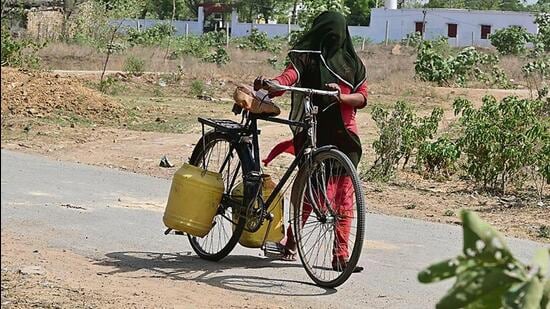
Bharatmorningnews.com – Water scarcity has become a defining feature of life in the remote villages of Shankergarh, a development block in Prayagraj, India. For years, the struggle to access even a basic supply of water has turned daily routines into a test of endurance, with residents often walking several kilometers to fetch what they need. The term “parched existence” aptly describes this enduring crisis, as communities continue to battle the absence of reliable water sources despite decades of efforts to address the issue.
The Devastating Reality of Water Scarcity
Residents in Shankergarh face a multifaceted challenge: failing handpumps, a dramatic drop in groundwater levels, and the abandonment of overhead tanks and natural water bodies. The situation is exacerbated by the lack of consistent emergency water supply services and the mismanagement of development funds, leaving families to rely on unpredictable sources such as private submersible pumps or shared water collections. With 276 villages spread across 74 gram panchayats, the “perennial crisis” in this region is not just a local issue but a systemic failure that impacts thousands.
Electricity shortages further compound the problem, as many households depend on power for water extraction. Families like that of Hind Lal, who live 500 meters from the nearest operational pump, have adapted by rationing their water usage to essential tasks. The inefficiency of government infrastructure has become a symbol of the frustration that permeates the community, as promises of improved water access remain unfulfilled.
Voices from the Ground
Ram Dev Singh, a 90-year-old farmer in Pahadi Kala village, recalls how the “parched existence” has persisted for over seven decades. Located 55 kilometers from Prayagraj’s district headquarters, his village lacks a single functioning water tap, forcing residents to endure long journeys to meet their needs. His son, Maan Bahadur, highlights the dire condition of the region’s groundwater, describing it as often contaminated and unfit for consumption. “Even with 50 handpumps in our gram panchayat, none operate reliably,” he explains, underscoring the scale of the problem.
Udai Pal, a 35-year-old father of three, echoes similar struggles. His family has learned to skip bathing and prioritize cooking over other uses, as government-provided water sources remain unreliable. “We are voters, but what do we get from these ‘netas’?” he questions, expressing disillusionment with local leaders who have yet to deliver on their promises of water security. The community’s growing anger reflects a deeper crisis of governance and resource allocation in the region.
Government Efforts and Unmet Expectations
Amid the worsening conditions, the Central government launched the ‘Har Ghar Jal’ scheme in 2023 with a budget of ₹450 crore, aiming to provide piped water to 40,000 households across 225,000 people by 2025. However, as of now, the project has only spent ₹250 crore, and not a single household in Shankergarh has received a connection. Manoj Kumar Singh, the block development officer, admits the progress has been slow, leaving villagers to continue their “perennial crisis” of water insecurity.
Local officials like Brijesh Prasad, an assistant engineer working on the project, claim 60% of the work is complete. Yet, this progress remains invisible to the affected communities, who still rely on manual labor and long-distance walks for water. The disparity between planned initiatives and on-the-ground reality highlights the urgent need for transparency and faster implementation to alleviate the ongoing “parched existence.”
Broader Implications and Environmental Concerns
The water crisis in Shankergarh is not isolated; it has rippled through neighboring villages like Lakhanpur, where 3,000 residents face the same challenges. The overhead tank built by the Jal Nigam in 2018-19 served as a temporary solution, but its failure within a month underscores the region’s vulnerability to declining groundwater levels. Environmental experts warn that the situation could worsen with climate change, making the “perennial crisis” even more acute for future generations.
The scarcity of water has also disrupted agricultural activities, a primary livelihood for many in the area. Crops suffer due to inconsistent irrigation, and livestock face dehydration. The psychological toll is equally severe, with children missing out on proper hygiene and elders enduring the physical strain of daily water collection. This relentless hardship has become a part of daily life, fueling a sense of helplessness among residents.
Community Resilience and Calls for Action
Despite the bleak circumstances, some communities have adopted innovative coping mechanisms. In Pahadi Kala, residents have begun sharing water resources, forming cooperative networks to ensure that everyone gets a fair share. However, these efforts are only temporary solutions, as the root causes of the crisis remain unresolved. The “perennial crisis” demands a comprehensive approach, combining infrastructure development with sustainable water management practices.
Local activists and concerned citizens are pushing for accountability, demanding that authorities address the misused funds and delayed projects. They argue that without immediate action, the “parched existence” in Shankergarh will continue to define the lives of its people for years to come. The government’s failure to deliver on its promises has turned the crisis into a symbol of neglect, with residents questioning whether their needs will ever be met.