
NGT assigns key role to two Pune institutions in ₹137-crore environmental penalty case
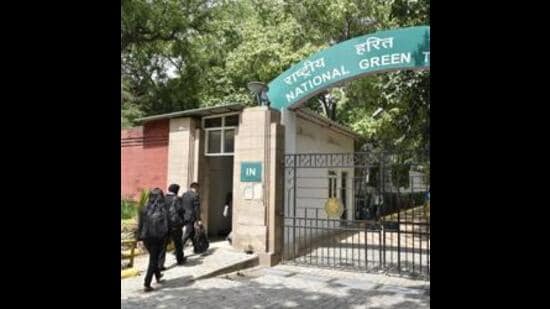
NGT Assigns Key Role to Two Pune Institutions in ₹137-Crore EPR Penalty Case
Environmental Tribunal Directs Expert Review of Plastic Waste Penalty
Bharatmorningnews.com – The National Green Tribunal (NGT) has assigned a pivotal role to two Pune-based institutions in assessing a ₹137-crore environmental penalty levied against Shakti Plastic Industries. This decision follows the tribunal’s identification of discrepancies in the compensation calculation, prompting the need for detailed technical and financial evaluations. The case highlights the NGT’s commitment to ensuring accountability in environmental violations, particularly within the plastic waste management sector.
On June 4, the NGT’s western zonal bench issued an order that became public on June 8, directing the Institute of Chartered Accountants of India (ICAI) and the College of Engineering Pune (COEP) to scrutinize the validity of the penalty. The ICAI will examine the financial justifications for the ₹137 crore compensation, while COEP’s environmental engineering team will analyze the operational capacity of Shakti’s recycling machinery. These evaluations aim to determine whether the penalty aligns with the state’s Extended Producer Responsibility (EPR) guidelines.
Background of the EPR Violation Case
The case stems from allegations that Shakti Plastic Industries issued EPR certificates for plastic waste in quantities exceeding its actual recycling output. Under India’s EPR framework, producers are obligated to collect and process plastic waste equivalent to their sales. Recyclers generate EPR certificates based on the waste they handle, which serve as proof of compliance. However, the Central Pollution Control Board (CPCB) and Maharashtra Pollution Control Board (MPCB) found that the company’s certificates were issued without adequate evidence of recycling activity.
As a result, the MPCB ordered the closure of Shakti’s Nangaon plant on June 18, 2024, citing irregularities in waste management practices. Three months later, on September 21, 2024, the board imposed a ₹137 crore penalty, marking one of the largest EPR fines in Maharashtra. Shakti challenged the decision, arguing that the penalty calculation methodology overlooked its actual operational capacity and machinery efficiency.
“The one-year debarment period outlined in clause 11.4 of the EPR Guidelines for Plastic Packaging has expired,”
the NGT stated, offering interim relief to Shakti Plastic Industries. This allows the company to resume operations temporarily while the compensation case is resolved. The tribunal emphasized that this decision does not affect the ongoing legal process, ensuring the case remains focused on technical accuracy and fair assessment.
The involvement of Pune’s institutions underscores the NGT’s approach to integrating regional expertise into high-stakes environmental cases. COEP’s professor Dr. Parag Sadgir, appointed to assess the Palghar facility’s machinery, brings specialized knowledge in environmental engineering. Meanwhile, the ICAI’s Chartered Accountants will review financial data to validate the ₹137 crore penalty. The MPCB is acting as the coordinating authority, overseeing the integration of findings into the tribunal’s final ruling.
The NGT’s directive reflects a broader effort to streamline environmental litigation by leveraging expert institutions. This case is a significant test of the EPR framework’s enforcement, as it balances corporate responsibility with the need for precise accountability. By involving Pune’s academic and professional bodies, the tribunal aims to strengthen the credibility of its decision and set a precedent for future cases.
Experts suggest that the ₹137-crore penalty could serve as a deterrent for similar violations. However, the role of the two Pune institutions in re-evaluating the case adds a layer of complexity, as their findings will determine whether the penalty stands or is adjusted. The tribunal’s emphasis on technical accuracy highlights the importance of rigorous data analysis in environmental justice, ensuring that penalties are both justified and proportionate.