
Mohali: Punjab Gau Sewa commission reviews measures for protection of stray cattle
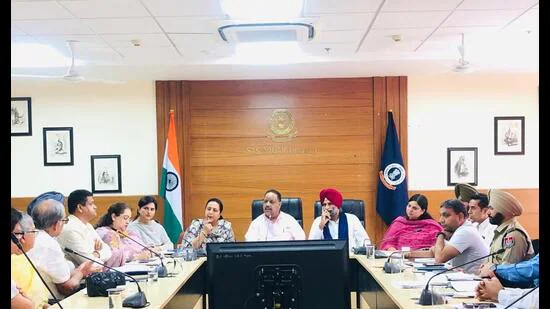
Mohali: Punjab Gau Sewa Commission Tackles Stray Cattle Protection Measures
Bharatmorningnews.com – Mohali – In Mohali, the Punjab Gau Sewa Commission has intensified its efforts to address the growing issue of stray cattle encroachment on public roads. Kimti Lal Bhagat, the commission’s vice-chairman, recently directed a comprehensive review of protocols to ensure the safe relocation and care of abandoned animals. The initiative underscores Mohali’s commitment to maintaining animal welfare standards, particularly in a city where stray cattle frequently disrupt traffic and damage crops. Bhagat emphasized that any negligence in this regard would result in strict enforcement actions against responsible authorities.
Unified Strategy for Cattle Population Control
During a pivotal meeting at the district administrative complex, Bhagat convened a cross-departmental task force comprising representatives from the district administration, police, animal husbandry department, municipal corporation, and environmental groups. The discussion highlighted the need for a synchronized approach to tackle stray cattle overpopulation, which has become a pressing concern in Mohali and surrounding areas. Officials from these bodies agreed to implement a unified strategy that combines immediate relief measures with long-term solutions, ensuring that cattle are not only removed from roads but also provided with proper shelter and sustenance.
“Stray cattle pose a significant threat to both road safety and agricultural productivity in Mohali,” Bhagat noted. “By coordinating efforts across departments, we can create a more effective framework for their protection and management.”
The meeting also emphasized the role of local communities in reporting instances of cattle abandonment, with plans to launch awareness campaigns to educate residents about their responsibilities in safeguarding stray animals. Bhagat urged municipal authorities to establish permanent checkpoints in high-risk zones to monitor and intercept cattle wandering onto roads.
Enhancing Infrastructure for Animal Care
The Punjab Gau Sewa Commission’s focus on improving infrastructure was a key agenda item during the meeting. Officials evaluated the current capacity of the Government Cattle Pound-cum-Gaushala in Magra (Lalru), a critical facility in Mohali, to determine if it can accommodate the increasing number of stray cattle. The review revealed that the site’s storage and fencing systems require upgrades to prevent overcrowding and ensure hygiene standards. Bhagat directed the implementation of new feeding schedules and the installation of solar-powered lighting to enhance the facility’s operational efficiency.
Furthermore, the commission is exploring partnerships with private stakeholders to expand the network of gaushalas across Mohali. This initiative aims to distribute the workload more evenly, reducing the burden on existing centers. A detailed action plan will be prepared, outlining timelines for infrastructure improvements and the allocation of resources to support these efforts. The emphasis on scalable solutions reflects Mohali’s proactive stance in addressing environmental and urban challenges related to livestock.
Legal Frameworks and Enforcement Actions
Legal measures against cattle abandonment were another central topic of the meeting. Bhagat called for stricter penalties under existing laws to deter owners from leaving their animals on public roads. The commission is revising guidelines to streamline the process of penalizing offenders, ensuring faster adjudication of cases. Additionally, a review of cattle smuggling and unlawful slaughter practices in Mohali was conducted, with plans to increase inspections of slaughterhouses and livestock markets to prevent illegal activities.
Officials also discussed the importance of documenting cases to build a robust database for future reference. This database will help identify recurring issues and track the effectiveness of interventions. Bhagat highlighted that transparency in enforcement is crucial for maintaining public trust and ensuring that the legal framework remains a deterrent. The meeting concluded with a commitment to prioritize Mohali’s unique challenges, such as the seasonal migration of cattle and their impact on urban infrastructure.
Community Involvement and Sustainable Solutions
Public engagement was identified as a vital component of the commission’s strategy. Bhagat encouraged citizens, local organizations, and educational institutions in Mohali to participate in initiatives that promote cattle welfare. This includes volunteering at gaushalas, supporting clean-up drives for stray animals, and reporting violations through the newly launched helpline. The commission also plans to integrate community feedback into its decision-making processes, ensuring that solutions are tailored to the city’s specific needs.
With a focus on sustainability, the meeting outlined plans to introduce sterilization programs for stray cattle to control population growth. These programs will be implemented in collaboration with veterinary experts and local NGOs, leveraging Mohali’s existing network of community health centers. Bhagat emphasized that by fostering a culture of responsibility among residents, the city can achieve lasting improvements in animal welfare. The comprehensive approach now being developed is expected to serve as a model for other urban areas facing similar challenges.