
Chandigarh: Panjab University VC assures MP Kang of Punjabi signboards
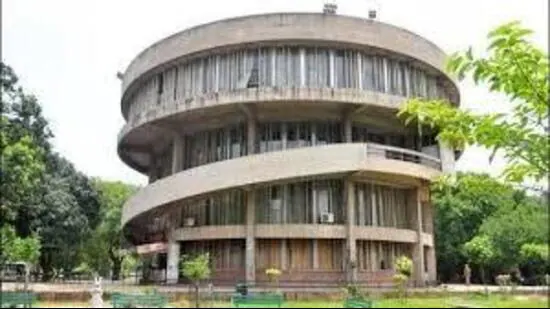
Chandigarh: Panjab University VC Assures MP Kang of Punjabi Signboards
Bharatmorningnews.com – Chandigarh, the capital city of Punjab and a vibrant hub of cultural and educational activity, has become a focal point of discussion following recent changes to signage at Panjab University. The university’s vice-chancellor, Renu Vig, recently addressed growing concerns raised by local representative and former student leader Malvinder Singh Kang, confirming that Punjabi signboards are now being procured and will soon be installed across campus. This assurance comes after months of protests and public outcry from students and activists who felt the removal of Punjabi script from official signs was a symbolic blow to the city’s linguistic and cultural heritage. The decision to replace Punjabi with Hindi and English has sparked a broader debate about the role of regional languages in public spaces, particularly in Chandigarh, where Punjabi and Hindi coexist as primary languages.
Protest Over the Shift to Hindi and English
The controversy escalated when members of the student organization SATH (Student Action for the Promotion of Punjab’s Heritage) began vandalizing signboards on campus that omitted the Punjabi script, specifically Gurmukhi. These signs, which were part of a recent accessibility initiative at the University Institute of Legal Studies and other central campus buildings, were criticized for favoring Hindi and English over the Punjabi language. Kang, who previously held prominent roles in the student council and Senate, has been a vocal advocate for preserving Punjabi in institutional settings. He argues that the exclusion of Gurmukhi from signage represents more than a linguistic adjustment—it signifies an erasure of Punjab’s cultural identity within Chandigarh’s educational landscape.
“The absence of Punjabi on our university signs is not just a language issue but a profound disconnect from the roots of our community,” Kang emphasized in a recent letter to the Punjab governor and Chandigarh administration. “As a city that values diversity, we cannot afford to sideline one of our core languages.”
His concerns highlight the growing sentiment among Punjabi-speaking citizens in Chandigarh that the shift in signage reflects a broader trend of marginalizing regional languages in favor of dominant ones. This sentiment is echoed by local activists who see the change as part of a larger effort to align the university with nationalistic linguistic policies, which they argue neglect the unique heritage of Punjab.
VC’s Assurance and the GeM Portal Procurement
Speaking to the media, Renu Vig reiterated the university’s commitment to cultural inclusivity, stating that the new Punjabi signboards have been sourced through the Government e-Marketplace (GeM) portal and are ready for installation. “We have ensured that all signage will now be bilingual, with Punjabi and Hindi prominently featured,” she said. The VC’s statement comes as a direct response to Kang’s demands, which included a call for the university to adopt a clear policy on language representation and to involve students in decision-making processes. The GeM procurement process, which streamlines government purchases, was highlighted as a transparent step in addressing the issue. However, critics argue that the timing of the signboard replacement, which coincided with the university’s ongoing accessibility upgrades, has drawn undue attention to the omission of Punjabi.
Further, the university administration has pledged to engage with Punjabi-speaking stakeholders, including alumni and student representatives, to discuss future signage plans. This move aims to bridge the gap between institutional policies and community expectations. The Panjab University, located in Chandigarh, has long been a symbol of Punjabi scholarship and academic excellence, making the language shift particularly significant. Kang has called for a review of the decision, emphasizing that the university’s commitment to Punjabi should be reflected in every aspect of its operations, from academic materials to public-facing signage.
Impact on Chandigarh’s Linguistic Identity
Chandigarh, a planned city that blends Punjabi and Hindi cultures, has historically been a model of linguistic harmony. The city’s unique status as a union territory, shared between Punjab and Haryana, has fostered a bilingual environment, with Punjabi and Hindi both widely spoken. However, the recent signage changes have ignited fears that Punjabi may be losing its prominence in public spaces. Local historians and linguists point out that the decision to remove Gurmukhi from the signs could have a lasting impact on the city’s cultural identity, especially in educational institutions that serve as key arenas for language preservation.
“Chandigarh’s identity is deeply tied to its Punjabi roots, and this change risks alienating a significant portion of the population,” said Dr. Amrita Kaur, a linguist based in Chandigarh. “If institutions like Panjab University abandon Punjabi, it could set a precedent for other public sectors to follow.”
The debate has also extended to the local media, with many outlets questioning whether the university’s actions are driven by political considerations or a genuine effort to modernize its infrastructure. As the installation of Punjabi signboards progresses, the city will be watching closely to see if the commitment to linguistic inclusivity translates into tangible efforts or if the issue remains symbolic.
Broader Implications for Chandigarh’s Cultural Policies
While the university’s response has been welcomed by some, others argue that the move is only a partial solution. They stress that the broader cultural policies of Chandigarh’s administration must ensure that Punjabi remains a visible and integral part of the city’s identity. The UT administration, which oversees Chandigarh, has been under pressure to address linguistic representation in public infrastructure, including schools, hospitals, and government offices. Kang’s intervention has brought renewed attention to this issue, with calls for a unified approach to language preservation in Chandigarh.
Experts suggest that the Punjabi signboards at Panjab University could serve as a model for other institutions in the city. “If Chandigarh can showcase Punjabi in its educational centers, it sends a strong message about the importance of the language,” said Professor Jasjeet Singh, a cultural studies scholar. “This is not just about signs—it’s about visibility, pride, and the future of Punjabi in a multilingual society.” As the university prepares to install the new signs, the city’s residents will be hopeful that this step marks the beginning of a more inclusive linguistic policy, one that honors Chandigarh’s rich Punjabi heritage while embracing modernity.