
BMC to revive 350 open wells as water reserves dip
Mumbai’s BMC Takes Initiative to Reactivate 350 Open Wells Amid Water Shortage
Bharatmorningnews.com – Mumbai continues to grapple with a delayed monsoon season, which has led to a 10% reduction in water supply. One of the city’s seven lakes has completely dried up, worsening the situation for residents. As water reserves decline rapidly—now at 12.12% of total storage—the municipal corporation has announced plans to reawaken 350 traditional open wells located on municipal property.
Directive to Municipal Officials
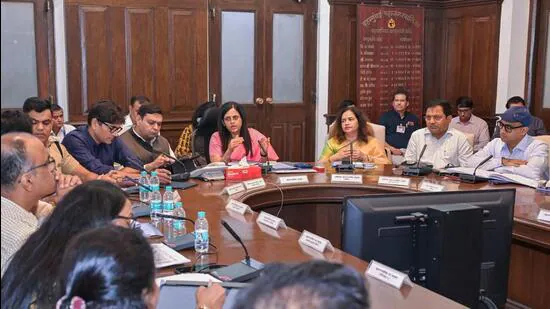
During a monthly review meeting of civic departments, municipal commissioner Ashwini Bhide directed all assistant municipal commissioners to inspect and clean the open wells. The goal is to prepare them for rainwater recharge, aiming to bolster water availability in the event of prolonged dry spells. This measure is intended as a proactive step to address potential shortages linked to the ongoing El Niño phenomenon.
“We’ve ordered all wards to locate open wells and allocate their water for non-potable uses, such as cleaning and gardening,” stated Dileep Patil, a hydraulic engineer at the BMC.
Patil clarified that open wells differ from borewells and other drilled sources. While these wells already hold water, they require silt and debris removal before they can be effectively utilized. He emphasized that housing societies could benefit from using well water for secondary purposes, provided they collaborate with municipal authorities and local corporators.
Current Water Levels
Although Mumbai’s water reserves are less severe than last year, they remain a cause for alarm. Recent reports highlighted a citywide tanker strike that disrupted supply chains on the first day of protests, affecting residential areas, businesses, and construction sites. As a result, many residents now depend on private water tankers, which are expected to deliver nearly 550 million litres per day.
According to BMC data released Thursday, the combined water stock in the seven key reservoirs stands at 175,465 million litres daily, compared to a total capacity of 1,447,363 million litres. This represents 12.12% of storage, up from 9.80% and 5.64% in the previous two years. Yet, the low levels have sparked worries about future shortages.
Among the reservoirs, Upper Vaitarna has already reached its lowest point. Modak Sagar, a vital water source, is at 32.4% of its capacity, while Bhatsa, Mumbai’s largest reservoir, holds just 11.33% of its total volume. These figures underscore the urgent need for alternative water management strategies.
Monsoon Delays and Climate Factors
Experts from the Indian Meteorological Department (IMD) have noted that the delayed monsoon onset is attributed to unfavorable wind patterns and atmospheric conditions. The monsoon front has advanced into parts of south coastal Maharashtra and reached Solapur but has since slowed its progression.
Bikram Singh, deputy director general of the IMD Mumbai office, explained that weak wind flow and the absence of strong monsoon currents have hindered northward movement. Models predict minimal progress over the next few days, with no active cloud bands forming in Maharashtra or neighboring regions. Rainfall in Mumbai has been sporadic and below average, and thunderstorms have not materialized as expected.