
One stage, two controversies, one big question
One stage, two controversies, one big question
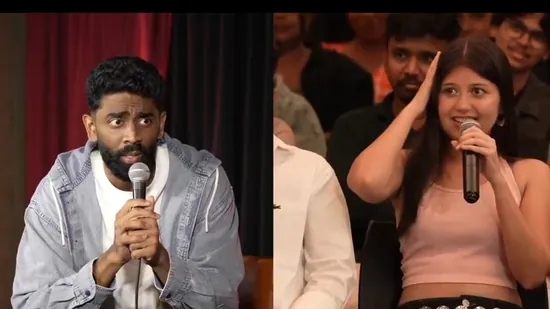
Bharatmorningnews.com – A few days after the infamous ₹370 biryani incident, comedian Pranit More found himself at the center of another public debate. This time, it was Mumbai-based medical student Sejal Pawar who drew criticism for a joke she made during an audience exchange. The comment, which revolved around the size of male cadavers’ genitalia, sparked a wave of backlash. In response, Pawar issued an apology on Instagram, acknowledging her responsibility for the remarks. Her account was subsequently set to private mode.
The current dispute has reignited discussions about the earlier biryani video, where audience member Himanshu Jangra remarked that paying ₹370 for a meal could warrant a romantic encounter. The statement was labeled misogynistic and sparked conversations about consent. Jangra resigned from his job and expressed regret, though some observers noted Pawar’s follower count increased despite the controversy.
More’s role in the situation came under scrutiny as well. Critics argued that he should have addressed Pawar’s comments rather than reacting with laughter. The comedian later offered his own apology and has since deactivated his Instagram profile. The incident has raised questions about the balance between humor and respect in public spaces.
Opinions on the matter have divided widely online. Influencer Dolly Singh called for greater accountability from comedians, emphasizing the need for mindful expression. Content creator Kusha Kapila viewed the biryani clip as a strategic piece meant to generate attention, not necessarily comedy. Actor Ranvir Shorey, however, defended the freedom of comedic experimentation, stating that societies that dismiss humor lose a part of their humanity.
Medical Perspectives on Cadaver Humor
“While the standard in dissection labs is to honor cadavers with reverence, these remarks could be likened to locker room banter and warrant similar scrutiny when shared in public for amusement. This is particularly worrying because body donation for medical education remains a delicate and socially awkward topic. Such comments might rekindle concerns about privacy and respect, possibly deterring families from donating bodies. They also risk undermining a profession that relies on public trust and the sanctity of the white coat,” says Dr. Saumya Pandey, a consultant radiologist in Faridabad.
“In India, cadaver dissection is regulated by the Human Anatomy Act and NMC guidelines. A body given to science or acquired legally must be treated with the same regard as a living patient. There’s no room for mockery or ridicule at the expense of the deceased. That body was once a father, husband, son, or brother. Medical students are taught from day one that the cadaver is their first silent teacher. Many institutions begin with a prayer, hold memorial services, and ensure remains are handled with dignity. The dissection hall is not a comedy stage—it’s a sacred educational space,” says Dr. Geeta Jain, Head of Gynaecology and IVF at Maccure Hospital.
“Anatomy is the first subject in MBBS programs, and for many, the dissection hall is their first encounter with the realities of medicine. The experience is challenging, with the pungent smell of preservatives, the sterile environment, and the emotional weight of working with a cadaver. I still recall my first year of medical school nearly 25 years ago, when instructors focused on helping us adapt to the dissection hall before teaching anatomy itself,” explains Dr. Vaishali Sharma, a senior gynaecologist and IVF specialist at VS Healthcare.