
Gurugram: Open manholes, sewage choke key Sec 69 link road to SPR
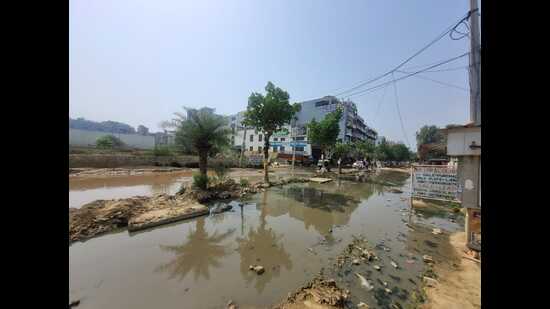
Gurugram: Sewage Crisis Threatens Key Link Road to Southern Peripheral Road
Bharatmorningnews.com – Gurugram, a rapidly expanding city in the National Capital Region, has faced growing frustration among residents, office workers, and commuters due to persistent sewage issues on a vital section of Kushal Chowk Road in Sector 69. For months, the 800-meter stretch has been plagued by overflowing manholes, stagnant wastewater, and foul odors, creating a hazardous environment for daily travel. The problem has worsened with ongoing construction activity, which has further damaged the road’s surface and contributed to deep potholes. Despite repeated complaints, local authorities have yet to address the root causes of the crisis, leaving the community in limbo.
Impact on Daily Commutes and Local Economy
The key link road between Kushal Colony and Avenue 69 is not only a critical artery for transportation but also a lifeline for businesses and services in the surrounding areas. Gurugram’s urban development has seen this stretch become increasingly busy, with thousands relying on it to access workplaces, schools, and healthcare facilities. However, the combination of open manholes and stagnant water has forced many corporate employees to take alternative routes, disrupting their schedules and increasing travel time. Ride-hailing services have also raised concerns, with some drivers avoiding the area or charging higher fares to compensate for the inconvenience.
“This road is essential for the functioning of Gurugram’s infrastructure, especially as the city’s population grows. The neglect of maintenance has turned a once-convenient route into a nightmare for commuters and local businesses,” said Ravi Kumar, a small business owner in Sector 69 who has been affected by the recurring issues.
Challenges in Wastewater Management
The problem is compounded by the city’s complex wastewater management system, which has struggled to keep pace with Gurugram’s urbanization. Residents have pointed out that the shared drainage channel between two colonies, Kushal Chowk and Avenue 69, is inadequately sized to handle the increasing volume of domestic and commercial discharge. During peak hours, the system overflows, resulting in wastewater spilling onto the road and creating a constant smell of decay. Legal experts suggest that the current setup lacks proper zoning and planning, leaving the area vulnerable to such crises.
Delays in Infrastructure Projects
While Gurugram has made significant strides in urban development, the sewage crisis highlights the lag in infrastructure projects. A 900-mm diameter RCC-covered master sewer line has been installed along the Southern Peripheral Road (SPR), but its extension into Sectors 69 and 70 is still pending due to legal clearances. Officials from the Gurugram Metropolitan Development Authority (GMDA) have acknowledged the delay, citing bureaucratic hurdles in obtaining approvals from relevant departments. This slow progress has left the communities reliant on temporary solutions, such as manual pumping and periodic cleaning, which are far from sustainable.
“The GMDA has been aware of the issue for months, but their response has been inadequate. Gurugram’s residents deserve better infrastructure to support their daily lives and economic activities,” remarked Priya Mehta, a local environmental activist.
Community Concerns and Potential Escalation
Residents fear that the situation could worsen with the monsoon season, as heavy rainfall is expected to exacerbate the flooding. The lack of alternative routes has made the area particularly vulnerable, with some neighborhoods experiencing prolonged waterlogging during peak hours. Kajal Sharma, a parent in the community, emphasized the risk to children’s safety, stating that the stagnant water often becomes a breeding ground for mosquitoes. The growing concern has prompted calls for immediate intervention, with some urging the GMDA to prioritize the area’s needs over other projects.
Collaboration Needed Between Private Developers and Authorities
Private developers managing the road have also been criticized for their slow response to complaints. Despite efforts to extract water using pumps and level the road surface, the infrastructure remains unstable. The GMDA has acknowledged that the private developers are responsible for maintaining the road, but their coordination with municipal bodies has been inconsistent. This disconnect has left residents without clear channels for reporting issues, leading to frustration and a sense of helplessness. As Gurugram continues to expand, experts warn that without improved collaboration, similar crises could become a regular occurrence in other parts of the city.
“It’s a shared responsibility between the GMDA and private developers to ensure Gurugram’s roads are functional and safe. The current neglect shows a lack of prioritization for the city’s most vulnerable areas,” noted Anil Verma, a civic body representative.