
Iran dismisses Trump warning of fresh attacks: ‘They will not try again if there’s any rationality’
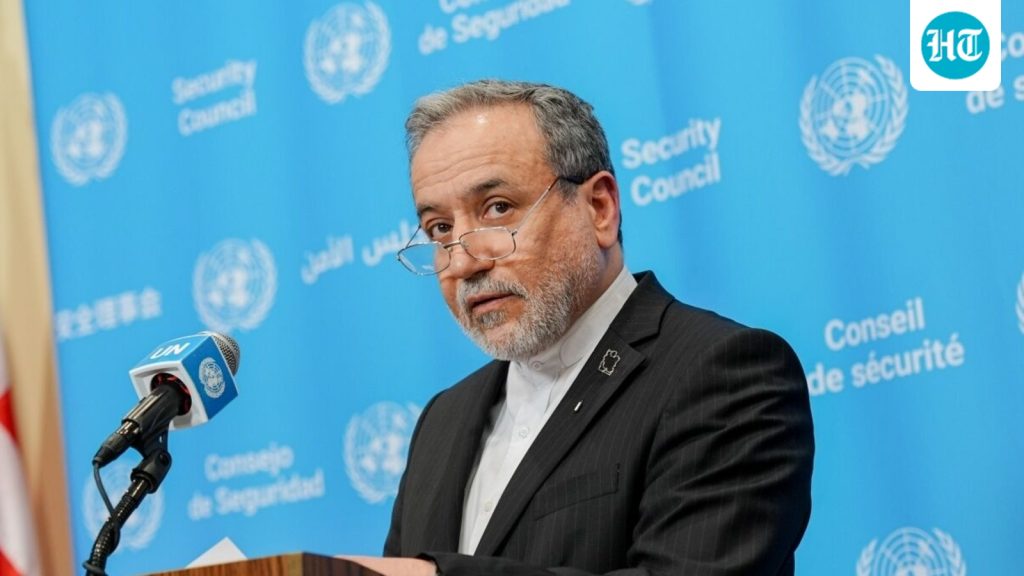
Iran Signals No Policy Shift Amid Renewed Talk of US Strikes
Bharatmorningnews.com – Iran’s leadership will not alter its regional approach even if the United States and Israel launch another military campaign, Foreign Minister Abbas Araghchi said on Sunday, as tensions persist despite a ceasefire that ended weeks of bombardment.
Araghchi presented the conflict as a decisive break from the region’s previous security order. He said Tehran was looking beyond the immediate fighting and argued that another attack would not produce a different outcome for Iran’s adversaries.
“Whether war happens or not, our policies remain in place,” Araghchi said during a televised appearance in Tehran.
His comments followed fresh remarks from US President Donald Trump, who raised the prospect of further strikes against Iran while also speaking of the possibility of a broad diplomatic settlement. The competing statements underline how military pressure and negotiations remain intertwined after the April 8 ceasefire.
Warning Against Another Offensive
Araghchi said the United States and Israel had already attacked Iran twice and would gain nothing from repeating the effort. He urged restraint, framing a new military operation as an irrational choice.
“If there is any rationality, they will not try military action against Iran again,” he said.
Trump, speaking on Saturday, left open both confrontation and diplomacy. He said a strike could happen soon, but also suggested that Washington and Tehran might reach an agreement. The US president said Iran wanted a deal, while questioning whether Tehran would abide by any terms it accepted.
“Maybe tomorrow… There’s a possibility I will. There’s also a possibility we’ll have a nice, big, beautiful agreement,” Trump said.
Trump also defended his administration’s conduct of the war in West Asia, praising US naval and military forces. He said American operations had inflicted substantial damage on Iranian military capabilities, claimed 259 ships had been sunk, and said Iran was facing record inflation.
Hormuz at the Centre of the Dispute
A major element of Araghchi’s address was the Strait of Hormuz, the strategic waterway linking the Persian Gulf with the Gulf of Oman. It is a vital route for global energy exports, so disruption there can have consequences far beyond the countries directly involved in the conflict.
Tehran has asserted control over passage through the strait since the war began and has targeted ships it says attempted to cross without Iranian authorization. The United States and regional governments have strongly opposed those actions, while the continuing naval blockade and restrictions on shipping have remained a major source of friction.
“The Strait of Hormuz will not be the same as before the 40-day war,” Araghchi said.
He called the conflict the “Ramadan War” and described it as a historic turning point for regional security. In his view, the existing arrangements have been overturned and any lasting settlement must address fighting across every arena rather than treating one front in isolation.
“The end of this war must be across all fronts,” Araghchi said.
For governments dependent on secure maritime trade, the unresolved status of Hormuz remains a central concern. Even after continuous airstrikes stopped, uncertainty over access to the narrow passage has continued to shape the wider diplomatic and security environment.
Competing Claims Over War Damage
Araghchi also made sweeping claims about Iranian military operations during the conflict. He said Iranian forces destroyed more than 80 American aircraft and fighter jets, with nearly all of them struck by missiles while on the ground.
“In this war, we destroyed more than 80 American aircraft and fighter jets, nearly all of which were hit by missiles on the ground,” he said.
He further claimed that Iranian attacks had devastated nearly all US bases in the region and damaged hundreds of structures at those installations. Araghchi again called for foreign military forces to leave the region.
Those assertions stand alongside Trump’s insistence that US operations had severely weakened Iran’s military capacity. The sharply different portrayals reflect the broader contest over the political meaning of the war, not only its military outcome.
Ceasefire Did Not End the Diplomatic Standoff
The present crisis followed the February 28 US-Israeli bombing campaign against Iran, during which Iran’s Supreme Leader and senior officials were assassinated. Tehran responded with attacks on US bases in the Gulf and by closing the Strait of Hormuz.
The April 8 ceasefire between Iran and the United States brought an end to sustained bombardment, but it did not resolve the core disputes over maritime access, military presence and the naval blockade. A diplomatic framework reached in June later collapsed after each side accused the other of breaching its obligations.
Iran has since advocated a return to that framework as a route toward a more durable settlement. At the same time, Tehran has rejected claims that it offered to reopen the Strait of Hormuz in exchange for an end to Washington’s naval blockade.
Iranian officials said no new proposal had been passed to the United States through Pakistani mediators. They also dismissed as fabricated a claim that Tehran had conveyed such an offer through Pakistan.
With Trump still holding out the possibility of both military action and a negotiated agreement, the next phase of the crisis may depend on whether the two sides can revive diplomacy without first resolving their conflicting narratives of the war. For now, Araghchi’s message was that Iran sees the regional balance as permanently changed—and that it will not retreat from the policies it adopted during the conflict.
Related Reading
Frequently Asked Questions
What is Iran dismisses Trump warning of fresh?
Iran dismisses Trump warning of fresh is the main topic of this guide. The article explains the context, practical details, and next steps readers should understand.
Why does Iran dismisses Trump warning of fresh matter?
Iran dismisses Trump warning of fresh matters because readers are looking for a useful answer, not just a short summary. Good content should match search intent and help them decide what to do next.