
Can a living US president appear on a US coin? Trump’s new gold $1 coin, explained
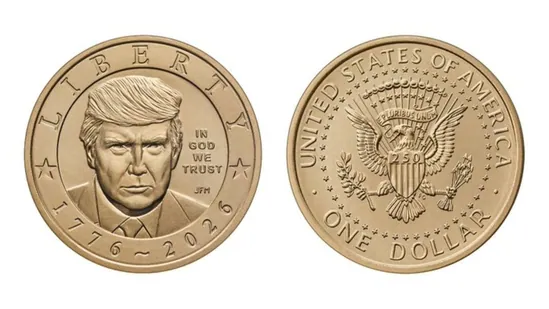
Living U.S. President on Coin? Trump’s New Gold $1 Coin Explained
Bharatmorningnews.com – Can a living U.S. president appear on U.S. currency? This question gained renewed attention when the Treasury Department unveiled a commemorative gold $1 coin featuring Donald Trump, marking the nation’s 250th anniversary. The decision sparked debates over the legal boundaries of presidential imagery on coins and its implications for tradition versus modernity.
Historical Precedents and Legal Framework
Traditionally, U.S. coins have honored deceased presidents, such as Abraham Lincoln on the penny or Thomas Jefferson on the nickel. However, the 2020 Bipartisan Coinage Act, signed into law by President Trump, introduced a new exception. This legislation allows the Treasury Secretary to feature living individuals on coins during the 250th anniversary year, effectively sidestepping the longstanding rule that restricts living presidents from appearing on regular currency.
The 1866 law, which governs paper money, explicitly bars living people from being depicted on U.S. currency. Similarly, the 2007 Presidential $1 Coin Program limits presidential portraits to those who have passed away. Yet, the 2020 law created a special provision, granting flexibility for commemorative issues. This legal shift enables the Mint to create coins with living presidents on the obverse side, while the reverse must still depict non-living figures or symbols.
Design and Symbolism of the Trump Coin
The gold $1 coin showcases a striking design, with Trump’s portrait on the front alongside the phrases “In God We Trust” and “Liberty.” The year 1776 is paired with 2026 to highlight the 250-year milestone, emphasizing the connection between American independence and modern leadership. The reverse side features the presidential seal and the number 250, underscoring the coin’s commemorative purpose. This blend of historical and contemporary elements aims to celebrate both the nation’s founding and its current direction.
The coin is not standard currency but a special commemorative edition, available in rolls and bags starting this fall. While it has a gold finish, the Mint clarified it is made of non-precious metals, making it more accessible than pure gold. This distinction is crucial, as it avoids the coin becoming a collectible item rather than a traditional piece of currency. The design also includes subtle nods to Trump’s political branding, such as the “FIGHT FIGHT FIGHT” slogan, which was part of an earlier draft but was modified to align with the 250th anniversary theme.
Political and Public Reactions
Reactions to the coin have been polarized. Critics, including Kentucky Representative Thomas Massie, argue that the move reflects an era of diminishing respect for constitutional norms. “Congratulations, we’ve entered the end stages,” Massie remarked, suggesting the coin could lead to more costly and controversial issues like the removal of the penny or nickel. He also raised concerns about counterfeit versions of the coin being sold to the public, potentially undermining its authenticity.
Conversely, supporters view the coin as a fitting tribute to Trump’s legacy and the nation’s achievements. The 250th anniversary of the United States provides a unique opportunity to honor leaders who have shaped the country’s history. Legal experts confirm that the 2020 law grants the Treasury the authority to issue such coins, allowing for creative expression while maintaining the integrity of the currency system. The coin’s release has also sparked discussions about the future of presidential portraits on U.S. currency, with some questioning whether other living leaders might follow suit.
Context of the 250th Anniversary and Coinage Trends
The timing of the coin’s release aligns with the 250th anniversary of the United States, a period of heightened national pride and historical reflection. While the Mint has historically used coins to commemorate significant events, such as the moon landing or the Civil War, this initiative is notable for its focus on a living president. The choice of gold as the coin’s material adds a touch of prestige, making it a collectible item for enthusiasts.
Experts suggest that the 2020 law was designed to allow flexibility in celebrating presidential legacies, particularly during milestone years. The coin’s design also reflects a trend of blending historical symbols with modern political figures, a practice that has been used in other commemorative issues. However, the inclusion of a living president raises questions about the long-term impact on the tradition of honoring leaders who have shaped the nation’s history. As the coin becomes available, its reception will likely influence future decisions about presidential imagery on U.S. currency.
Author Bio
Prakriti Deb is a journalist at Hindustan Times Digital, covering a wide range of topics from American politics to global events. With a focus on political developments that shape international dynamics, Deb aims to simplify complex narratives through clear and engaging storytelling. Prior to her role at Hindustan Times, she contributed to The Indian Express Digital, where she reported on international affairs and their implications for global society. Holding a postgraduate degree in Mass Communication with a specialization in journalism, Deb combines her academic background with a passion for storytelling. Outside of work, she enjoys travel, art, and exploring new experiences through creative expression.