
Why was Alyssa Thomas suspended after Caitlin Clark incident? What report reveals about Adam Silver’s involvement
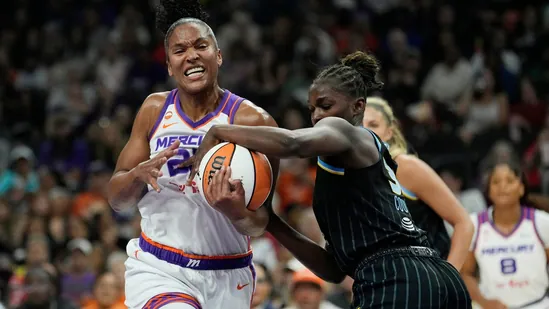
Alyssa Thomas Suspended After Caitlin Clark Incident: Adam Silver’s Role Revealed
Bharatmorningnews.com – Alyssa Thomas, the star forward of the Phoenix Mercury, found herself in the spotlight after receiving a one-game suspension following a controversial moment during a game against the Indiana Fever’s Caitlin Clark. The incident, which occurred during a loose-ball play, sparked a flurry of questions about the WNBA’s disciplinary process and the extent of Adam Silver’s influence on the decision. The suspension, enforced for a Flagrant 2 foul, not only removed Thomas from a home matchup in Phoenix but also raised concerns about consistency in officiating and leadership accountability within the league.
Details of the Suspension Decision
The incident unfolded when Thomas made contact with Clark’s throat area during a critical play. Initially, the referee did not call the foul, but after a post-game review by the WNBA’s officials, the call was upgraded to a Flagrant 2. This decision marked the first time Thomas had been suspended for a foul in her career. According to the report, the suspension was not merely a reaction to the physical contact but also a strategic move to send a message about handling high-profile conflicts. The involvement of Adam Silver, the NBA Commissioner, added another layer to the narrative, as he was reportedly consulted to ensure the ruling aligned with broader league standards.
“The WNBA has always prioritized fair play, and this suspension reflects our commitment to upholding that standard,” said a league spokesperson in a statement following the incident.
Commissioner’s Strategic Influence
The report suggests that Adam Silver played a pivotal role in shaping the outcome of Thomas’s suspension. While WNBA Commissioner Cathy Engelbert initially resisted the idea of a one-game penalty, Silver’s input appeared to sway the decision. His emphasis on consistency and accountability across both men’s and women’s basketball highlighted the league’s desire to maintain a unified approach to discipline. This collaboration between the NBA and WNBA underscores a growing trend of cross-league coordination, particularly in handling incidents that could impact public perception or sponsorship opportunities.
Engelbert, who has led the WNBA since 2019, faced pressure to take a firm stance on the matter. The suspension not only addressed the immediate incident but also aimed to reinforce the league’s commitment to addressing player conduct in a timely manner. Critics, however, argue that the decision may have been influenced by external factors, such as the potential for future conflicts or the need to align with NBA protocols. The report adds to the ongoing debate about whether such interventions are necessary or if they compromise the WNBA’s autonomy in making rulings.
Broader Implications for the WNBA
The suspension of Alyssa Thomas has reignited discussions about officiating standards in the WNBA. While the league has made strides in improving the quality of play and player safety, incidents like this highlight the challenges of maintaining consistent enforcement. The review process, which led to the Flagrant 2 call, demonstrates the league’s willingness to revisit calls, but it also raises questions about transparency. How often are such reviews conducted, and what criteria are used to classify fouls as flagrant? These questions are critical for fans and analysts who seek clarity in the league’s disciplinary actions.
Additionally, the involvement of Adam Silver signals a potential shift in how the WNBA handles high-stakes situations. By leveraging the NBA’s authority, the league may be trying to set a precedent for future incidents. However, some argue that this could create a perception of bias or overreach. As the WNBA continues to grow, balancing rigorous enforcement with player support will be essential to maintaining its credibility and fostering a positive environment for athletes.
Player Reactions and Public Discourse
Thomas and Clark both expressed their perspectives on the incident. Clark, who is among the league’s most prominent stars, acknowledged the physical nature of the play but emphasized that it was a split-second decision. Meanwhile, Thomas defended her actions, stating that the contact was unintentional. Their contrasting viewpoints have fueled public debate, with fans divided over whether the suspension was justified or overly harsh.
Media outlets and analysts have also weighed in, highlighting the broader implications of the ruling. Some view it as a necessary step to address conflicts, while others criticize it as a response to political pressure rather than a fair judgment. The discussion extends beyond the individual incident, reflecting the WNBA’s ongoing efforts to manage its image and ensure that its disciplinary actions are seen as equitable and transparent.
As the season progresses, the suspension of Alyssa Thomas will be closely watched for its impact on future rulings. Whether it serves as a model for consistency or a sign of increased external influence remains to be seen. For now, the incident underscores the delicate balance between accountability and fairness in professional sports, with the WNBA at the center of this evolving narrative.