
After years of Netanyahu crying ‘bomb’, hostage crises, assassinations, the US and Iran are moving towards a peace deal
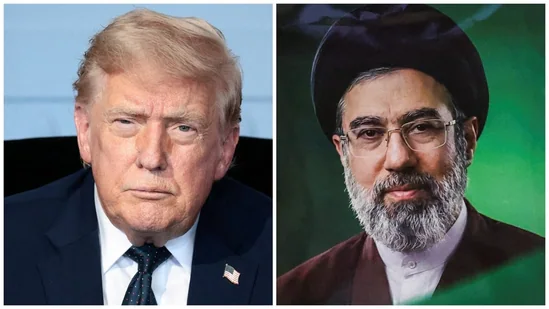
Netanyahu’s Years of Crying ‘Bomb’ Lead to US-Iran Peace Deal?
Bharatmorningnews.com – After years of Netanyahu crying ‘bomb,’ the long-standing tensions between the United States and Iran have finally begun to show signs of resolution. Israeli Prime Minister Benjamin Netanyahu, known for his relentless emphasis on Iran’s nuclear threat, has been a central figure in escalating regional conflicts. However, recent diplomatic efforts suggest that both nations are now prioritizing peace over continued hostilities. A potential peace deal, set to be formally announced in Switzerland this week, could mark a turning point in their relationship. This agreement, which addresses critical issues like nuclear proliferation and regional security, has been in the works for months, with final terms still being negotiated as of Monday.
Netanyahu’s Nuclear Warnings and Political Legacy
For over three decades, Netanyahu has consistently warned of Iran’s impending nuclear capability, often using the phrase “bomb” to evoke fear in both domestic and international audiences. His rhetoric gained momentum in the 1990s, when he first positioned Iran as a major threat to Israel’s survival. This narrative was reinforced in 2003, when the IAEA confirmed that Iran had paused its weaponization efforts, yet Netanyahu continued to argue that the country was only months away from developing nuclear weapons. His warnings, though sometimes seen as alarmist, played a significant role in shaping public opinion and justifying military actions in the region.
“Iran was only months away from developing nuclear weapons,” Netanyahu declared repeatedly, shaping public perception of the region’s threat landscape.
The Prime Minister’s stance has been a cornerstone of Israeli foreign policy, particularly during periods of heightened geopolitical instability. His administration has actively supported U.S. sanctions on Iran and participated in military strikes aimed at dismantling its nuclear infrastructure. While his warnings have kept the international community on high alert, critics argue that they have also fueled unnecessary conflicts and diverted attention from more diplomatic solutions. This ongoing cycle of threats, military actions, and diplomatic overtures has created a complex web of relations that the current peace deal aims to untangle.
Escalating Tensions and Regional Conflicts
The roots of the U.S.-Iran crisis stretch back to the 1967 “Atoms for Peace” initiative, which saw the United States provide Iran with nuclear technology. This program laid the groundwork for Iran’s future nuclear ambitions, but it wasn’t until the 1979 Islamic Revolution that relations took a dramatic turn. The revolution, which ousted the U.S.-backed Shah, led to the 444-day hostage crisis at the American Embassy in Tehran, becoming a defining moment in the Cold War era. This event not only strained U.S.-Iran relations but also shifted the global perception of Iran as a regional power with growing influence.
By the early 2000s, the nuclear issue had become a focal point of international diplomacy. In 2002, the discovery of a covert uranium enrichment facility at Natanz, along with the existence of a similar plant at Fordow, sent shockwaves through the international community. Netanyahu capitalized on this revelation, positioning Iran as a direct threat to Israel’s security. The subsequent 2003 talks between the U.S. and Iran, brokered by Britain, France, and Germany, aimed to curb Iran’s nuclear program, but they collapsed in 2006 when Iran resumed uranium enrichment. This period of renewed conflict set the stage for the more intense hostilities that followed in the 2010s.
The Peace Deal and Its Potential Impact
Recent developments have shifted the focus from confrontation to cooperation. By 2023, Iran had expanded its nuclear infrastructure and deepened ties with Russia, complicating the geopolitical landscape. The October 2023 Hamas attack in Israel further intensified tensions, leading to a series of Israeli strikes in Gaza and a direct clash with Iran’s support for Hamas. Despite these hostilities, the current peace deal represents a strategic move to de-escalate the situation. The agreement, which includes provisions for Iran’s nuclear program and sanctions relief, is being finalized after months of negotiations involving key stakeholders in the U.S. and Iran.
The deal’s framework has been shaped by the lessons of past conflicts, including the 2015 Joint Comprehensive Plan of Action (JCPOA). While the JCPOA was initially signed under the Obama administration, it faced challenges under Trump’s presidency, who withdrew the U.S. from the agreement in 2018. The current peace deal seeks to address these shortcomings by offering a more comprehensive and enforceable set of terms. If successful, it could lead to a significant reduction in military tensions, stabilize the Strait of Hormuz, and open new channels for economic and political cooperation between the two nations.
Historical Context and Future Prospects
The U.S.-Iran rivalry has evolved over decades, with each era marked by distinct challenges and opportunities. The 1979 revolution and subsequent hostage crisis were followed by a period of détente in the 1980s, but this was short-lived as Iran’s nuclear program resumed. The 2000s saw a mix of diplomacy and military interventions, culminating in the 2015 JCPOA. However, the deal’s fragility was exposed by the Trump administration’s “maximum pressure” campaign, which led to Iran’s accelerated nuclear development and increased regional aggression.
Now, as the world grapples with the implications of a potential peace deal, the focus is on restoring stability to a region that has long been a flashpoint for global tensions. The agreement, while still in its final stages, reflects a broader shift in U.S. foreign policy toward engagement rather than isolation. For Iran, the deal offers a chance to secure economic benefits and reduce international scrutiny. For Israel, it provides reassurance that Iran’s nuclear ambitions are under control, at least for the foreseeable future. If this peace deal holds, it may pave the way for a new era of cooperation and reduce the risk of a full-scale regional war.
Conclusion: A Step Toward Peace After Years of Netanyahu Crying
After years of Netanyahu crying ‘bomb’ and relying on military posturing, the U.S. and Iran are finally taking steps toward a lasting peace. The negotiations, which have spanned multiple administrations and political shifts, demonstrate the complexity of resolving a conflict with deep historical roots. While challenges remain, the current agreement signals a willingness to prioritize diplomacy over continued hostilities. The success of this peace deal will depend on its ability to address both nations’ security concerns while fostering economic and political cooperation. If implemented effectively, it could mark a significant milestone in the long and turbulent history of U.S.-Iran relations.