
CJI Surya Kant forms four special benches to fast-track Supreme Court’s oldest cases
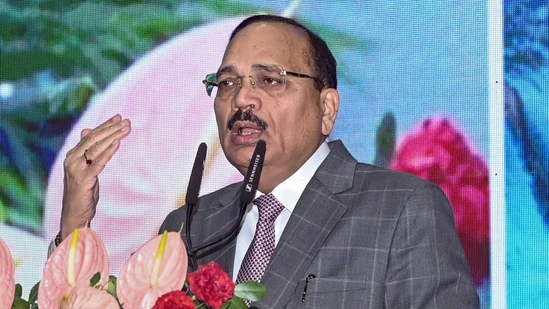
CJI Surya Kant Forms Four Special Benches to Fast-Track Supreme Court’s Oldest Cases
Supreme Court’s New Strategy to Tackle Legacy Cases
Bharatmorningnews.com – Chief Justice of India (CJI) Surya Kant has launched a strategic initiative by forming four special benches, a move that directly aligns with the goal of accelerating the resolution of the Supreme Court’s most aged cases. This decision, announced to streamline justice delivery, marks a significant step toward addressing the persistent backlog that has plagued the judiciary for years. By creating dedicated benches for older cases, CJI Kant aims to fast-track their adjudication, ensuring that justice is not delayed for prolonged periods. The reform is part of a broader effort to enhance the court’s operational efficiency and meet the demands of a justice system increasingly under strain.
Structure of the Special Benches and Operational Focus
Under the new arrangement, four special benches will be established, each assigned to handle either civil or criminal matters that have remained unresolved for extended periods. The initiative includes two division benches led by Justice PK Mishra and Justice SVN Bhatti, which will exclusively address the oldest civil cases from July 13 onwards. Similarly, two benches headed by Justice Manoj Misra and Justice Ujjal Bhuyan will focus on the most aged criminal cases during the same period. This structured approach ensures that each bench is dedicated to a specific category, avoiding distractions from routine hearings and enabling focused, expedited proceedings.
“The judiciary’s primary responsibility is not only to resolve cases but to deliver justice in a timely manner, which is essential for maintaining public trust. The formation of these four special benches by CJI Surya Kant is a critical step toward dismantling the legacy of delayed justice and ensuring that older cases are given the attention they deserve,” CJI Kant emphasized in a statement.
Each bench will operate on Tuesdays, Wednesdays, and Thursdays, allowing for a consistent and predictable schedule. The rationale behind this structure is to create a dedicated pipeline for the settlement of cases that have lingered for years, often due to procedural delays or resource constraints. The Chief Justice also highlighted that this reform will institutionalize a long-term solution, moving away from reactive measures to proactive case management. By prioritizing older cases, the Supreme Court hopes to alleviate the burden on its docket and improve overall case resolution rates.
Data-Driven Insights into the Case Backlog
Data from the National Judicial Data Grid (NJDG) reveals that the Supreme Court currently oversees 95,911 pending cases, with 74,145 civil and 21,766 criminal matters outstanding. Notably, 37,826 of these cases (approximately 39.4%) are less than a year old, underscoring the sheer volume of older cases still awaiting judgment. The CJI’s four special benches will initially address around 200 matters each, totaling 800 cases across the four specialized teams. This targeted effort is expected to significantly reduce the time taken to resolve cases that have been in limbo for over a decade, thereby enhancing the court’s reputation for efficiency.
The decision to fast-track these cases follows a period of reduced court activity due to the summer break, during which the judiciary’s workload had temporarily eased. However, with the return to full operations, the backlog has resurfaced, prompting the need for a more systematic approach. CJI Kant has reiterated that the Supreme Court’s backlog is not merely a procedural issue but a structural challenge that requires sustained reforms. The formation of the four special benches is a testament to his commitment to addressing this problem through innovative mechanisms.
Combining Institutional Reforms with Alternative Dispute Resolution
CJI Surya Kant’s initiative reflects a dual strategy to combat the case backlog, integrating internal reforms with external dispute resolution methods. While the special benches will focus on the court’s procedural efficiency, the Supreme Court has also emphasized the importance of leveraging arbitration and mediation to resolve complex cases outside the traditional judicial framework. This approach is designed to alleviate the workload on the benches while ensuring that parties receive fair and timely resolutions. The Chief Justice’s speech at the Indian Institute of Arbitration and Mediation’s Silver Jubilee highlighted the need for collaboration between courts and alternative mechanisms to address the scale of pending cases effectively.
By forming these four special benches, the Supreme Court aims to set a precedent for other high courts and lower judicial bodies to follow. The initiative not only accelerates the disposal of older cases but also serves as a model for reducing delays in the broader legal system. CJI Kant has stressed that the success of this reform will depend on consistent implementation and the judiciary’s willingness to adapt. As the first step in this reform, the new benches will prioritize cases that have been pending for the longest duration, with the ultimate goal of delivering justice in a timely manner to the public.