
Was World Cup format unfair to Kylian Mbappe after one bad night ended France’s dominance in 2026?
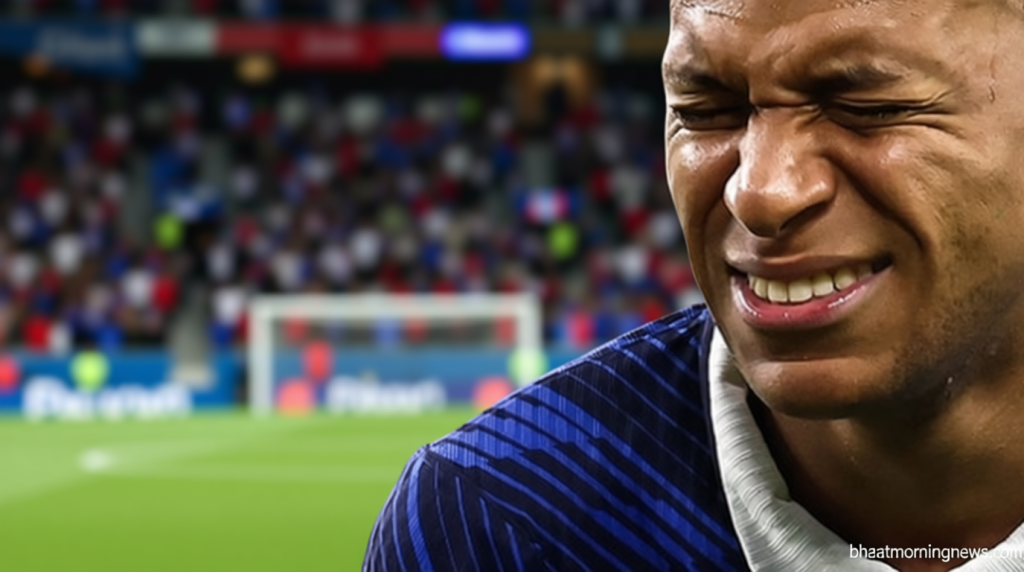
Was World Cup Format Unfair to Kylian Mbappé After France’s 2026 Dominance Ended?
Bharatmorningnews.com – Was the World Cup format unfair to Kylian Mbappé? The young forward’s performance in the 2026 tournament took a dramatic hit after France’s historic campaign was abruptly halted by a 2-0 semifinal loss to Spain. Mbappé, who had been a dominant force throughout the competition, found himself at the center of a debate about the fairness of the World Cup’s structure in determining the ultimate champion.
France had entered the semifinals as the tournament’s most consistent team, securing all six group stage matches with a record of 16 goals scored and just two conceded. Their knockout-phase journey was marked by clinical efficiency, including a 3-0 victory over Sweden, a 1-0 win against Paraguay, and a 2-0 triumph over Morocco. These results highlighted a seamless blend of attacking creativity and defensive discipline, which had propelled France to the brink of a historic title.
Mbappé’s Record-Breaking Campaign and the Format’s Strain
By the time of the semifinal, Mbappé had already set the pace for the tournament, netting eight goals and delivering three assists. His involvement in 11 of France’s 16 goals underscored his role as the team’s linchpin, with a contribution rate of nearly 69%. This performance earned him the unofficial title of tournament favorite, even if not officially recognized by the Golden Boot awards. However, the format of the World Cup proved to be a double-edged sword, as one game could erase years of preparation.
“There is, however, no realistic argument for replacing the World Cup with a league.”
France’s prior six wins had given them 18 points, while Spain’s five victories and one draw secured 16. The 2-0 loss to Spain in the semifinal not only ended France’s campaign but also shifted the hypothetical league table, leaving the team one point behind with no opportunity for recovery. This dramatic reversal has sparked discussions about whether the single-elimination structure of the World Cup overemphasizes the importance of a single match over sustained excellence.
Two-Legged Knockouts and the Impact on Performance
The Champions League’s two-leg knockout format offers a contrasting model, allowing teams to bounce back from setbacks. Had France faced Spain in a two-leg semifinal, they could have adjusted tactics, reinforced midfield control, or shifted Mbappé’s positioning to counter Spain’s strategies. This format provides a buffer, making the outcome less dependent on a single night’s performance. In contrast, the World Cup’s rigid structure compresses all achievements into a fleeting moment, where tactical mismatches or individual slumps can tip the balance.
While Mbappé’s campaign was exceptional, the World Cup format risks overshadowing a team’s overall performance. France’s balance and dominance were evident across the tournament, yet the loss to Spain became the defining moment of the competition. This has led to questions about whether the format penalizes teams that peak early, as it does not allow for recovery from a single poor game. Critics argue that this could diminish the significance of a player’s sustained impact, while defenders of the format emphasize its role in maintaining the tournament’s excitement and unpredictability.
The World Cup’s structure has long been a topic of debate. With 48 teams competing in a single-elimination format, the tournament requires a compact schedule that prioritizes intensity over depth. While this makes the competition more dynamic, it also means that a team’s early success can be reversed in a single match. For France, the format ensured that their six-game run of dominance was reduced to a single result, raising the question of whether the World Cup is fair to its most consistent performers.
Despite the criticism, the World Cup format remains a cornerstone of international football. It ensures that every match carries equal weight, creating a narrative of high stakes and dramatic finishes. However, the 2026 tournament has highlighted how this structure can be harsh on teams like France, whose meticulous planning and execution were undone by the unpredictability of the final round. As discussions about tournament reform continue, the fairness of the format will remain a key point of contention among players, coaches, and fans alike.