
China Aggressively Patrols Disputed Waters. Now the U.S. Coast Guard Is Moving In.
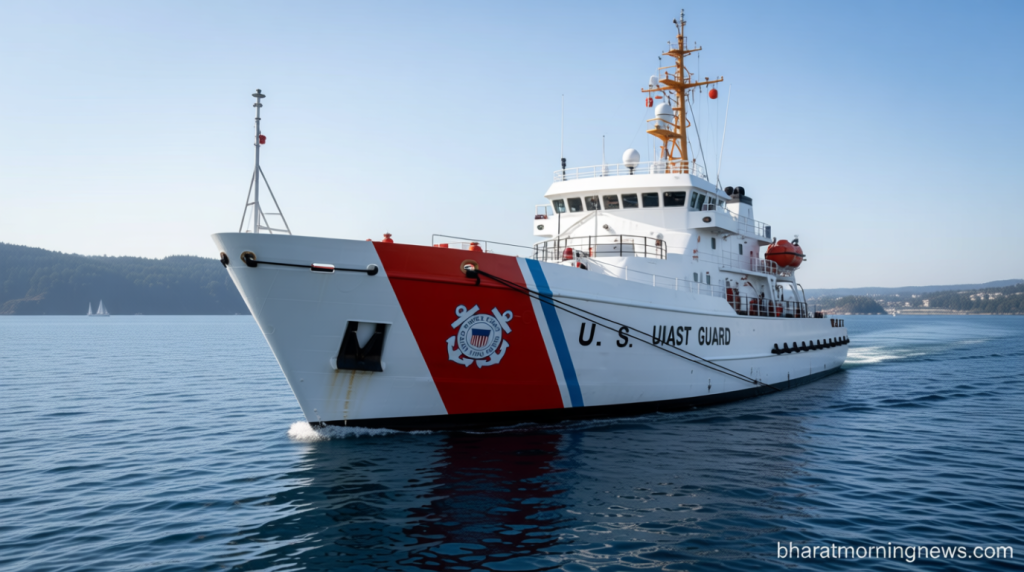
China Aggressively Patrols Disputed Waters; U.S. Coast Guard Responds
Bharatmorningnews.com – China’s aggressive patrols in disputed waters have intensified, prompting the U.S. Coast Guard to bolster its presence in the western Pacific. This strategic shift comes as Beijing solidifies its control over key maritime regions, including the South China Sea and the Taiwan Strait. The U.S. decision to deploy vessels from Singapore and Subic Bay reflects a broader effort to counter China’s growing dominance and assert America’s maritime influence in the Indo-Pacific. With tensions rising, the Coast Guard’s recent move underscores a renewed commitment to safeguarding critical trade routes and maintaining regional stability.
Coast Guard’s Operational Flexibility
The U.S. Coast Guard’s deployment of six 154-foot fast-response cutters marks a significant expansion of its global operational capabilities. These vessels, part of the restructured “expeditionary cutter squadron,” are now stationed in Singapore and Subic Bay, enabling rapid response to incidents in the South China Sea and nearby waters. Unlike traditional naval operations, the Coast Guard’s focus on agile, versatile assets allows for a more dynamic approach to patrolling contested areas. This initiative is approved for at least through September, according to a Coast Guard spokesperson, highlighting its long-term strategic importance.
While the U.S. has historically relied on larger cutters for operations in Subic Bay, the current deployment introduces smaller, more maneuverable ships tailored for law enforcement and surveillance missions. These cutters can operate independently or alongside allied forces, offering a unique blend of speed and endurance. Their presence in the Pacific provides a consistent reminder of America’s commitment to maritime security, even as China’s aggressive patrols grow more frequent and assertive.
Strategic Rebalancing in the Indo-Pacific
Washington’s decision to reposition its Coast Guard fleet aligns with a broader geopolitical strategy to counter China’s expanding influence. By establishing a foothold in the Philippines and Singapore, the U.S. reinforces its alliances and strengthens partnerships with nations such as Vietnam and Micronesia. This strategic rebalancing not only enhances military readiness but also ensures a more distributed presence across the region, reducing reliance on the Navy for all maritime operations.
“The Coast Guard’s role in the Indo-Pacific is crucial for maintaining a continuous American footprint in areas where China’s aggressive patrols have become a daily occurrence,” said Euan Graham, a nonresident senior fellow at the Australian Strategic Policy Institute. “This approach allows the U.S. to respond swiftly without overburdening its naval assets, which are already stretched across multiple theaters.”
Analysts emphasize that the Coast Guard’s flexibility is a key asset in addressing China’s assertiveness. With the Navy engaged in operations in the Middle East and other regions, the Coast Guard fills a critical gap by conducting patrols in the Pacific, supporting joint exercises, and collaborating with local authorities to enforce maritime laws. This dual role of law enforcement and military presence strengthens the U.S.’s ability to monitor and respond to China’s activities in disputed waters.
China’s Assertive Maritime Expansion
China’s aggressive patrols in disputed waters have been a defining feature of its assertive maritime policy in recent years. The Chinese coast guard, supported by naval forces, has increasingly intercepted Philippine and Vietnamese vessels in the South China Sea, often using water cannons and forced boarding to assert territorial claims. These actions have raised concerns about the militarization of maritime boundaries and the potential for escalations in the region.
“China’s aggressive patrols are part of a systematic effort to consolidate control over the South China Sea, which is vital for global trade and regional security,” noted an expert from the U.S. Naval War College. “The U.S. Coast Guard’s deployment is a clear signal that America is prepared to defend its interests in these contested areas.”
Meanwhile, the U.S. Coast Guard continues to leverage its existing capabilities, with ships based in Guam and Hawaii conducting regular patrols. These missions often involve coordinated efforts with local governments to address illegal fishing, smuggling, and unauthorized maritime activity. The combination of new deployments and ongoing operations ensures a more robust response to China’s growing maritime assertiveness, even as the U.S. faces logistical challenges in maintaining a sustained presence.
Challenges and Future Readiness
Despite its strategic advantages, the