
The clock nobody reset
The Clock Nobody Reset: A Colonial Legacy in Assam’s Tea Gardens
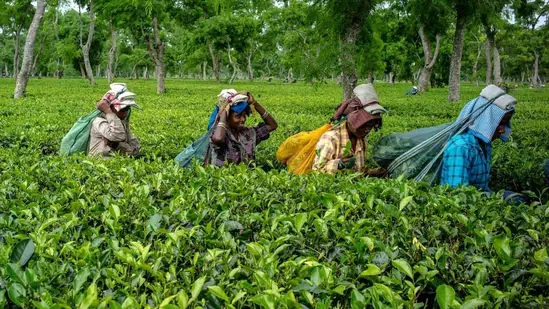
Bharatmorningnews.com – Imagine stepping into a tea plantation in Jorhat, Assam, at the break of dawn. The workers are already on their way to the fields, not because of an early start, but due to a time that is one hour ahead of the rest of India. This peculiar time difference, known as Bagan Time, has persisted for decades, a relic of British colonial rule that continues to shape the rhythms of labor in the region. While India unified its time zones in 1947 as a symbol of post-colonial independence, the Assam tea gardens remain anchored to this old system, a testament to the enduring influence of imperial governance. The clock nobody reset—this phrase now resonates beyond its literal meaning, capturing the quiet yet persistent legacy of a bygone era in the lives of those who toil under its shadow.
The Rhythm of a Forgotten System
The British introduced Bagan Time in 1870 to streamline the tea industry, aligning work schedules with the sun’s trajectory in the region. By setting the clock ahead of the Indian Standard Time, they ensured that workers had fewer hours of daylight to complete their tasks, maximizing efficiency. This practice, though practical for the empire’s needs, left a lasting impact on the local population. Even after India’s independence, the time remained unchanged, creating a subtle but significant disconnect between the tea gardens and the rest of the nation. It is a time that never sleeps, yet its beneficiaries often remain unaware of its origins.
Consider this: in 1947, India reclaimed its sovereignty, crafting a new Constitution and embracing a shared national identity. Yet, in the tea gardens of Assam, the hands of time continued to move as they had for over a century, unadjusted by the country’s modernization efforts.
For generations, the workers in these gardens—many of whom were migrants from Jharkhand, Odisha, and Chhattisgarah—lived under the dictates of this artificial time. Their daily routines, dictated by the clock, reflected the colonial ethos of control and order. This system, though designed to optimize production, also reinforced the hierarchy of labor, separating the workers from the rhythms of their own lives. The time difference became more than a mere technicality; it was a symbol of an era where colonial structures still governed the pulse of a region’s economy.
The Global Industry and Its Local Cost
The tea harvested in Assam’s gardens is a global commodity, exported to countries across Europe, the Americas, and Asia. Yet, the workers who cultivate it often remain invisible to the world beyond their fields. Their wages, though low, are a fraction of what tea companies earn from international markets. This disparity highlights the paradox of the tea industry: it thrives on a global scale while its laborers endure conditions shaped by a colonial time system that still operates in their daily lives.
It is a reminder that the benefits of globalization are not evenly distributed. The tea gardens, once the heart of India’s colonial economy, now echo the same inequalities that defined their past.
Mothers would hang infants in makeshift cribs made of cloth and branches, enduring the long hours of labor with little respite. These children, cradled in the shade of Assam’s trees, grew up in a world where their time was measured in the same way as their ancestors’—by a clock that no longer belonged to them. The system that once served the empire now sustains the industry, with the workers’ sacrifices largely unacknowledged. This is the story of the clock nobody reset, a silent but powerful force in the lives of those who work the land.
Over time, the tea industry in Assam has evolved, adapting to new economic and technological realities. Yet, the time difference remains unchanged, a holdover from a system that valued efficiency over equity. While the introduction of mobile phones and modern infrastructure has brought some change to the workers’ lives, the core structure of their labor persists. The clock, still ticking forward, serves as a reminder that not all aspects of colonial rule have been dismantled. It is a time that continues to shape the pace of work, even as the world moves faster in other regions.
The persistence of Bagan Time raises questions about how history is embedded in everyday life. In a nation that prides itself on progress and modernity, why does a single time zone remain a relic of the past? The answer lies in the interplay of tradition, economy, and politics. The Assam tea gardens, with their unique time, are not just a geographical anomaly but a microcosm of a broader societal structure that has yet to fully reconcile with its colonial past. This time, unadjusted and unchallenged, continues to govern the lives of those who rely on its rhythm for survival.
Efforts to address this issue have been slow, but they are beginning to take shape. Initiatives like Jan Dhan, Ujjwala, and Ayushman Bharat have reached these communities, providing access to financial services, energy, and healthcare. While these schemes are not specifically tailored for tea workers, their impact is undeniable. The clock may still be in place, but the lives it governs are gradually finding new pace. The tea gardens, once a symbol of colonial control, are now navigating a future where time, too, can be reimagined. Until then, the clock nobody reset continues to mark the passage of days in a way that few have questioned.