
Supreme Court seeks bank liability for digital arrest fraud losses
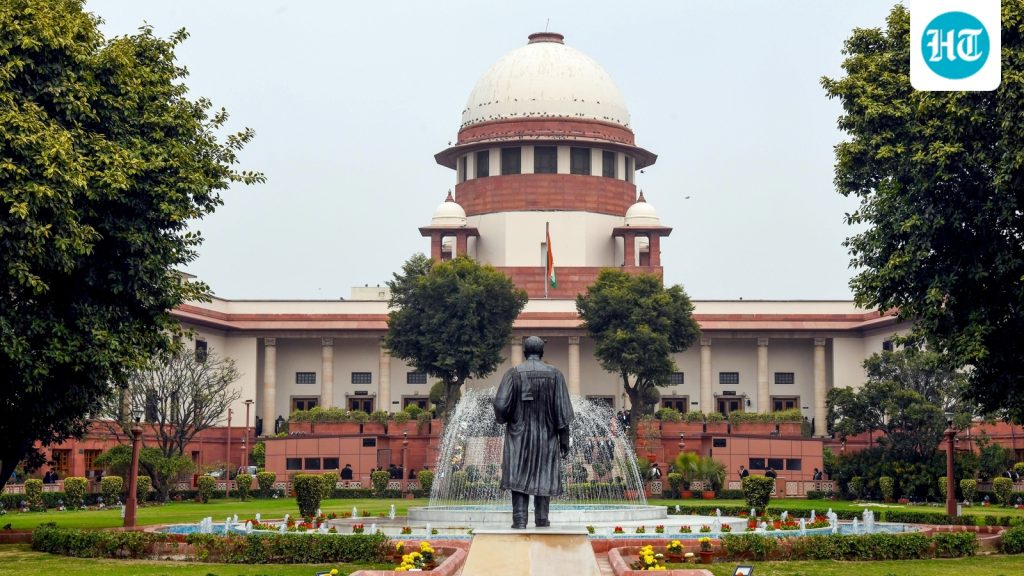
Supreme Court presses for stronger bank accountability in digital arrest scams
Bharatmorningnews.com – The Supreme Court has indicated that banks may need to bear a far greater share of responsibility when customers lose money in “digital arrest” scams, particularly where gaps in a financial institution’s safeguards helped enable the fraud.
A bench led by Chief Justice of India Surya Kant, with justices Joymalya Bagchi and V Mohana, said an effective response must not stop at advisory measures. It should include action against bank employees who work with fraudsters and meaningful compensation for victims where the bank’s own failure contributed to the loss.
“Banks must be held accountable. If there is no liability placed under the proposed guidelines, we will ensure it.”
Digital arrest fraud typically begins with a caller pretending to be a police officer or an official from a central investigative agency. Victims are often kept on video calls, intimidated with threats of arrest or legal action, and pressured into moving money to accounts controlled by criminals. The coercive nature of these scams can leave targets unable to pause, seek advice or verify the caller’s claims.
Figures placed before the court by the Indian Cybercrime Coordination Centre and the Ministry of Home Affairs showed 21,928 complaints related to such frauds in the first eight months of the year, with losses exceeding ₹647 crore. The scale of the alleged losses has pushed the court to question whether the existing financial-protection framework is adequate for customers facing sophisticated cybercrime.
Compensation should match the loss when banks fail, court says
The bench said RBI measures should require banks and other financial institutions to compensate customers by no less than the amount lost when an institution’s failure is found to have enabled the fraud. The judges also stressed that criminal prosecution should be possible where bank officials are discovered to have colluded with those behind a cybercrime.
“The regulatory measures proposed by RBI must mandate for financial institutions to indemnify digital arrest or cyber fraud victims for providing suitable compensation not less than the amount lost by the customer on being found that the fraud has taken place as a result of failure of the financial institution in the commission of the act or incident.”
The concern is especially relevant because the RBI’s revised electronic-banking fraud compensation rules, due to take effect in January, provide a maximum payout of ₹25,000 and apply only to losses up to ₹50,000. For victims who transfer much larger sums under pressure, that cap could offer limited relief.
The court urged the RBI to use its regulatory authority not merely to publish directions, but to ensure banks face strict liability where appropriate. The judges noted an imbalance between the remedies available to banks and those open to fraud victims. Financial institutions can pursue recovery under the Securitisation and Reconstruction of Financial Assets and Enforcement of Security Interest Act, 2002, and the Insolvency and Bankruptcy Code, while ordinary customers who lose money in a fraud may have no comparable path to recover it.
“Thousands of crores are being looted and still you do not have strong measures in place. This money is being lost to the economy. Where is the accountability clause in your regulations so that when a fraud takes place, compensation can be given to victims besides prosecuting the bank officials who are found to be involved?”
Need for early transaction warnings
The bench also focused on prevention, suggesting that banks should identify transfers that sharply depart from an account holder’s normal financial behaviour. A large withdrawal from the account of a private individual, particularly a senior citizen, may deserve closer scrutiny when it does not resemble the customer’s usual transaction pattern.
“We can understand companies having crores of rupees of transactions but for accounts of private individuals who are senior citizens, if so much of the amount is being withdrawn, immediately the bank should be alerted and the transaction withheld. The nearest police station can be asked to reach the person who is the account holder to verify the transaction.”
Such safeguards could involve flagging unusual transfers, delaying them for verification, or reaching out directly to the account holder before funds leave the banking system. The court’s observations underline that fraud prevention may require rapid intervention, since transferred money can become difficult to trace once it passes through multiple accounts or payment channels.
The judges also referred to disputes involving an alleged builder-bank nexus. Even though lending in such cases is governed by an RBI master circular, homebuyers affected by subvention arrangements have often struggled to obtain relief. The court said banks should face clear consequences if they breach their obligations.
“Strict liability of banks must be provided and in case of breach, accountability must be fixed.”
Draft KYC rules under review
The RBI informed the court that it is completing draft Know Your Customer guidelines dealing with the due diligence expected from banks. The regulator expects to notify the rules by November 30. The court said it wishes to examine the proposed document before finalisation and will issue further directions after reviewing it.
Attorney General R Venkataramani, appearing for the Centre, said an inter-departmental committee and the Indian Cybercrime Coordination Centre were examining the issue from multiple angles. The Ministry of Home Affairs is also preparing a standard operating procedure that is expected to address bank liability.
Venkataramani told the court that the reported volume of digital arrest fraud had declined: 123,672 cases in 2024, 58,239 in 2025, and 21,928 cases this year up to September 1. Yet senior advocate NS Nappinai, assisting the court as amicus curiae, said the frauds continue and argued that assigning liability to banks remains essential. She added that educated individuals are among the principal targets.
The case highlights a broader challenge for consumers: a convincing voice or video call can create panic even when the supposed authority has no legal basis for demanding an immediate payment. Police and investigative agencies do not conduct arrests through video calls or require people to transfer funds to prove innocence. The Supreme Court’s intervention signals that public awareness must be matched by stronger banking controls, faster fraud detection and a credible remedy when institutional failures contribute to a customer’s loss.
Related Reading
Frequently Asked Questions
What is Supreme Court seeks bank liability for digital?
Supreme Court seeks bank liability for digital is the main topic of this guide. The article explains the context, practical details, and next steps readers should understand.
Why does Supreme Court seeks bank liability for digital matter?
Supreme Court seeks bank liability for digital matters because readers are looking for a useful answer, not just a short summary. Good content should match search intent and help them decide what to do next.