
Noida Airport’s promises and portents at take-off
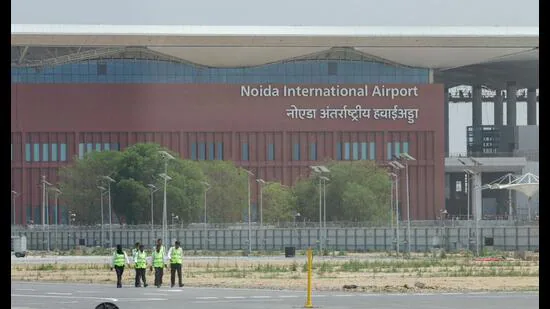
Noida Airport’s Promises and Portents: A New Chapter in Regional Connectivity
Bharatmorningnews.com – Noida Airport s promises and portents have become the focal point of discussions surrounding India’s expanding infrastructure ambitions. As the country races to enhance its transportation networks, the Noida International Airport (NIA) stands out as a symbol of both opportunity and uncertainty. Launched with an investment of ₹11,000 crore, the airport’s first phase was officially inaugurated by Prime Minister Narendra Modi last month, signaling a major leap forward for the National Capital Region (NCR). Scheduled to begin operations on June 15, the NIA aims to redefine air travel in Uttar Pradesh by combining the warmth of Indian hospitality with the precision of Swiss engineering, a vision inspired by the successful bid secured by Zurich Airports in November 2019.
Revitalizing Jewar’s Strategic Position in the NCR
Once a modest agricultural village, Jewar has been transformed into a key node of the NCR’s transportation grid under the leadership of Chief Minister Yogi Adityanath. The rapid land acquisition and relocation efforts have enabled the swift commencement of NIA’s construction, a project that could elevate the region’s status as a competitive aviation hub. This development underscores the government’s commitment to modernizing infrastructure and creating economic corridors. However, the success of the airport will also depend on its ability to complement existing facilities, such as Delhi’s Indira Gandhi International Airport, rather than compete directly for passengers.
Infrastructure for Seamless Accessibility
The Noida Airport s promises and portents are closely tied to its infrastructure. Positioned just 700 meters from the Yamuna Expressway, the airport is designed to reduce travel times and improve connectivity within the NCR. To further enhance accessibility, the National Highways Authority of India (NHAI) has constructed a clover-leaf interchange that connects the airport to the expressway, ensuring smoother traffic flow. Additionally, the Delhi Metro is set to extend its network to a station adjacent to NIA, a model that aligns with the integration seen in European aviation systems. These efforts aim to make the airport a convenient option for both domestic and international travelers, but challenges remain in coordinating with local transport networks.
Competition and Cost Efficiency: A New Era for Aviation
The Noida Airport s promises and portents extend beyond infrastructure to include a competitive edge in the aviation sector. With Delhi Airport also undergoing significant upgrades—investment of ₹9,800 crore to modernize its facilities—the region is now home to two major airports vying for market share. Airlines are now faced with the challenge of attracting passengers by leveraging the NIA’s proximity to Noida and its potential cost advantages. While Delhi’s central location continues to draw traffic, the NIA’s development could divert some travelers from the east and central parts of the city, offering a more economical alternative for those in the NCR.
However, the airport’s financial viability remains a key concern. Experts highlight that delayed construction timelines may lead to higher operational costs, particularly when compared to Delhi’s established infrastructure. The NIA’s distance from Noida’s core—25-26 kilometers—means that ease of access will be crucial to its success. Even with improved road networks and metro connectivity, navigating Delhi’s congested highways could still pose a challenge. This underscores the need for efficient logistics and public transport solutions to ensure the airport fulfills its promises and becomes a sustainable asset for the region.
Broader Implications for India’s Aviation Landscape
The Noida Airport s promises and portents reflect a larger trend of India’s push for decentralized aviation hubs. As greenfield airports like Navi Mumbai and Goa’s MOPA took nearly two decades to materialize, the NIA’s expedited timeline—seven years from bid to inauguration—signals a more agile approach to infrastructure development. This shift could alleviate pressure on Delhi’s overcrowded airport and foster regional growth by making air travel more accessible to nearby states such as Haryana and Uttarakhand. The airport’s proximity to major cities and its integration with high-speed rail and logistics partnerships may further enhance its appeal, positioning it as a key player in India’s evolving transport ecosystem.
“The Noida Airport s promises and portents are not just about a new facility, but about redefining how the NCR connects with the rest of the nation. In a country where delays have historically stunted infrastructure progress, this project’s early launch offers hope for more timely developments.”
As the NIA prepares to take flight, its success will hinge on its ability to balance innovation with practicality. While the airport’s vision is ambitious, the challenges it faces—financial, logistical, and infrastructural—require careful management. For the NCR, the Noida Airport s promises and portents represent both a chance to lead and a test of India’s commitment to modernizing its transport networks. The coming months will be critical in determining whether these promises translate into lasting portents for the region’s growth and connectivity.