
How Ajit Agarkar’s tenure transformed Indian careers: The stars who rose, fell and found redemption under his watch
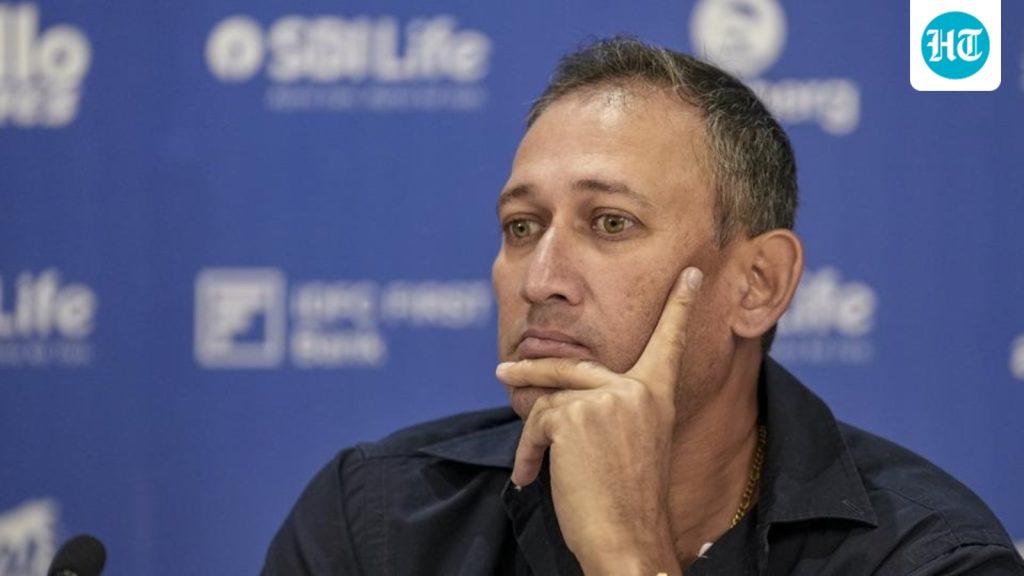
How Ajit Agarkar’s Tenure Changed India’s Selection Landscape
Bharatmorningnews.com – How Ajit Agarkar s tenure transformed Indian careers is most clearly seen in the changing fortunes of players around the national team. As chairman of India’s selection committee, Agarkar presided over a period that included the 2023 ODI World Cup final, T20 World Cup triumphs in 2024 and 2026, and the 2025 Champions Trophy victory. Yet selection decisions also determined which players gained momentum, lost their places or found a route back into contention.
India’s selection system is never judged only by trophies. A panel’s decisions influence who becomes a regular, who is trusted at ICC events, who receives a central contract and who gradually moves away from international cricket. During this period, Mohammed Shami, Yuzvendra Chahal and Ruturaj Gaikwad experienced sharply different career trajectories.
Mohammed Shami’s dramatic change in standing
Mohammed Shami’s situation represents one of the most striking reversals during How Ajit Agarkar s tenure. At his peak, Shami was central to India’s ODI attack, held a Grade A central contract and delivered decisive performances on the biggest stages.
At the 2023 ODI World Cup, Shami took 24 wickets in seven matches at an average of 10.70. He finished as the tournament’s leading wicket-taker despite not playing India’s first four games. He also took nine wickets in five matches at the 2025 Champions Trophy and earned another place in the ICC Team of the Tournament.
However, Shami has not played for India since the Champions Trophy final in March 2025. His absence continued despite a productive 2025-26 domestic season, when he collected 69 wickets in 22 matches across the Ranji Trophy, Syed Mushtaq Ali Trophy and Vijay Hazare Trophy. His Ranji Trophy figures of 37 wickets at 16.72 highlighted that his domestic output remained strong.
The shift extended beyond match selection. Shami moved from a Grade A deal in 2024-25 to no central contract in 2025-26, underlining how quickly a player’s institutional standing can change even after major ICC performances.
Yuzvendra Chahal’s route back became difficult
Yuzvendra Chahal was still an active T20I option when Agarkar took charge in July 2023. He played all five matches in the West Indies in August that year and took five wickets. By then, he had already claimed 96 wickets in 80 T20 internationals and 121 wickets in 72 ODIs for India.
That West Indies series remains Chahal’s most recent India assignment. He missed selection for the 2023 ODI World Cup, was part of the 2024 T20 World Cup squad without playing a match, and subsequently slipped out of the international picture.
When explaining Chahal’s omission from the 2023 Asia Cup squad, Agarkar pointed to Axar Patel’s batting value and said Kuldeep Yadav was slightly ahead in the wrist-spin competition. The decision reflected India’s preference for balance rather than a simple assessment of Chahal’s wicket-taking ability.
Ruturaj Gaikwad’s T20I momentum slowed
Ruturaj Gaikwad’s reduced T20I role was not caused by poor returns. Across 2023 and 2024, he scored 498 runs in T20Is at an average of 62.25 and a strike rate of 150. Against Australia in late 2023, he topped the series run charts with 223 runs at 55.75.
Gaikwad’s most recent T20I appearance came on July 13, 2024, despite his strong record and earlier leadership role at the Asian Games. He remains on a Grade C central contract and has returned to the ODI squad, showing that he remains part of India’s wider plans even if his place in the shortest format is less secure.
How Ajit Agarkar s tenure transformed Indian careers was therefore not a story of straightforward success or failure. Players could produce strong numbers and still face intense competition, tactical changes and evolving squad requirements.
FAQ: India Selection and Ajit Agarkar’s Era
What was Ajit Agarkar’s role in India’s selection process?
Ajit Agarkar served as chairman of India’s selection committee, helping shape squads, leadership decisions and player opportunities across formats.
Why did some established players lose their places?
India’s selectors had to balance form, fitness, team combination, batting depth and competition for roles. A player’s previous record did not guarantee continued selection.
Can players such as Shami, Chahal and Gaikwad return to regular India duty?
Selection can change quickly with form, fitness, format-specific needs and vacancies in the squad. Domestic performances and opportunities in bilateral series can help players return to contention.