
Elvish Yadav slams Pranit More, Himanshu Jangra over ₹370 biryani joke controversy: ‘Laga consent ka MRP hota hai’
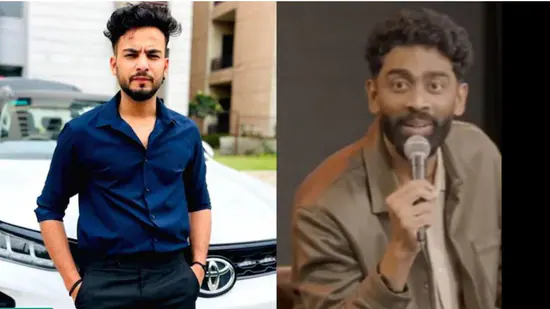
Elvish Yadav Slams Pranit More Over ₹370 Biryani Joke Controversy
Bharatmorningnews.com – In a recent incident that sparked widespread debate, YouTuber Elvish Yadav strongly criticized Pranit More and Himanshu Jangra for their involvement in a controversial biryani joke. The joke, which revolved around the idea of consent being measured by the cost of a ₹370 biryani, became a focal point for discussions on gender dynamics and comedic boundaries. Elvish Yadav took to social media to voice his concerns, highlighting how the remark undermined the dignity of women and perpetuated harmful stereotypes. The incident quickly gained traction on platforms like X and Instagram, drawing sharp reactions from both critics and supporters.
The ₹370 Biryani Joke and Its Origins
The controversy began during a live comedy show in Gurugram, where Pranit More invited an audience member to share a personal story. Himanshu Jangra, a web developer, responded by recounting an anecdote about his expectations for physical intimacy after a date, justifying it by referencing the price of a ₹370 biryani. His comment, “Maine kaha ki ₹370 lage hain to use to wasool to karunga hi,” was interpreted as equating financial cost with the permission to engage in intimate acts, raising questions about how consent is perceived in everyday interactions.
Elvish Yadav’s critique emphasized the power dynamics at play. He argued that the joke not only trivialized women’s autonomy but also showcased how men could justify uncomfortable situations through a lens of economic logic. “Biryani toh dum pe bani thi, controversy ego pe,” he tweeted, pointing out that while the dish itself is a delicacy, the joke was fueled by personal pride and a lack of sensitivity. This statement resonated with many, as it encapsulated the tension between humor and respect in modern comedy.
Public Backlash and Feminist Perspectives
The remarks ignited a firestorm of backlash, with social media users condemning the joke as a reflection of broader societal attitudes toward women. Feminist voices on platforms like Instagram and X amplified the critique, arguing that the anecdote reduced consent to a transactional concept. Kusha Kapila, a well-known influencer, weighed in on the issue, stating that women should not be hesitant to call out such jokes. “Urge women to call out disgusting comedy plenty. Please darna mat (Don’t feel scared). Bakwaas kiya he toh drag karo badiya se (If they have spoken nonsense then feel free to drag it too).” Her message encouraged public accountability and highlighted the importance of addressing misogyny in comedy.
Elvish Yadav’s criticism echoed similar sentiments, as he pointed out that the joke’s humor was rooted in the idea that consent could be “laga” (imposed) and measured in rupees. This sentiment was not just a personal take but a reflection of a growing movement questioning the role of comedy in shaping social norms. The debate extended beyond the initial joke, with many arguing that such content could normalize disrespectful behavior and diminish women’s voices in the process.
Pranit More’s Response and Apology
After the controversy escalated, Pranit More issued a public apology, acknowledging his role in the incident. He deactivated his Instagram account temporarily and stated, “I’ve seen the criticism regarding a recent crowdwork clip. The comments made by the audience member do not reflect my views. Looking back, I should have challenged the remark instead of laughing and moving on. That was a lapse in judgment on my part.” His statement aimed to clarify that the joke was not his own but a product of the audience’s input, though many remained critical of his response.
Elvish Yadav, however, emphasized that the responsibility of a comedian extends beyond merely repeating a joke. “When you host a show, you have the power to choose which stories you amplify,” he said in a follow-up post. This insight added depth to the discussion, as it highlighted how comedy can shape public perception and how comedians are often seen as gatekeepers of humor. Pranit More’s apology, while sincere, was seen by some as a step toward accountability rather than a complete resolution of the issue.
Broader Implications and Cultural Context
The ₹370 biryani joke became a symbol of a larger conversation about consent in Indian society. It reflected how casual references to money can be used to justify uncomfortable or even predatory behavior, a trend that has been increasingly scrutinized in recent years. Elvish Yadav’s slam on Pranit More and Himanshu Jangra was not just about the specific incident but also about the cultural norms that perpetuate such attitudes. “Laga consent ka MRP hota hai,” he remarked, underscoring the idea that consent is often treated as an optional add-on rather than a fundamental right.
As the controversy spread, it sparked discussions on the intersection of humor and gender equality. Many social media users highlighted how the joke resonated with their own experiences, noting that such statements often reflect ingrained biases. Elvish Yadav’s public critique served as a catalyst for these conversations, encouraging comedians and audiences alike to reflect on the impact of their words. The incident also brought attention to the importance of consent in everyday interactions, beyond the realm of comedy, and how it is often overlooked or undervalued.
In the wake of the backlash, Pranit More and Himanshu Jangra faced a reckoning with their audience. While some appreciated their willingness to acknowledge the mistake, others argued that the joke’s core message remained problematic. Elvish Yadav’s continued emphasis on the issue highlighted the need for deeper reflection and change in the way comedy is crafted and consumed. The conversation surrounding the ₹370 biryani joke remains relevant, as it continues to challenge the norms of consent and respect in both comedy and society at large.