
Bhiwandi’s ‘Spider-Man’ uses his ‘power’ to responsibly help commuters cross waterlogged streets
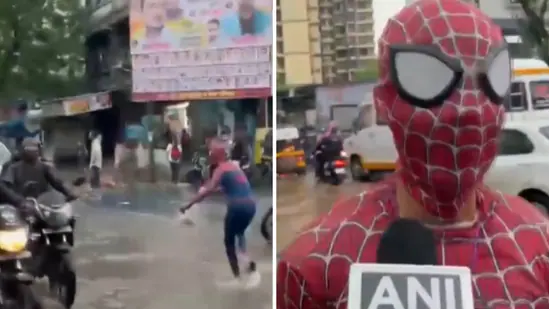
Bhiwandi’s ‘Spider-Man’ Uses Power to Aid Commuters in Flood Crisis
Bharatmorningnews.com – In the heart of Bhiwandi, Maharashtra, a unique initiative has emerged to combat waterlogging woes. Inspired by the iconic Spider-Man, a local man named Shadab stepped up to use his creativity and energy to help commuters navigate flooded streets. With the monsoon season wreaking havoc on urban infrastructure, Shadab’s efforts exemplify the spirit of community service and the tangible impact of individual action. His choice to don the superhero persona underscores the phrase “with great power comes great responsibility,” as he turned his passion for the character into a real-world solution for the city’s traffic challenges.
The Waterlogged Streets and Shadab’s Unconventional Response
Bhiwandi’s streets transformed into a maze of waterlogged pathways, creating significant disruptions for daily commuters. As rainstorms persisted, local authorities struggled to keep pace with the rising water levels, leaving many stranded. Shadab, recognizing the urgency, decided to take matters into his own hands. His role as the self-proclaimed ‘Spider-Man’ was not just a spectacle but a practical aid, helping clear pools of water and guiding vehicles through the chaos. This innovative approach captured widespread attention, with social media users and local news outlets highlighting his contribution to the community’s resilience.
“Shadab, dressed as ‘Spider-Man,’ assisted in moving traffic through waterlogged areas in Bhiwandi,” shared ANI, whose video of the event gained traction across platforms. The footage showcased him using his knowledge of the city and physical strength to ferry people across flooded zones, a task typically handled by municipal crews.
Shadab’s actions were driven by a desire to alleviate the suffering of residents. He emphasized that the BMC had delayed responses to the crisis, prompting him to act as a temporary solution. “I saw people struggling and thought, why not use the power of a superhero to make a difference?” he explained in an interview. His efforts, though brief, demonstrated how individual initiatives can bridge gaps in public services during emergencies.
Community Reactions and the Power of Viral Movements
The public’s response to Shadab’s heroics was a mix of admiration and humor. Many praised his ingenuity, calling him a “local hero” who turned the city’s plight into a heartwarming story. Others jokingly referred to the event as “Spider-Man: India chapter” or “a wholesome side quest,” reflecting the light-hearted yet impactful nature of his contribution. Social media platforms buzzed with comments, with one user noting, “In a time when everyone questions their motives, this man simply acts.”
His viral appearance also sparked conversations about the role of social media in amplifying grassroots efforts. The incident became a symbol of how everyday individuals can use their platforms to address local challenges. While the municipal authorities continued their work, Shadab’s temporary solution offered a glimpse of hope, reminding residents of the importance of proactive community engagement. The episode also highlighted the need for better infrastructure planning to mitigate future monsoon-related issues.
“People may call him crazy, but I call him a rare species,” remarked a local resident. “He’s not just helping others—he’s making a statement about what it means to be responsible in times of crisis.”
Monsoon Challenges Across Maharashtra
The monsoon crisis in Maharashtra extended beyond Bhiwandi, affecting multiple cities and towns. As of July 1, heavy rainfall had submerged roads in Mumbai, Pune, and other regions, leading to traffic gridlock and emergency evacuations. The BMC’s decision to close schools and allow remote work underscored the scale of the problem. In Bhiwandi, the situation was particularly acute, with low-lying areas turning into temporary lakes. Shadab’s intervention, though small in scale, became a beacon of hope amid the widespread challenges.
Authorities acknowledged the need for faster responses but emphasized the logistical hurdles posed by the intensity of the downpours. “The water accumulation has been unprecedented,” stated a BMC official. “We’re working around the clock, but the pace of the rainfall is testing our capacity.” This context made Shadab’s initiative all the more remarkable, as it filled a critical gap during the early stages of the disaster.
Shadab’s Legacy and the Role of Innovation
Shadab’s act of using his “power” to help commuters has inspired others to think creatively about problem-solving. His role as a temporary hero demonstrated how a single individual can make a significant difference, even in the face of larger systemic issues. While the BMC and other municipal bodies continue to address the root causes of waterlogging, Shadab’s example serves as a reminder that innovation can thrive in unexpected places. His story also reflects the growing trend of individuals leveraging their personal strengths to contribute to public welfare, especially during crises.
As the monsoon season progressed, similar grassroots efforts were reported in other parts of the state. From makeshift bridges built by local volunteers to drivers using boats to ferry people, the community’s response showcased resilience. Shadab’s role, though brief, highlighted the power of individual action and the potential for local heroes to inspire broader movements. His actions have since become a case study in how to use creativity and determination to tackle urban challenges, even when traditional systems fall short.